| OCR Text |
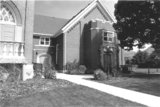
Show United States Department of the Interior National Park Service OMB No. 1024-0018, NPS Form National Register of Historic Places Continuation Sheet Section No. 8 Page 2 American Fork Third Ward Meetinghouse, American Fork, Utah County, UT Mining brought cash to support a growing mercantile base, and brickyards and lumber mills allowed residents to construct more substantial and stylish homes and businesses. When the Denver & Rio Grande Railroad reached American Fork in 1883, the city was experiencing intensive commercial growth and municipal maturity. Between 1890 and 1900, the population of the city grew from 1,942 to 2,732. The American Fork Ward of the LDS Church was organized on May 5, 1851, and was the social focus of the practically the entire town for fifty years. On January 13, 1901, a general reorganization of the LDS Church in Utah County took place. The original Utah Stake of Zion (a stake is equivalent to a diocese), which once encompassed all LDS wards (equivalent to parishes) in the county, was divided into three stakes. The northern portion of the county, which included American Fork, became the new Alpine Stake. Six months later, on July 14, 1901, the American Fork Ward was divided into four wards, each comprising a quadrant of the city. A committee was appointed in each of the four wards to locate a site on which to building a ward chapel. The four buildings were completed by 1905, and all were rectangular buildings with towers at one corner and Gothic Revival details. Local carpenter, Arthur Dickerson (1874-1949) designed the Third Ward. The four ward bishops bought the brick together because they could get a good price for such a large quantity. All four chapels were later expanded (1920s-1930s) to include recreation hall and additional classrooms. Of the four buildings, only two are extant: the Second Ward Meetinghouse, which was listed in the National Register of Historic Places in 1992, and later incorporated into the American Fork Historic District in 1998; and the Third Ward building. The Fourth Ward building was destroyed by fire on June 28, 1975, and the First Ward was demolished in the late 1960s. The American Fork Third Ward included all the members living in the northwest quadrant of the city. A corner lot at 190 West 300 North belonging to the Thomas Shelley (1822-1903) family was acquired by John R. Hindley (1863-1947), first bishop of the Third Ward, for the sum of four hundred dollars in May 1902. On October 3rd, Hindley transferred the deed to the American Fork Third Ward to be administered by him as bishop and by his successors. Excavation on the building commenced in April 1903. Members began holding services in the basement as soon as the first room was finished. The chapel was completed by 1905. With few exceptions, the labor to build the edifice was donated by ward members. The building was completed at a cost of $9,099.75. Both the Third and Fourth Ward chapels were dedicated on March 17, 1907. A photograph taken on that Sunday morning indicates a crowd of more than 200 in attendance at the Third Ward service. An interior photograph taken that year shows the chapel with metal frame, theater-type seats, elaborate woodwork in the podium-pulpit area, and a large coal burning stove to provide heat. A second smaller stove was located in the basement. According to Ellen Tracy, historian of the Third Ward, the "grounds were lovely with grass and trees. North of the building were hitching posts for those who had to come with horse and buggy or wagons. And back of the hitching posts was a grove of trees and grass where many socials were held." The manuscript history of the ward notes a second dedication on September 3, 1908, by Joseph F. Smith. The ward grew steadily and by July 1915, the northern-most portion of the ward boundaries was given to the Highland and Alpine Wards, with a transfer of 95 members. The ward continued to grow, but for many years 'Ellen Tracy, comp., American Fork Third Ward, scrapbook compiled between circa 1949 - 1973. |