| OCR Text |
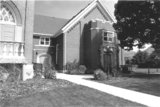
Show United States Department of the Interior National Park Service OMB No. 1024-0018, NPS Form National Register of Historic Places Continuation Sheet Section No. 7 Page 1 American Fork Third Ward Meetinghouse, American Fork, Utah County, UT Narrative Description The American Fork Third Ward Meetinghouse is a two-story, brick church building, constructed in three phases between 1903 and 1958. The original chapel space, constructed in 1903-1905, was designed in an eclectic Gothic Revival style. In 1938, a recreation hall and classroom wing was constructed to the east and north with modest Jacobethan decorative elements. The building was again expanded in 1958 in a wing to the west and north. Through the years minor alterations have been made to the exterior of the building, none of which substantially affect the building's overall architectural integrity. The interior was extensively remodeled during the construction of the 1958 addition. The building is currently undergoing a major rehabilitation for adaptive reuse as a reception center. This work, which is a historic preservation tax credit project, is designed to restore many of the original features of the building as well as adapt the building to a new use. The original 1903 footprint was a 53 feet x 80 feet rectangle with a square tower and entrance vestibule at the southeast corner. The 1903 building sits on a rock-faced, ashlar, stone foundation. The brick is red tap brick laid in a running bond with flush mortar joints. Decorative brick elements included corbelling at the cornice line, square colossal pilasters (projecting above the roofline for a slightly castellated effect), and rock-faced brick accenting the window hoods and round tower windows. Windows and door transoms were pointed, gothic-arches. A large stained-glass window was located on the south elevation. The upper tower windows had a floral design. The main floor of the sanctuary was above a raised basement. Steps leading up to multi-panel, double doors were located on the tower's south elevation, and the north end of the east elevation. A grade-level entrance to the basement was located on the east side of the vestibule. Sandstone was used for lintels, sills, impost blocks, keystones, and the date block above the tower entrance. The cornice was plain and the eaves of the simple gable roof were slightly belcast. The roof of the tower was pyramidal with patterned shingles. On the interior, the sanctuary featured a raised podium and pulpit at the north end. The podium featured Victoriangothic ornamentation such as a lathe-turned balustrade and gothic-designs in the woodwork. Metal frame theater-style seats were used (instead of pews), and a large pot-bellied stove was mounted next to the podium to heat the space. Ward histories indicate in 1929, the basement, originally used for classroom space, was expanded and remodeled. In 1938, the first major addition was built to the east and the north. This addition effectively doubled the floor space of the original building, with a recreation-social hall to the east, a two-story auxiliary wing (classrooms, restrooms, and kitchen) to the north, and a foyer connecting the new space to the old. The new addition is constructed on a concrete foundation with no basement. The brick is laid in common bond with headers every sixth course. The south elevation of the addition features corbelled brick and pilasters similar to the 1903 building, but the decorative elements are Jacobethan rather than Gothic Revival. The south elevation of the social hall features a projecting entrance wing with a crenellated parapet and cast concrete window and door surrounds. A second, recessed entrance (also with a cast concrete surround) leads into the connecting foyer. On the interior the foyer has stairs to the second floor classrooms and a cloakroom. The hall is open with a stage to the north and a projection room (above the projecting entrance wing). The classrooms, restrooms, kitchen etc. are located at the rear of the building and can be accessed either from the foyer or the rear entrance. |