| OCR Text |
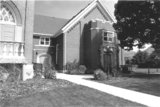
Show United States Department of the Interior National Park Service 0MB No. 1024-0018, NPS Form National Register of Historic Places Continuation Sheet Section No. 7 Page 2 American Fork Third Ward Meetinghouse, American Fork, Utah County, UT Both the north and east elevations of the 1903 building were significantly impacted by the 1938 addition. In addition, the pilaster caps and belcast eaves were probably removed at this time when a new roof was installed on the structure. In 1958, a major remodeling took place when the west wing was added. The 1958 wing is also two stories, and construction included additional excavation of the original basement. The wing sits on a raised concrete foundation and is constructed of red brick laid in a common bond similar to the 1938 addition. Although the 1958 addition features pilasters, there is little ornamentation such as corbelling. The windows are steel-sash, multi-pane windows and the doors were multi-paneled wood. The wing sits sufficiently back from the south elevation and does not impact the main facades of the 1903 and 1938 portions. The main feature of the 1958 addition is the entrance on the west elevation. On the interior, the space is divided into an entrance vestibule, classrooms, offices, and a large mechanical room in the basement. According to the construction drawings for the 1958 addition, the 1938 wing was left intact with little or no alterations. However, several significant changes were made to the 1903 portion of the building. On the exterior, the stone foundation was encapsulated in concrete and the steps to the tower entrance removed. The cornice was replaced and the roofline simplified. Louvers were installed in the attic vents. The tower roof was removed and replaced with a built-up roof deck, a new crenellated brick parapet, capped with cast concrete, and new metal steeple. New cast concrete panels replaced the original upper tower windows. A chapel annex (quiet room) was added to the chapel's east elevation. The gothic windows on the west elevation were replaced with steel-sash versions of the same design. The wood sash of south elevation window and transom was left intact, however, the original stained glass was replaced with a blue-green, marble-patterned milk glass. On the interior, the changes were even more significant. All original finishes and furnishings in the chapel were removed. A new podium was built at the south end changing the orientation of the congregation and new pews were installed. The new design was modern, with simple lines and light, tan-colored woodwork. About 1970, the stained-glass window and tower entrance were bricked-in, probably due to the difficulty of replacing broken glass. The aluminum soffits around the entire perimeter of the building were installed in the 1980s. A more major alteration was the replacement of the wood doors on all main elevations with glass and aluminum (probably 1970s or 1980s). Metal stairs were added to the west (supported by wing walls) and north elevations for additional egress from the second floor, and necessitated converting two windows into doors. When the property was sold in 1994, church officials had the steeple removed before transferring the deed. The building was used as a preschool between 1994 and 2000. Alterations made during this phase included the removal of pews and from the chapel space and the demolition of the stage area in the recreation hall. The steep stairs to the projection room were removed at an unknown date. Between January and September 2001, the building was rehabilitated for use as a reception center. Alterations to the exterior were minor. Most were designed to restore the historic integrity of the building. The windowblocking brickwork from the south elevation was removed and a new stained glass window was installed in the original wood sash. Stained glass was also installed in several panes of the gothic windows on the west elevation, and the windows on the tower. The original entry doors in the tower were rehabilitated. New wood |