| OCR Text |
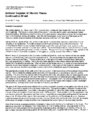
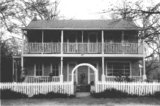
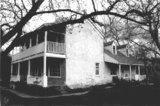
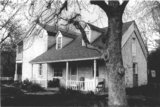
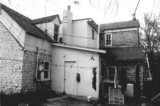
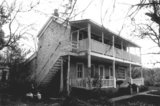
Show OMB No. 1024-0018, NPS Form United States Department of the Interior National Park Service National Register of Historic Places Continuation Sheet Section No. 8 Page 3 Jepson, James, Jr., House, Virgin, Washington County, UT drifted in, probably because of the site's isolation. Prospects were not attractive enough to encourage a large population. The first settlers lived in rock-lined dugouts; it wasn't until 1860 that the first public building, a log schoolhouse, was constructed. It was to this environment that the Jepsons arrived in 1862. James Jepson, Sr., and his wife, Eleanor were English converts to the Mormon church and immigrated to America, settling in Nauvoo, Illinois, in 1843. After serving a mission for the church in St. Louis, Missouri, the Jepsons moved to Utah in 1852, where the rest of the Saints (church members) had located. The Jepsons settled in an area north of Salt Lake City, known as Centerville, where James, Jr., was born on October 13,1854. Sometime later the family moved to Mill Creek, just south of Salt Lake City. Not long after this, on October 6,1862, James, Sr., received a call from Brigham Young to move to the Cotton Mission in southern Utah. One month later, after their house and land had sold, the Jepsons embarked on their relocation and, although James, Jr., was only eight years old, he assisted in driving the sheep and cattle on the 300-mile trek. They were not given a specific colony in which to settle so they chose Virgin, where they arrived in December. James, Sr., and Eleanor would spend the remainder of their lives here. As did most children of the era, James, Jr., spent his youth assisting his father in farming, growing fruit, and handling daily subsistence chores. When he was eighteen he went with a company of men to St. George, approximately twenty-five miles away, to assist on the construction of the Mormon temple. James spent a month on the project, helping the stonemasons and stone haulers. It is most likely here that he gained the experience he would need to construct his own dwelling. James, Jr., married Lucinda Stratton on December 26,1876. The following summer they began construction on this house. The following March, their first child, James Anthony, was born. Not long after this, the husband of James' sister, Eleanor, died and she moved into the house with the two Jepson families. After she remarried, she and her new husband continued to reside here. The Jepsons were a close family and it was with this intent that James, Jr., constructed such a large house. James, Sr., passed away in September 1882. At the time of his death he was serving as first counselor to the bishop8 of the Virgin Ward (similar to a parish). When the elder Jepson died, James, Jr., was called to fill his father's counselor position. Because the bishop was in poor health, much of his responsibility in overseeing the affairs of the ward was passed to James. Besides the spiritual and day-to-day responsibilities, James also boarded and entertained Mormon church authorities when they would make their frequent visits. By doing this he became well acquainted with the prominent leaders of the church. Along with this calling, he also served (without compensation) as school trustee and treasurer for twenty years and fourteen years respectively. On his many trips to St. George, James had often thought that the ground on the Hurricane Flat appeared to be a prime area to settle and farm. But, because of its location, it appeared almost impossible to get water to the land. Because the nearby Virgin River was in a deep gorge with solid sandstone cliffs, the possibility of settle in Utah's "Dixie" (as it came to be known) in order to raise cotton. Part of the Mormon concept of settling in the Utah Territory was to be as far as possible from the civilization that had dealt the church so much hardship and persecution. In order to succeed, the colonies had to be self sufficient, and cotton was a much-needed commodity. 8 Bishops not only served as spiritual leaders, but also as civic leaders, managing the temporal affairs of the population, particularly in remote settlements such as Virgin. |