| OCR Text |
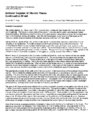
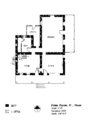
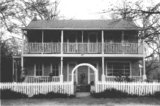
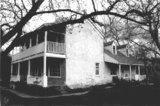
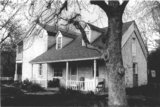
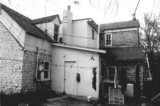
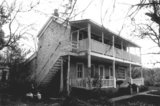
Show 0MB No. 1024-0018, NFS Form United States Department of the Interior National Park Service National Register of Historic Places Continuation Sheet Section No. 8 Page 1 Jepson, James, Jr., House, Virgin, Washington County, UT Narrative Statement of Significance The James Jepson, Jr., House, constructed in 1877, is significant under Criteria B and C. Under Criterion B it is significant for its association with James Jepson, Jr., an early civic and religious leader in the small settlement of Virgin, in southern Utah. James, Jr., is also credited with the inception and construction of the Hurricane Canal, which brought water to the Hurricane Bench in southern Utah and allowed settlement of this vast area that had previously lacked a water source and was uninhabitable. Once the water was made available to the area, Jepson resettled there and assisted in the development of the town of Hurricane, Utah. The house is also significant under Criterion C as one of the earliest and most unique examples of a stone, double-cell type dwelling in Virgin. The double-cell was rather common in Utah, although more so in the colonies in the southwestern portion of the state. The Jepson House is also the largest and best-preserved example in Virgin and in the surrounding area. 1 The house has received little alteration and is a contributing structure to the material history of Virgin. Architectural Significance By the time the twenty-two year old James Jepson, Jr., constructed this large, two-story house in Virgin, Utah, in 1877, he had lived in the small, remote settlement on and off for nearly fifteen years. In 1862, his father, James Jepson, Sr., was called2 by Brigham Young (as were several families) to serve in the southern Utah Cotton Mission, in a region known as Utah's "Dixie." They were one of the few families to settle in Virgin, along the banks of the Virgin River. At the time they settled, there were only a few families and a single public building: a schoolhouse constructed of cottonwood logs. The family lived in a tent and wagon while James, Sr., constructed an earth-fast dwelling of cedar poles set vertically into the ground with boards nailed to them to make walls. They lived in this dwelling for several years and upon being forced to move to nearby Rockville in 1866, because of skirmishes with the local Indian population, they dismantled the structure and moved it with them. Once they had rebuilt their home in Rockville, the Jepson family was almost immediately notified to move back to Virgin where a fort was to be constructed. So they completed the house-moving process once again. When the conflicts with the Indian population subsided, the Jepsons moved again, taking their house with them. This time they moved to farmland a mile outside of Virgin. But within a year, James, Sr., was called to serve as a counselor to the bishop of the Virgin Ward of the Church of Jesus Christ of Latter-day Saints (IDS or Mormon church). So for the fifth time the house was moved, to a spot near the meetinghouse in Virgin.3 The wood-frame structure served its purpose for several years, but as James, Jr., prepared for marriage it was obvious that the dwelling would be too small to house two families. So he designed a dwelling to be constructed that would be large enough for his family and his parents. He planned on constructing it of brick, but soon found that brick in the region was scarce and of poor quality. Fortunately, a ledge of blue limestone 1 Of the five extant double cells in Virgin, the Jepson House retains the best historical integrity. There is one other two-story example besides the Jepson House, the remaining three are single story houses and retain little historical integrity. 2 Because there is no paid clergy in the IDS church, people are called by the presiding authority to serve in various church positions including, at this time, serving missions within the territory in order to provide commodities such as cotton, iron, silk, etc., with which to trade among other settlements. 3 Layton J. Ott, "A Sketch of the Life of James Jepson, Jr.," (Garfield County, Utah: Federal Writers' Project, May 8,1939) pp.1-2,5. |