| OCR Text |
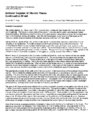
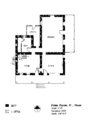
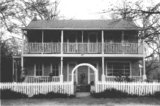
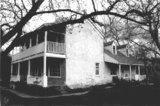
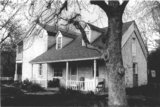
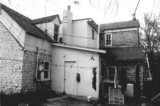
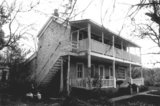
Show 0MB No. 1024-0018, NPS Form United States Department of the Interior National Park Service National Register of Historic Places Continuation Sheet Section No. 7 Page 1_ Jepson, James, Jr., House, Virgin, Washington County, UT Narrative Description The James Jepson, Jr., House, built in 1877, is a two-story, double-cell-type house with a rear eli and later lean-to addition. The house is constructed of limestone in a coursed-ashlar pattern and features modest classical detailing. Situated in a small rural town and surrounded by various kinds of trees, the setting retains much of its historical, vernacular feeling. Very little has been altered on the exterior of the house and it remains a contributing architectural and historical resource in the town of Virgin, Utah. Facing south on Jepson Street, the Jepson House with its coursed-ashlar limestone construction is quite imposing in its appearance. Full-width porches on both levels dominate the two-story front facade. The porches feature simple square, wooden columns that support the upper porch and upper porch roof; the columns on the main level rest on square wood plinths. Connected between the four sets of columns on both levels is a simple wooden balustrade of unturned lumber. The porch is original to the house and appears to be unaltered, except for possibly the plinths, which appear to possibly date from the 1910s or 1920s. Behind the porch, the facade is that of a classic double-cell dwelling - a six-bay format with the two central bays on both levels being entryways into separate rooms. The two doorways on the upper story provide access to the porch roof deck. The two window bays to the right of the main level have been connected to form one large window (c. 1940s). This is the only major alteration to the primary fagade and does little to detract from its historical appearance. Other windows on the house consist of a variety of types including twoover-two, double-hung wooden sashes on the original portion of the house (which retain the original wood trim), one-over-one, double-hung wooden sashes, and multiple divided-light, wood-framed sashes. The east fagade consists of the gable end of the main portion of the house along with the primary fagade of the rear ell. The ell is from the original construction date and now features a covered porch and two dormer windows. The ell is only one and one-half stories and the entire roof was raised a few feet (retaining the same gable pitch) to accommodate an attic room for which the dormers were constructed (probably c. 1940s when the interior of the house was divided into three sections). The original porch roof was also altered at this time to match the ell's roof slope. Also, one of the three windows on this fagade was enlarged to add a multi-light picture window, probably at the same time the front window was altered. The rear (north) fagade is the most altered with a partially blocked-in doorway on the gable end of the ell, and a c.1970s corner lean-to addition of wood-frame construction. This addition partially obscures the original rear lean-to of stone construction. Also visible is the raised roof of the ell with a flat-roofed bump-out room next to the rear of the main portion of the house (probably c. 1970s as well). These additions are also apparent on the west fagade, along with the exterior staircase, which is supported on juniper posts and ascends to the secondstory porch. Portions of the original chimneys remain on the gable ends of the primary structure. However, these have been shortened and a single concrete chimney flue added to the top of each. Over all, the integrity of the structure remains, except for a few minor alterations that occur mainly on the secondary facades. One other structure, a garage/workshop, is located on the property slightly to the northwest of the house. This appears to have been constructed in the 1950s and is not a contributing building. Although portions of the property have been parceled off, the surrounding landscape adds to the integrity and feeling of the site. An early orchard survives behind the property and the surrounding yard is planted with several mature, deciduous |