| OCR Text |
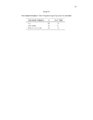
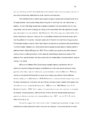
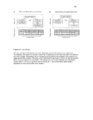
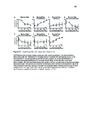
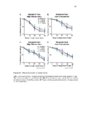
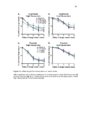
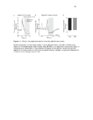
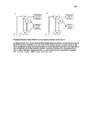
Show 55 each session, such that delay periods were 0.5, 10, 20, 30 and 40 s for blocks 1-5. When a lever associated with a delayed reward was chosen, the light above that lever remained illuminated until the reward was delivered. The immediate reward was always delivered 0.5 s after a rat made a lever press response. An omission was scored if no response was made on a given trial. All other task parameters were as described for the Large/Small Choice task. Drug testing (yohimbine, propranolol, guanfacine and prazosin; see below) began after animals displayed stable patterns of behavior on five consecutive sessions, as indicated using a repeated measures ANOVA for each rat, with day and delay as factors (no main effect of day, p > 0.05). Delay discounting reversal task. After drug testing in the standard delay discounting task, rats underwent training in the delay discounting reversal task. In this task, the length of the delay period preceding delivery of the large reward was reversed, such that the delay length decreased, rather than increased, within each session (Cardinal et al., 2000). All task parameters were identical to those described for the standard task, with the exception that delay periods for blocks 1-5 were successively 40, 30, 20, 10, and 0.5 s (Figure 3.1B). Drug testing (yohimbine and propranolol only; see below) was initiated when animals displayed stable patterns of behavior on five consecutive sessions. This reversal paradigm was used in combination with the standard discounting task to dissociate apparent drug effects on impulsivity from effects on behavioral flexibility. Decreased impulsivity in the standard discounting task is evident as an upward shift in the discounting curve (i.e., increased choice of the large delayed reward across the session). In the standard task, the large delayed reward was strongly preferred by all rats in the first block of trials, when the delay length was only 0.5 s (equal to that for the immediate reward). Thus, persistently elevated choice of the large reward across the session could result from drug-induced perseverative responding on the initially preferred lever, rather than increased tolerance of delay. The reversal paradigm allows these possibilities to be dissociated. Because the delay in the first block of trials is large, rats prefer the small immediate reward initially. Drug-induced perseverative behavior would thus |