| OCR Text |
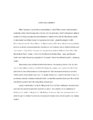
Show 14 Yohimbine. In order to address the first goal of this project-to examine the effects of stress on cognitive impulsivity-acute stress was modeled pharmacologically using the α2adrenergic receptor antagonist yohimbine, which potently induces behavioral and physiological stress-like responses in both animals and humans (e.g., Holmberg and Gershon, 1961; Lang and Gershon, 1963; Bremner et al., 1996). Like acute physiological stress, yohimbine increases firing of LC neurons (Crespi, 2009), resulting in increased noradrenaline release in brain regions mediating behavioral and cognitive responses to acute stress (Abercrombie et al., 1988; Forray et al., 1997; Khoshbouei et al., 2002; Garcia et al., 2004; Crespi, 2009). Compared with other models of acute stress, yohimbine was favorable for the present study because it robustly reinstates ethanol seeking in rats and is thus commonly used to model stress-induced relapse to alcohol seeking (e.g., Le et al., 2005; Dzung Le et al., 2009). Moreover, due to the long half life of yohimbine, it possible to ensure that the stressor was present throughout the duration of the behavioral session (Hubbard et al., 1988). Yohimbine has been shown to increase measures of motor impulsivity, which is characterized by the inability to withhold preplanned behavioral responses (Ma et al., 2003; Swann et al., 2005; Sun et al., 2010), but the effects of yohimbine on cognitive impulsivity have not been examined. Propranolol. The second goal of the project was to characterize the effects of additional noradrenergic receptor-specific manipulations on impulsivity. Propranolol, guanfacine, and prazosin were examined. Propranolol is a nonselective β-adrenergic receptor antagonist, which is safe in humans and may offer promise as a treatment for alcohol dependence. Propranolol decreases ethanol self-administration in rats, an effect that is most pronounced in rats made dependent by chronic exposure to ethanol vapor (Gilpin and Koob, 2010). Moreover, repeated administration of propranolol blocks reconsolidation of ethanol-associated memories (Wouda et al., 2010). Although studies investigating propranolol effects on ethanol-seeking behaviors are sparse, a broader literature of drugs of abuse provides evidence that propranolol offers promise as a therapy for the treatment of drug addiction. Propranolol blocks yohimbine-induced reinstatement of cocaine-seeking (Mantsch et al., 2010) and disrupts reconsolidation and retrieval |