| OCR Text |
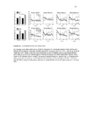
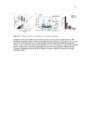
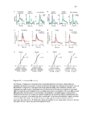
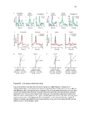
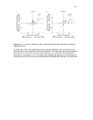
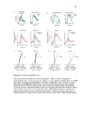
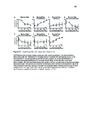
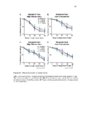
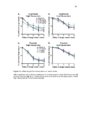
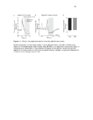
Show 31 responding preferentially to cues predicting either the more valuable (immediate/large) or less valuable (delayed/small) reward (Figure 2.4A, example responses in delay task; and Figure 2.4B, in size task). Neural responses to cues predicting reward are summarized in population histograms constructed from the average of all cue-responsive neurons (Figure 2.4C, delay task; Figure 2.4D, size task). In both tasks, the magnitude of the cue-evoked response after vehicle administration was slightly greater on trials associated with more valuable rewards (Figure 2.4CD, left panels, black lines) relative to less valuable rewards (Figure 2.4C-D, right panels). For all trial types, ethanol administration (red lines) decreased the magnitude of cue-evoked responses. To analyze value encoding in the population of NAcc neurons with cue-evoked responses, we determined if the distribution of selectivity indices was significantly shifted toward positive (indicating population-level encoding of the more valuable reward) or negative values (encoding of the less valuable reward). In the delay task, selectivity indices were significantly shifted toward positive values after vehicle administration (Figure 2.4E, vehicle, p < 0.05). That is, the population as a whole responded more robustly for immediate versus delayed rewards. Because cue-evoked NAcc responses have been reported to correlate with response latency (Roesch et al., 2009), we sought to examine potential contributions of cue-evoked encoding to behavioral responses. To do so, we calculated behavioral selectivity index value for each session, using lever press latencies for responding on immediate and delayed reward trials. This index was analogous to that calculated for neural firing, and resulted in values that were positive (approaching a maximum value of 1) when responding was faster for immediate rewards, and negative when responding was faster for delayed rewards (minimum approaching -1). This analysis showed that selectivity in cue-evoked neural responses was not correlated with selectivity in response latency (p = 0.8; data not shown). Thus while cue-evoked responses encoded anticipated value, this encoding appeared to be independent of the speed with which subsequent instrumental responding was executed. Ethanol administration abolished value encoding in cue-evoked responses (Figure 2.4E, ethanol, p = 0.3), reflected in a significant leftward shift in the distribution of selectivity indices |