| OCR Text |
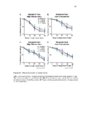
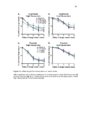
Show 9 containing medium spiny neurons (Chang and Kitai, 1985; O'Donnell and Grace, 1993), which project to motor output structures (Zahm, 2000). Thus, the NAcc is a critical component of the brain reward circuitry and is ideally situated to integrate limbic-related information and guide goaldirected behavioral output (Mogenson et al., 1980; Ikemoto and Panksepp, 1999). As such, the NAcc encodes information about both anticipated rewards and goal-directed behavior. The effects of ethanol on neuronal firing and dopamine release in the mesolimbic system may provide a neural mechanism by which choice of immediate reinforcers is promoted over choice of delayed reinforcers. The second goal of the project--to determine how ethanol alters encoding in this circuit during decision making--was addressed by focusing analysis on cue- and operant (lever press)evoked firing during a modified delay discounting task. Impulsive behavior occurs when animals fail to respond to cues predicting delayed rewards and respond instead to cues predicting immediate rewards (Tomie et al., 1998; Hellemans et al., 2005). These changes in behavior likely reflect differences in the perceived value of immediate versus delayed rewards. As cue-evoked NAcc firing encodes value representation of expected rewards, I addressed the hypothesis that ethanol selectively decreases cue-evoked NAcc firing on delayed reward trials. As discussed in Chapter 2, ethanol caused a loss of cue-evoked value encoding of anticipated rewards. Second, I analyzed lever press-evoked firing, as operant-related firing has been proposed to invigorate specific behavioral responses (Cardinal et al., 2002). A selective decrease in lever press-evoked firing for delayed rewards was observed, and this was accompanied by a selective increase in lever press latency for delayed rewards. These effects of ethanol on encoding goal-directed behaviors may contribute to ethanol-induced impulsivity. The effects of ethanol on the mesolimbic system may mediate impaired decision making during acute intoxication, as well as contribute to compulsive alcohol-seeking and -taking, which are characteristic of alcoholism. Specifically, short-term changes in neuronal firing resulting from acute ethanol administration may bias individuals toward continued alcohol consumption over the long-term benefits of not drinking. These processes may contribute to binge drinking or loss-ofcontrol drinking, which are risk-factors for the development of alcoholism (Jennison, 2004). Thus, |