| OCR Text |
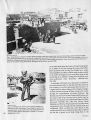
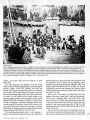
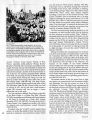
Show 7WWJ r l o t p kWa Koyemshi accompany kachina dancers from their kivas to public outdoor performances, where they prov.de cues for dancers and clown for the audience during intermissions. Photograph by Ben Wittick, probably 1890s. 504 Smithsonian, NAA. Fig. 5. A member of the newe-kwe 'Clown People', dressed and painted for a public performance. Clown People, in contrast with Koyemshi (fig. 4), use face paint rather than masks and favor tattered non-Indian clothing. Photograph by Matilda C. Stevenson, probably Jan. 8, 1909. on the other hand, know the mastery of cold, breaking the ice to bathe in the river during the winter (ibid.:452). Both the Sword and the Big Fire People have orders whose members are able to swallow long wooden swords or the trunks of Douglas firs cut to the same shape as the swords (fig. 6); in addition, the Big Fire People have an arrow-swallowing order (Stevenson 1904:466-485, 504-520). Knowledge of the kinds so far discussed is available to the society member either at the time of his first initiation into a society or as a first step beyond that initiation. At a higher level are orders with powerful curing knowledge. In three societies the "power of these curing orders comes through the impersonation of eastern kachinas: Big Kachina and mito tasa for the Clowns; Big Kachina (not the same as that of the Clowns), sicwka, and kwelele for Big Fire; and the sume-kuli and Horned Ones for Helix (Stevenson 1904:429, 485, 530). The Uhuhu, Snake Medicine, and Red Ant People each have an order whose curing powers come through red ants, horned toads, and rattlesnakes. When a patient has a sore throat or skin troubles caused by ants, members of this order are able to see the bits of gravel in his body, bring them to the TEDLOCK |