| OCR Text |
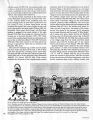
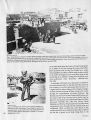
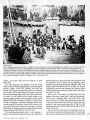
Show dir) (Stevenson 1915:89). The 9uwanammi usually come to Zuni on winds from the southwest or southeast; their winter counterparts are the suniya-siwani 'snow priests', who come from the northeast and northwest (Stevenson 1904:21, 445; Tedlock 1965-1966:H-1). To the east of Zuni, somewhere in the vicinity of the Sandia Mountains, is sipa-puli9ma, the home of the 9ona-ya- naka ^a'siwani 'priests of the completed path', who possess healing herbs. At their head isposaya-nk^i; his bow priests or wema- ^a-siwani 'beast priests' are the mountain lion (north), bear (west), badger (south), wolf (east), eagle (zenith), and mole (nadir) (Cushing 1883:16). Sometimes 9aciya latapa 'Knife Wing', with flint-blade feathers, is assigned to the zenith instead of the eagle (Bunzel 1932c:784); the morning star is his head and the evening star is his heart (Benedict 1935, 2:97). Other priests of the completed path include the rattlesnakes and ants of the six directions (Bunzel 1932c:829; Stevenson 1904:529). When these animals or the beast priests die they go to sipa-pulPma, where they are restored to life (Benedict 1935, 2:34). The kokko-kwe 'kachinas' (sg. kokko) are raw people who wear masks and dance all the time. A few of them come from sipa'puli^ma, including sicwka and kwelele, who bring new fire at the new year, and the six sume'kuli, whose masks are in the six directional colors (Stevenson 1904:407, 531; Bunzel 1932:923-924). These eastern kachinas, like the priests of the completed path, possess medicines. Most of the other kachinas live in the west at Kachina Village, at the bottom of a lake at a two days' walk from Zuni; there they sing and pray for rain and the growth of crops. The komoss9ona 'kachina chief of their village is the tall and stately pawtiwa; his spokesmen are the stubborn cripple kaklo and the young fire god sula-wici (Bunzel 1932:845, 909, 958). The k9akwa-mossi 'house chiefs' of Kachina Village are the 10 koyemshi (koyemsi, popularly called mudheads), who are at one and the same time the silliest and most dangerous of the kachinas (ibid.:947, 951). The kachina bow priests include saya tasa 'Long Horn', who speaks of the winter; hwtutu, who speaks of the summer; the 12 salimopiya (two for each direction) and four sayati^a 'Blue Horns', all of whom carry yucca whips; and the six Shalakos (sa9lako), who are 10-foot-high couriers (fig. 1) (Bunzel 1932c:719, 1932:920-922, 937, 989). The ordinary people of the village range from the kindly kokk9oksi 'good kachina' and kokkwe9le 'kachina girl' to the clumsy hehe^a and the lazy ya*>9ana (Bunzel 1932:1012-1041). Kachina Village is also a home for the nawe 'hoofed game animals'. At least some kachinas become nawe when they die, and when nawe themselves die they go to Kachina Village and are restored there (Benedict 1935, 1:72, 77, 2:70-71; Tedlock 1972:32), just as the beast priests are restored at sipa-puli?ma. And like the beast priests, the nawe have directional assignments: mule deer (north), mountain sheep (west), antelope (south), and mi % fy-ffy^if ' • ' • • ' ' * w * "•'*. '• .. ":,~ L 500 left, Mus. of Northern Ariz., Flagstaff; right, Mus. of N.M., Santa Fe. Fig. 1. Shalakos, couriers for the priests of Kachina Village, left, Zuni Shalako and Man, by Theodore Edaakie, Zuni artist, right, Shalakos crossing the Zuni River to the ceremonial grounds south of the old part of town. Each Shalako is accompanied by an alternate impersonator and by members of the particular curing society to whose music it danced throughout the previous night (the upright object carried by the man in the lead is the badge of membership in a curing society). When all 6 Shalakos and their alternates have reached the ceremonial grounds, they will run back and forth over a race course, planting feathered offering-sticks (such as those held by the second man) for the general well-being and fecundity of the villagers and their animals and crops. This ceremony takes place in late Nov. or early Dec. of each year. Photograph by Ben Wittick, probably in 1896. TEDLOCK |