| OCR Text |
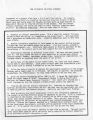
Show HOW TO DEVELOP POLITICAL STRENGTH Proponents of a project often have a lot of political muscle. For example, the Conservancy Districts promoting the Garrison Diversion Project in North Dakota have had taxing power for decades and have built up huge reserves of money which they use to sing the praises of the project. How can average citizens counteract the wealth and power of those interests promoting water projects? By effective organizing. Here are some steps to follow: 1. Organize an official opposition group. Pick a name (for example "Citizens United to Save the Valley" or "Committee on the Green River"). Get stationery and a letterhead and membership cards. Establish membership dues to help fund your efforts. 2. Develop information pamphlets or fact sheets on the project telling average citizens why they too should oppose the project. List your reasons-economic, social, environmental, etc. Distribute these widely to increase awareness of the shortcomings of the project and to get more support for your organization. 3. Hold regular meetings to formulate action plans. Get more and more groups to join in. You must expand the base of your opposition to include many diverse interest groups-farmers, sportsmen, garden clubs, conservation organizations, etc. Everyone should be concerned about the waste of tax dollars. 4. Get to know all the media in your state-radio, TV, state and local papers. Invite them to your meetings. Issue press releases when your organization plans some action such as sending a delegation to see the Governor. 5. Enlist the help of experts to analyze the questionable economics of the project. Release such a report when it is finished. Get experts to question the projects assumptions, its effectiveness, its long range effects on the tax base, etc. 6. Write the General Accounting Office (GAO) at 441 G Street NW, Washington, D.C. 20548 for report number B-l67941 "Improvements Needed in Making Benefit-Cost Analyses for Federal Water Resources Projects." This report will provide you a brief introduction into the economic sleight-of-hand used by the agencies. 7. Find out who the real project supporters are. Sometimes by checking land holdings and business associations you will see that they are speculators who stand to make big profits from federal projects. Publicize any significant findings. 8. Work to educate your local Congressman if he is not irrevocably committed to the project by getting different groups of opponents to see him. If he is irrevocably committed to the project, you will probably not be able to stop the project unless some unique national resource is at stake. Thus, you will have to find someone opposed to the project to run against your present Congressman in the next election. Because the Congress operates on a "Congressional courtesy" basis, not on the facts about the project, a project will be approved if the local Congressman wants it. If he opposes the project, Congress will not go over his head. 9. Get as many state and federal agencies on your side as you can. The next section tells about those agencies which can assist you by opposing the project themselves or by providing valuable information to you. |