| Title |
Calvin P. Rudd, East Mill Creeky, Utah: an interview by Becky B. Lloyd, June 7, 2001: Saving the Legacy tape nos. 253 & 254 |
| Alternative Title |
Calvin Rudd, Saving the legacy: an oral history of Utah's World War II veterans, ACCN 2070, American West Center, University of Utah |
| Creator |
Rudd, Calvin, 1923- |
| Contributor |
Lloyd, Becky B.; University of Utah. American West Center |
| Publisher |
Digitized by J. Willard Marriott Library, University of Utah |
| Date |
2001-06-07 |
| Date Digital |
2015-12-16 |
| Access Rights |
I acknowledge and agree that all information I obtain as a result of accessing any oral history provided by the University of Utah's Marriott Library shall be used only for historical or scholarly or academic research purposes, and not for commercial purposes. I understand that any other use of the materials is not authorized by the University of Utah and may exceed the scope of permission granted to the University of Utah by the interviewer or interviewee. I may request permission for other uses, in writing to Special Collections at the Marriott Library, which the University of Utah may choose grant, in its sole discretion. I agree to defend, indemnify and hold the University of Utah and its Marriott Library harmless for and against any actions or claims that relate to my improper use of materials provided by the University of Utah. |
| Spatial Coverage |
Philippines; Borneo; China; Indochina |
| Subject |
Rudd, Calvin, 1923- --Interviews; Veterans--Utah--Biography; World War, 1939-1945--Personal narratives, American; American; World War, 1939-1945--Aerial operations, American; World War, 1939-1945--Campaigns--Pacific Area--Personal narratives, American |
| Keywords |
Army Air Corps; Lingayen Gulf invasion |
| Description |
Transcript (57 pages) of an interview by Becky B. Lloyd with Calvin P. Rudd on June 7, 2001. From tape numbers 253 and 254 in the "Saving the Legacy" Oral History Project |
| Collection Number and Name |
Accn2070, Saving the Legacy oral history project, 2001-2010 |
| Abstract |
Rudd was born on 7 November 1923 in Salt Lake City, Utah. He joined the Army Air Corps in December 1942 and trained in Nebraska, California, Arizona, and Washington prior to being assigned to a P-38 squadron in the Pacific Theater. He participated in the battle at Lingayen Gulf and the battlle of Borneo. He also flew missions into China and French Indochina. He was discharged in 1946, but stayed in the Reserves for several years. Interviewed by Becky Lloyd. 57 pages. |
| Type |
Text |
| Genre |
oral histories (literary works) |
| Format |
application/pdf |
| Extent |
57 pages |
| Language |
eng |
| Rights |
 |
| Scanning Technician |
Mazi Rakhsha |
| Conversion Specifications |
Original scanned with Kirtas 2400 and saved as 400 ppi uncompressed TIFF. PDF generated by Adobe Acrobat Pro X for CONTENTdm display |
| ARK |
ark:/87278/s6hx3frv |
| Topic |
Personal narratives--American; Veterans; World War (1939-1945); Military operations, Aerial--American |
| Setname |
uum_slohp |
| ID |
1035505 |
| Reference URL |
https://collections.lib.utah.edu/ark:/87278/s6hx3frv |
| Title |
Page 50 |
| Format |
application/pdf |
| Setname |
uum_slohp |
| ID |
1035497 |
| OCR Text |
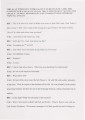
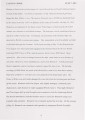
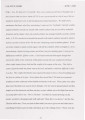
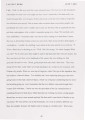
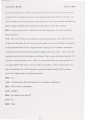
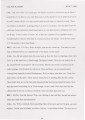
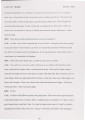
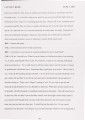
Show CALVI P. R DD J 7 2 01 guess you could say. But, being in con1bat and actually shooting at n1 body wh wa shooting at me ... it's a terrible thing to say and I'm not sure I can pull the right word out of the hat for you. There isn't anything quite like that. When I talk to my squadron mate at reunions and the like, you know, we talk a lot becaus~ we're on the same wavelength. But it's too hard for me to try and tell somebody else about that. So really, I'm kind of a dull conversationalist (laughs), which my wife reminds me of from time to time. But there were good moments, some of which don't maybe fit the usual mold. BEC: Repeat that again. CAL: Some moments don't fit the usual mold. BEC: You mean, if you told me it would be difficult for me to understand? CAL: Oh, no. I can tell you. When I was at Ontario in California as part of our training we, in effect, guarded the West Coast. We would be, as part of our training, racking up time and experience. We would check in with the radar stations an.d the people in charge of guarding the California coast. Sometimes they would give us a vector. That is, they 'd say, "Take up this heading and go out there." So we'd fly out to sea and sometimes we'd get a radio call and they'd say that at such-and such a heading there was an unknown aircraft coming in. There was a "Bogie" coming in, see? So we were to go out and _ intercept it and determine if it was friendly or otherwise. Well, they always turned out to be friendly: aircraft transport or somebody coming from Honolulu. They all turned out to be that way. But we didn't know that they would. Now this might sound really dumb to you, maybe, but I thought that was one of the better moments for me because usually there was just me and one other guy. It would be just the pair of us. It was a good moment for me because I was the guy to go out and intercept whatever was coming and if 50 |
| Reference URL |
https://collections.lib.utah.edu/ark:/87278/s6hx3frv/1035497 |