| Title |
Calvin P. Rudd, East Mill Creeky, Utah: an interview by Becky B. Lloyd, June 7, 2001: Saving the Legacy tape nos. 253 & 254 |
| Alternative Title |
Calvin Rudd, Saving the legacy: an oral history of Utah's World War II veterans, ACCN 2070, American West Center, University of Utah |
| Creator |
Rudd, Calvin, 1923- |
| Contributor |
Lloyd, Becky B.; University of Utah. American West Center |
| Publisher |
Digitized by J. Willard Marriott Library, University of Utah |
| Date |
2001-06-07 |
| Date Digital |
2015-12-16 |
| Access Rights |
I acknowledge and agree that all information I obtain as a result of accessing any oral history provided by the University of Utah's Marriott Library shall be used only for historical or scholarly or academic research purposes, and not for commercial purposes. I understand that any other use of the materials is not authorized by the University of Utah and may exceed the scope of permission granted to the University of Utah by the interviewer or interviewee. I may request permission for other uses, in writing to Special Collections at the Marriott Library, which the University of Utah may choose grant, in its sole discretion. I agree to defend, indemnify and hold the University of Utah and its Marriott Library harmless for and against any actions or claims that relate to my improper use of materials provided by the University of Utah. |
| Spatial Coverage |
Philippines; Borneo; China; Indochina |
| Subject |
Rudd, Calvin, 1923- --Interviews; Veterans--Utah--Biography; World War, 1939-1945--Personal narratives, American; American; World War, 1939-1945--Aerial operations, American; World War, 1939-1945--Campaigns--Pacific Area--Personal narratives, American |
| Keywords |
Army Air Corps; Lingayen Gulf invasion |
| Description |
Transcript (57 pages) of an interview by Becky B. Lloyd with Calvin P. Rudd on June 7, 2001. From tape numbers 253 and 254 in the "Saving the Legacy" Oral History Project |
| Collection Number and Name |
Accn2070, Saving the Legacy oral history project, 2001-2010 |
| Abstract |
Rudd was born on 7 November 1923 in Salt Lake City, Utah. He joined the Army Air Corps in December 1942 and trained in Nebraska, California, Arizona, and Washington prior to being assigned to a P-38 squadron in the Pacific Theater. He participated in the battle at Lingayen Gulf and the battlle of Borneo. He also flew missions into China and French Indochina. He was discharged in 1946, but stayed in the Reserves for several years. Interviewed by Becky Lloyd. 57 pages. |
| Type |
Text |
| Genre |
oral histories (literary works) |
| Format |
application/pdf |
| Extent |
57 pages |
| Language |
eng |
| Rights |
 |
| Scanning Technician |
Mazi Rakhsha |
| Conversion Specifications |
Original scanned with Kirtas 2400 and saved as 400 ppi uncompressed TIFF. PDF generated by Adobe Acrobat Pro X for CONTENTdm display |
| ARK |
ark:/87278/s6hx3frv |
| Topic |
Personal narratives--American; Veterans; World War (1939-1945); Military operations, Aerial--American |
| Setname |
uum_slohp |
| ID |
1035505 |
| Reference URL |
https://collections.lib.utah.edu/ark:/87278/s6hx3frv |
| Title |
Page 21 |
| Format |
application/pdf |
| Setname |
uum_slohp |
| ID |
1035468 |
| OCR Text |
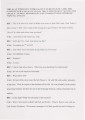
Show ALVI P. R DD J 7 2 1 CAL: Y s. We had old P-39 aircraft. They were combat aircraft they d brought back. I don't know what you know about a P-39. It was a great aircraft in a lot of ways. But w needed to learn how to fly it and we had poorly trained mechanics. We didn't have mechanics that knew what they were doing. I came out of a "hydraulic" aircraft, a radialengine hydraulic aircraft (an aircraft with control surfaces that are moved by hydraulic actuators and an engine where air-cooled cylinders are arranged radially around a central hub.). A P-39 is an electrical aircraft (an aircraft with control surfaces moved by electric motors, an early version of the "fly-by-wire" technology used in modem planes). It had an in-line engine (a liquid-cooled engine with all the cylinders within arranged in a row), necessitating a liquid cooling system, and it had a tricycle (landing) gear. It was just as different as could be. [Editor 's note: P-39s had an unusual mid-engine design that moved the whole center of gravity of the plane towards the rear compared with most other single engine planes that had the weight of the engine in the nose. This shift in center of gravity made the plane want to fly level and made it relatively difficult to hold in a dive. The weight distribution also required the plane to have a tricycle landing gear, the first in a plane of its type. Soviet pilots discovered that P-39s had an occasional tendency to enter a flat spin when loaded too heavily to the rear. These spins were often fatal since the plane was used at lower altitudes.] So we went to ground school and they taught us in the classroom and then one day we just walked out to the flight line and an Air Corps pilot said to me, "Get in. Sit there." And then he started pointing out the clocks, you know, the gauges and stuff, and said, "Okay this is so-and-so," and the like. Then he said to me, "Now you just sit there until your nerve gives out and either shove everything forward or get out and come back, go to the walking Army." Those were the 21 |
| Reference URL |
https://collections.lib.utah.edu/ark:/87278/s6hx3frv/1035468 |