| Title |
Calvin P. Rudd, East Mill Creeky, Utah: an interview by Becky B. Lloyd, June 7, 2001: Saving the Legacy tape nos. 253 & 254 |
| Alternative Title |
Calvin Rudd, Saving the legacy: an oral history of Utah's World War II veterans, ACCN 2070, American West Center, University of Utah |
| Creator |
Rudd, Calvin, 1923- |
| Contributor |
Lloyd, Becky B.; University of Utah. American West Center |
| Publisher |
Digitized by J. Willard Marriott Library, University of Utah |
| Date |
2001-06-07 |
| Date Digital |
2015-12-16 |
| Access Rights |
I acknowledge and agree that all information I obtain as a result of accessing any oral history provided by the University of Utah's Marriott Library shall be used only for historical or scholarly or academic research purposes, and not for commercial purposes. I understand that any other use of the materials is not authorized by the University of Utah and may exceed the scope of permission granted to the University of Utah by the interviewer or interviewee. I may request permission for other uses, in writing to Special Collections at the Marriott Library, which the University of Utah may choose grant, in its sole discretion. I agree to defend, indemnify and hold the University of Utah and its Marriott Library harmless for and against any actions or claims that relate to my improper use of materials provided by the University of Utah. |
| Spatial Coverage |
Philippines; Borneo; China; Indochina |
| Subject |
Rudd, Calvin, 1923- --Interviews; Veterans--Utah--Biography; World War, 1939-1945--Personal narratives, American; American; World War, 1939-1945--Aerial operations, American; World War, 1939-1945--Campaigns--Pacific Area--Personal narratives, American |
| Keywords |
Army Air Corps; Lingayen Gulf invasion |
| Description |
Transcript (57 pages) of an interview by Becky B. Lloyd with Calvin P. Rudd on June 7, 2001. From tape numbers 253 and 254 in the "Saving the Legacy" Oral History Project |
| Collection Number and Name |
Accn2070, Saving the Legacy oral history project, 2001-2010 |
| Abstract |
Rudd was born on 7 November 1923 in Salt Lake City, Utah. He joined the Army Air Corps in December 1942 and trained in Nebraska, California, Arizona, and Washington prior to being assigned to a P-38 squadron in the Pacific Theater. He participated in the battle at Lingayen Gulf and the battlle of Borneo. He also flew missions into China and French Indochina. He was discharged in 1946, but stayed in the Reserves for several years. Interviewed by Becky Lloyd. 57 pages. |
| Type |
Text |
| Genre |
oral histories (literary works) |
| Format |
application/pdf |
| Extent |
57 pages |
| Language |
eng |
| Rights |
 |
| Scanning Technician |
Mazi Rakhsha |
| Conversion Specifications |
Original scanned with Kirtas 2400 and saved as 400 ppi uncompressed TIFF. PDF generated by Adobe Acrobat Pro X for CONTENTdm display |
| ARK |
ark:/87278/s6hx3frv |
| Topic |
Personal narratives--American; Veterans; World War (1939-1945); Military operations, Aerial--American |
| Setname |
uum_slohp |
| ID |
1035505 |
| Reference URL |
https://collections.lib.utah.edu/ark:/87278/s6hx3frv |
| Title |
Page 19 |
| Format |
application/pdf |
| Setname |
uum_slohp |
| ID |
1035466 |
| OCR Text |
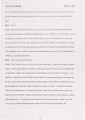
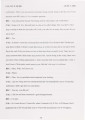
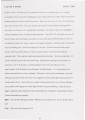
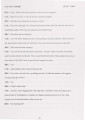
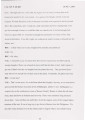
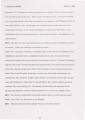
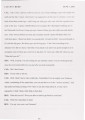
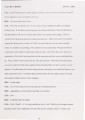
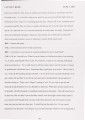
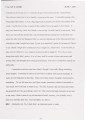
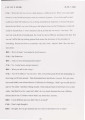
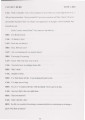
Show ALVIN P. R DD J 7 2001 [Editor's note: The Boeing AT-6 Advanced trainer wa a sing! engine, low winged monoplane with retractable landing gear and a single enclosed cockpit which hou ed two tandem seats for a cadet and his instructor. There was provision for one .30 cal machine gun. One version of the AT-6 saw action as forward air control planes during Korea. Since the war, because of a superficial resemblance, AT-6s have often been modified to portray Japanese Zeros in Hollywood productions. The Bell P-39 Airacobra was one of the principal American fighter aircraft in service at the start of World War II It was a streamlined single seat, single engine, low-winged monoplane, and featured a retractable tricycle landing gear, which was unique for the time. It had an unusual mid-engine design, which accommodated a 3 7 mm co-axial cannon, which fired through the propeller hub. The propeller shaft ran between the pilots legs. It also carried four .50 caliber machine guns in the nose and wings. Although its mid-engine placement was innovative, the P-39 design was handicapped by the lack of an efficient turbosupercharger, which limited its performance at high altitude. As a consequence the plane performed best at lower altitudes. The plane, with it potent armament, was used with great success by the Soviet Air Force against German Luftwaffe and ground forces on the eastern front. Most of the air combat on the eastern front was at lower altitudes since neither side engaged in much high-altitude strategic bombing.] That was not a happy experience all around but at the end of that time, I did get to come home on leave. I came home and got engaged. BEC: Oh. Let me interrupt you here. Where are we in time now? Are we at the end of '43? CAL: This was in the spring of '44. 19 |
| Reference URL |
https://collections.lib.utah.edu/ark:/87278/s6hx3frv/1035466 |