| Title |
Calvin P. Rudd, East Mill Creeky, Utah: an interview by Becky B. Lloyd, June 7, 2001: Saving the Legacy tape nos. 253 & 254 |
| Alternative Title |
Calvin Rudd, Saving the legacy: an oral history of Utah's World War II veterans, ACCN 2070, American West Center, University of Utah |
| Creator |
Rudd, Calvin, 1923- |
| Contributor |
Lloyd, Becky B.; University of Utah. American West Center |
| Publisher |
Digitized by J. Willard Marriott Library, University of Utah |
| Date |
2001-06-07 |
| Date Digital |
2015-12-16 |
| Access Rights |
I acknowledge and agree that all information I obtain as a result of accessing any oral history provided by the University of Utah's Marriott Library shall be used only for historical or scholarly or academic research purposes, and not for commercial purposes. I understand that any other use of the materials is not authorized by the University of Utah and may exceed the scope of permission granted to the University of Utah by the interviewer or interviewee. I may request permission for other uses, in writing to Special Collections at the Marriott Library, which the University of Utah may choose grant, in its sole discretion. I agree to defend, indemnify and hold the University of Utah and its Marriott Library harmless for and against any actions or claims that relate to my improper use of materials provided by the University of Utah. |
| Spatial Coverage |
Philippines; Borneo; China; Indochina |
| Subject |
Rudd, Calvin, 1923- --Interviews; Veterans--Utah--Biography; World War, 1939-1945--Personal narratives, American; American; World War, 1939-1945--Aerial operations, American; World War, 1939-1945--Campaigns--Pacific Area--Personal narratives, American |
| Keywords |
Army Air Corps; Lingayen Gulf invasion |
| Description |
Transcript (57 pages) of an interview by Becky B. Lloyd with Calvin P. Rudd on June 7, 2001. From tape numbers 253 and 254 in the "Saving the Legacy" Oral History Project |
| Collection Number and Name |
Accn2070, Saving the Legacy oral history project, 2001-2010 |
| Abstract |
Rudd was born on 7 November 1923 in Salt Lake City, Utah. He joined the Army Air Corps in December 1942 and trained in Nebraska, California, Arizona, and Washington prior to being assigned to a P-38 squadron in the Pacific Theater. He participated in the battle at Lingayen Gulf and the battlle of Borneo. He also flew missions into China and French Indochina. He was discharged in 1946, but stayed in the Reserves for several years. Interviewed by Becky Lloyd. 57 pages. |
| Type |
Text |
| Genre |
oral histories (literary works) |
| Format |
application/pdf |
| Extent |
57 pages |
| Language |
eng |
| Rights |
 |
| Scanning Technician |
Mazi Rakhsha |
| Conversion Specifications |
Original scanned with Kirtas 2400 and saved as 400 ppi uncompressed TIFF. PDF generated by Adobe Acrobat Pro X for CONTENTdm display |
| ARK |
ark:/87278/s6hx3frv |
| Topic |
Personal narratives--American; Veterans; World War (1939-1945); Military operations, Aerial--American |
| Setname |
uum_slohp |
| ID |
1035505 |
| Reference URL |
https://collections.lib.utah.edu/ark:/87278/s6hx3frv |
| Title |
Page 24 |
| Format |
application/pdf |
| Setname |
uum_slohp |
| ID |
1035471 |
| OCR Text |
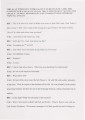
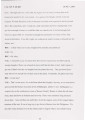
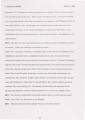
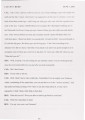
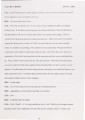
Show LVIN P. R DD J 7 2001 Th y imn1 diately got hot (laughs). So we'd take off and wed drop ffth nd fth strip. We d drop off, like that [demonstrates], down because the lake wa down ther . During that drop off, we'd stick the nose down and keep it alive, picking up a little air speed, enough to keep it in the air. But when we got to Ontario everything changed. It was a high-class base, really. Everything was done, really, with style and we had good instructors and good aircraft, especially compared to Moses Lake and Victorville. BEC: Why was that? What was the Moses Lake deal? Were they really training you to fly these or it almost sounds like they were killing 'time until they could get you to this other place. Is that true? CAL: I don't know about that. See, you're trying to use logic (laughs). BEC: (laughs) I know. CAL: You've just simply never been in the military. BEC: I know. People tell me that all the time: "It's the Army. It doesn't have to make sense." CAL: But, they did not use P-39s much in combat, I mean, they didn't continue to send P-39s. We had P-39s in combat early in the war but they-it was a low altitude aircraft and it was used by the Russians. At Moses Lake we were training we learned how to fly P-39s. We learned how to fly an Allison engine. We learned a whole lot of things. BEC: That were applicable to the P-38 when you got there? CAL: Well, they were useful. Same engine, essentially. So there were a lot of good things but I probably had more fun up there. BEC: At Moses Lake? 24 |
| Reference URL |
https://collections.lib.utah.edu/ark:/87278/s6hx3frv/1035471 |