| Title |
John Reed, Salt Lake City, Utah: an interview by John C. Worsencroft, November 2, 2009: Saving the Legacy tape no. IA-18 |
| Alternative Title |
John Reed, Saving the legacy: an oral history of Utah's World War II veterans, ACCN 2070, American West Center, University of Utah |
| Creator |
Reed, John, 1951- |
| Contributor |
Worsencroft, John C., 1981-; University of Utah. American West Center |
| Publisher |
Digitized by J. Willard Marriott Library, University of Utah |
| Date |
2009-11-02 |
| Date Digital |
2015-12-16 |
| Access Rights |
I acknowledge and agree that all information I obtain as a result of accessing any oral history provided by the University of Utah's Marriott Library shall be used only for historical or scholarly or academic research purposes, and not for commercial purposes. I understand that any other use of the materials is not authorized by the University of Utah and may exceed the scope of permission granted to the University of Utah by the interviewer or interviewee. I may request permission for other uses, in writing to Special Collections at the Marriott Library, which the University of Utah may choose grant, in its sole discretion. I agree to defend, indemnify and hold the University of Utah and its Marriott Library harmless for and against any actions or claims that relate to my improper use of materials provided by the University of Utah. |
| Spatial Coverage |
Kuwait; Iraq |
| Subject |
Reed, John, 1951- --Interviews; Veterans--Utah--Biography; Iraq War, 2003-2011--Personal narratives, American |
| Description |
Transcript (58 pages) of an interview by John C. Worsencroft with John Reed on November 2, 2009. From tape number IA-18 in the "Saving the Legacy" Oral History Project |
| Collection Number and Name |
Accn2070, Saving the Legacy oral history project, 2001-2010 |
| Abstract |
Reed (b. 1951) was born in San Antonio, Texas. He discusses his family and recalls his experiences at Occidental College during the Vietnam War, his feelings and thoughts about the war, and serving in the military. He joined the Army Reserves in 1982, drilling with a unit out of Santa Barbara, California, until his move to Inactive Reserves in 1995. In 2000, he and his family moved to Salt Lake City, Utah, where he returned to active status when he joined the 96th Regional Readiness Command at Fort Douglas as historian with the 96th Infantry Division Association. In April 2007 he was deployed to Iraq. He discusses the impact of his deployment on himself and his family. He received Military Transition Team Training (MITT) at Fort Riley. His unit arrived in-country in July. He served with the 104th Training command, working with the Multi-National Security Transition Command-Iraq (MNSTC-1), assisting with Iraqi reconstruction projects. He describes his activities, experiences and duties in Iraq, including his travel through the region with reconstructions inspectors to project sites. He was released from duty after nearly nine months of service in Iraq. He describes the thoughts, feelings, and challenges associated with his return home. John retired as a lieutenant colonel in the Army. He is currently an adjunct professor at the University of Utah. Interviewed by John C. Worsencroft. 58 pages. |
| Type |
Text |
| Genre |
oral histories (literary works) |
| Format |
application/pdf |
| Extent |
58 pages |
| Language |
eng |
| Rights |
 |
| Scanning Technician |
Mazi Rakhsha |
| Conversion Specifications |
Original scanned with Kirtas 2400 and saved as 400 ppi uncompressed TIFF. PDF generated by Adobe Acrobat Pro X for CONTENTdm display |
| ARK |
ark:/87278/s6vx2jng |
| Topic |
Personal narratives--American; Veterans; Iraq War (2003-2011) |
| Setname |
uum_slohp |
| ID |
1035034 |
| Reference URL |
https://collections.lib.utah.edu/ark:/87278/s6vx2jng |
| Title |
Page 24 |
| Format |
application/pdf |
| Setname |
uum_slohp |
| ID |
1034998 |
| OCR Text |
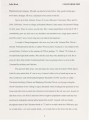
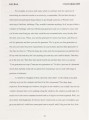
Show John Reed 2 B R 2 09 quintessentially masculine success experiences and the Reserve gave me that. Id n t know what guys are doing for that now. I guess they're just riding mountain bike down the side of sheer rock faces. I guess that's what they do to be young men. But I just personally found that virtually every experience I had, once I went to the field, was sweet. And some of that, then, comes out of the deployment. Towards the end of my time in Baghdad when people are looking at me and including me within the rubric of somebody who knows what he's doing, it's like that same feeling I had in my early thirties. JCW: You talk about being happy, relieved, glad that you don't have to brush up against these working class men in Vietnam. But you come out of the '70's guilty; you come out of the '70's wishing you had done it. Was it working with Vietnam veterans in the '70's? How do you think your mindset changed so in the early 1980's you decide you have to go join the military? JR: Well, I dealt with a lot of these Vietnam vets and for some reason when I came into contact with them in a legitimate sort of work way, they would include me within their circle. Some of these guys had incredible stories. I remember once going out to an exotic dance place in, I think it was Fresno, California. These guys, I'm in my late 20's, so I want to pivot my head over and look at the gals dancing, but I couldn't, I was just transfixed by these guys. They began showing their wounds, which is like something out of medieval Europe. One guy shows a scar on his back or s~oulder. I remember another guy saying, "That ain't shit. Take a look at this." And he yanks his shirt up in the middle of this bar and he literally has two or three ribs missing on one side-I forget which one. He says, "Well, I was in a five-ton cargo truck driving stuff to Khe Sanh and a little 23 |
| Reference URL |
https://collections.lib.utah.edu/ark:/87278/s6vx2jng/1034998 |