| Title |
John Reed, Salt Lake City, Utah: an interview by John C. Worsencroft, November 2, 2009: Saving the Legacy tape no. IA-18 |
| Alternative Title |
John Reed, Saving the legacy: an oral history of Utah's World War II veterans, ACCN 2070, American West Center, University of Utah |
| Creator |
Reed, John, 1951- |
| Contributor |
Worsencroft, John C., 1981-; University of Utah. American West Center |
| Publisher |
Digitized by J. Willard Marriott Library, University of Utah |
| Date |
2009-11-02 |
| Date Digital |
2015-12-16 |
| Access Rights |
I acknowledge and agree that all information I obtain as a result of accessing any oral history provided by the University of Utah's Marriott Library shall be used only for historical or scholarly or academic research purposes, and not for commercial purposes. I understand that any other use of the materials is not authorized by the University of Utah and may exceed the scope of permission granted to the University of Utah by the interviewer or interviewee. I may request permission for other uses, in writing to Special Collections at the Marriott Library, which the University of Utah may choose grant, in its sole discretion. I agree to defend, indemnify and hold the University of Utah and its Marriott Library harmless for and against any actions or claims that relate to my improper use of materials provided by the University of Utah. |
| Spatial Coverage |
Kuwait; Iraq |
| Subject |
Reed, John, 1951- --Interviews; Veterans--Utah--Biography; Iraq War, 2003-2011--Personal narratives, American |
| Description |
Transcript (58 pages) of an interview by John C. Worsencroft with John Reed on November 2, 2009. From tape number IA-18 in the "Saving the Legacy" Oral History Project |
| Collection Number and Name |
Accn2070, Saving the Legacy oral history project, 2001-2010 |
| Abstract |
Reed (b. 1951) was born in San Antonio, Texas. He discusses his family and recalls his experiences at Occidental College during the Vietnam War, his feelings and thoughts about the war, and serving in the military. He joined the Army Reserves in 1982, drilling with a unit out of Santa Barbara, California, until his move to Inactive Reserves in 1995. In 2000, he and his family moved to Salt Lake City, Utah, where he returned to active status when he joined the 96th Regional Readiness Command at Fort Douglas as historian with the 96th Infantry Division Association. In April 2007 he was deployed to Iraq. He discusses the impact of his deployment on himself and his family. He received Military Transition Team Training (MITT) at Fort Riley. His unit arrived in-country in July. He served with the 104th Training command, working with the Multi-National Security Transition Command-Iraq (MNSTC-1), assisting with Iraqi reconstruction projects. He describes his activities, experiences and duties in Iraq, including his travel through the region with reconstructions inspectors to project sites. He was released from duty after nearly nine months of service in Iraq. He describes the thoughts, feelings, and challenges associated with his return home. John retired as a lieutenant colonel in the Army. He is currently an adjunct professor at the University of Utah. Interviewed by John C. Worsencroft. 58 pages. |
| Type |
Text |
| Genre |
oral histories (literary works) |
| Format |
application/pdf |
| Extent |
58 pages |
| Language |
eng |
| Rights |
 |
| Scanning Technician |
Mazi Rakhsha |
| Conversion Specifications |
Original scanned with Kirtas 2400 and saved as 400 ppi uncompressed TIFF. PDF generated by Adobe Acrobat Pro X for CONTENTdm display |
| ARK |
ark:/87278/s6vx2jng |
| Topic |
Personal narratives--American; Veterans; Iraq War (2003-2011) |
| Setname |
uum_slohp |
| ID |
1035034 |
| Reference URL |
https://collections.lib.utah.edu/ark:/87278/s6vx2jng |
| Title |
Page 14 |
| Format |
application/pdf |
| Setname |
uum_slohp |
| ID |
1034988 |
| OCR Text |
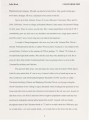
Show John Reed 2 R2009 I could care less. I don't need it for my lectures. So I had no ability with that. Al o, I pretty quickly became identified as the person who was going to have a single lane, called, or a single area of responsibility and I was going to be the only person in the command who worked on that. That required me to be very, very conversant with Excel, because it became a function of monitoring thousands of different construction projects and seeing what their progress was and whether or not the Iraqi military was signing for the buildings and maintaining them. So I report there and I'm supposed to become the deputy or the executive officer to a Navy 06-their colonels are called captains. This guy has already chewed up and spit out two lieutenant colonel Army Reservists and turned them into virtually catatonic wrecks. I replaced a guy who would have showed up with them. He interviews me and I later find out that after I left the office he turned to his deputy and said, "Well, another useless Army Reserve faggot." So, I was very discouraged, I'm not being taking seriously, and I'm used to be taken seriously. I mean, [break in recording] ... class, you have 200 students in a class, you're the person that assigns them their grades. Even if they don't like you, they generally tend to be fairly respectful. So here I am being treated like dirt. Also it's physically very tough because it's extremely hot. I show up there in the hottest part of the year, it's about 110 degrees on a good day. Also, I'm living in a small trailer. Generically, everybody's sleeping place over there is referred to as their hooch, which I guess we get directly from Vietnam. In Vietnam your hooch was something that you pitched every night in the field, but it ends up being a reference to wherever it is that you sleep. No internal sanitation facilities. One air conditioning unit, and it is constantly 13 |
| Reference URL |
https://collections.lib.utah.edu/ark:/87278/s6vx2jng/1034988 |