| Title |
John Reed, Salt Lake City, Utah: an interview by John C. Worsencroft, November 2, 2009: Saving the Legacy tape no. IA-18 |
| Alternative Title |
John Reed, Saving the legacy: an oral history of Utah's World War II veterans, ACCN 2070, American West Center, University of Utah |
| Creator |
Reed, John, 1951- |
| Contributor |
Worsencroft, John C., 1981-; University of Utah. American West Center |
| Publisher |
Digitized by J. Willard Marriott Library, University of Utah |
| Date |
2009-11-02 |
| Date Digital |
2015-12-16 |
| Access Rights |
I acknowledge and agree that all information I obtain as a result of accessing any oral history provided by the University of Utah's Marriott Library shall be used only for historical or scholarly or academic research purposes, and not for commercial purposes. I understand that any other use of the materials is not authorized by the University of Utah and may exceed the scope of permission granted to the University of Utah by the interviewer or interviewee. I may request permission for other uses, in writing to Special Collections at the Marriott Library, which the University of Utah may choose grant, in its sole discretion. I agree to defend, indemnify and hold the University of Utah and its Marriott Library harmless for and against any actions or claims that relate to my improper use of materials provided by the University of Utah. |
| Spatial Coverage |
Kuwait; Iraq |
| Subject |
Reed, John, 1951- --Interviews; Veterans--Utah--Biography; Iraq War, 2003-2011--Personal narratives, American |
| Description |
Transcript (58 pages) of an interview by John C. Worsencroft with John Reed on November 2, 2009. From tape number IA-18 in the "Saving the Legacy" Oral History Project |
| Collection Number and Name |
Accn2070, Saving the Legacy oral history project, 2001-2010 |
| Abstract |
Reed (b. 1951) was born in San Antonio, Texas. He discusses his family and recalls his experiences at Occidental College during the Vietnam War, his feelings and thoughts about the war, and serving in the military. He joined the Army Reserves in 1982, drilling with a unit out of Santa Barbara, California, until his move to Inactive Reserves in 1995. In 2000, he and his family moved to Salt Lake City, Utah, where he returned to active status when he joined the 96th Regional Readiness Command at Fort Douglas as historian with the 96th Infantry Division Association. In April 2007 he was deployed to Iraq. He discusses the impact of his deployment on himself and his family. He received Military Transition Team Training (MITT) at Fort Riley. His unit arrived in-country in July. He served with the 104th Training command, working with the Multi-National Security Transition Command-Iraq (MNSTC-1), assisting with Iraqi reconstruction projects. He describes his activities, experiences and duties in Iraq, including his travel through the region with reconstructions inspectors to project sites. He was released from duty after nearly nine months of service in Iraq. He describes the thoughts, feelings, and challenges associated with his return home. John retired as a lieutenant colonel in the Army. He is currently an adjunct professor at the University of Utah. Interviewed by John C. Worsencroft. 58 pages. |
| Type |
Text |
| Genre |
oral histories (literary works) |
| Format |
application/pdf |
| Extent |
58 pages |
| Language |
eng |
| Rights |
 |
| Scanning Technician |
Mazi Rakhsha |
| Conversion Specifications |
Original scanned with Kirtas 2400 and saved as 400 ppi uncompressed TIFF. PDF generated by Adobe Acrobat Pro X for CONTENTdm display |
| ARK |
ark:/87278/s6vx2jng |
| Topic |
Personal narratives--American; Veterans; Iraq War (2003-2011) |
| Setname |
uum_slohp |
| ID |
1035034 |
| Reference URL |
https://collections.lib.utah.edu/ark:/87278/s6vx2jng |
| Title |
Page 12 |
| Format |
application/pdf |
| Setname |
uum_slohp |
| ID |
1034986 |
| OCR Text |
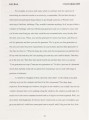
Show John Reed 2 B 2 Riley had no means of validating me as deployable to Iraq unle I went thr ugh the am ninety-day training cycle that these other fellows from the 104th Division had g ne through. Now at the same time some mobilized reservists were being sent to Fort Benning Georgia for a two-week shake-n-bake, basically issued a 9-millimeter pistol and sent over there. So if I had woken up at Fort Benning, I would have been in Iraq much faster. Instead, I'm kept back at Riley. I'm made the administrative leader of a group of about twelve guys, who are going to be serving as replacements to MITT Teams. So I go through this long training cycle, some Arabic, a lot of weapons stuff, which I found to be extremely cool. My eyes were no longer good enough to shoot expert with anything, but I qualified with the M-9 pistol, M-4 carbine, M240B, general purpose machine gun. I fired for familiarization the M203 grenade launcher, M2 heavy barrel .50 caliber machine gun. I was introduced to Soviet bloc weapons and formed an opinion that the AK's the best thing that ever happened to the American military. Since it's so hard to hit stuff with it there's probably all kinds of Gls and Marines that are walking about today that would have been killed if the bad guys had our weapons. So in a sense, the Surge that everyone's heard about, talked about, didn't begin to kick in until roughly when I reported to Riley. So the last flurry of indirect fire going into the IZ, or International Zone in Baghdad, is while I'm at Riley. We'd be sitting there in the DFAC, or the dining facility, looking up at CNN, and it'd be scrolling off all these guys that were getting killed and injured over there. While I was in training about a half a dozen MITT Team guys were killed also. This was real sobering because we all assumed 11 |
| Reference URL |
https://collections.lib.utah.edu/ark:/87278/s6vx2jng/1034986 |