| Title |
Mark L. Abbott, American Fork, Utah: an interview by Benjamin Bahlmann, April 5, 2001: Saving the Legacy tape nos. 383 - 385 |
| Alternative Title |
Mark L. Abbott, Saving the legacy: an oral history of Utah's World War II veterans, ACCN 2070, American West Center, University of Utah |
| Creator |
Abbott, Mark L., 1923-2013 |
| Contributor |
University of Utah. American West Center; Bahlmann, Benjamin J. |
| Publisher |
Digitized by J. Willard Marriott Library, University of Utah |
| Date |
2001-04-05 |
| Date Digital |
2015-12-16 |
| Access Rights |
I acknowledge and agree that all information I obtain as a result of accessing any oral history provided by the University of Utah's Marriott Library shall be used only for historical or scholarly or academic research purposes, and not for commercial purposes. I understand that any other use of the materials is not authorized by the University of Utah and may exceed the scope of permission granted to the University of Utah by the interviewer or interviewee. I may request permission for other uses, in writing to Special Collections at the Marriott Library, which the University of Utah may choose grant, in its sole discretion. I agree to defend, indemnify and hold the University of Utah and its Marriott Library harmless for and against any actions or claims that relate to my improper use of materials provided by the University of Utah. |
| Spatial Coverage |
American Samoa; Guadalcanal, Solomon Islands; Tarawa Atoll, Kiribati; Saipan, Northern Mariana Islands; Tinian, Northern Mariana Islands; Camp Pendleton, San Diego County, California, United States |
| Subject |
Abbott, Mark L., 1923-2013--Interviews; Veterans--Utah--Biography; World War, 1939-1945--Personal narratives, American; World War, 1939-1945--Military operations, American; World War, 1939-1945--Campaigns--Pacific Area--Personal narratives, American; Guadalcanal, Battle of, Solomon Islands, 1942-1943--Personal narratives, American |
| Keywords |
Marine Corps |
| Description |
Transcript (106 pages) of an interview by Benjamin Bahlmann with Mark L. Abbott on April 5, 2001. From tape numbers 383, 384, and 385 in the "Saving the Legacy" Oral History Project |
| Collection Number and Name |
Accn2070, Saving the Legacy oral history project, 2001-2010 |
| Abstract |
Abbott (b. 1923) recalls his childhood in Sutherland, Utah. He joined the Marine Corps in November 194 and took basic training in California. He was assigned to the 2nd Marine Division, 8th Marines, 8th Regiment, E Company. He served in American Samoa and took part in battles on Guadalcanal, Tarawa, Saipan, and Tinian. He later became part of a combat training group at Camp Pendleton. Interviewed by Benjamin Bahlmann. 106 pages. |
| Type |
Text |
| Genre |
oral histories (literary works) |
| Format |
application/pdf |
| Extent |
106 pages |
| Language |
eng |
| Rights |
 |
| Scanning Technician |
Mazi Rakhsha |
| Conversion Specifications |
Original scanned with Kirtas 2400 and saved as 400 ppi uncompressed TIFF. PDF generated by Adobe Acrobat Pro X for CONTENTdm display |
| ARK |
ark:/87278/s65h9jc6 |
| Topic |
Personal narratives--American; Veterans; World War (1939-1945); Guadalcanal, Battle of (Solomon Islands : 1942-1943) |
| Setname |
uum_slohp |
| ID |
1033561 |
| Reference URL |
https://collections.lib.utah.edu/ark:/87278/s65h9jc6 |
| Title |
Page 89 |
| Format |
application/pdf |
| Setname |
uum_slohp |
| ID |
1033542 |
| OCR Text |
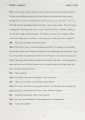
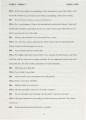
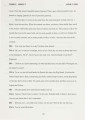
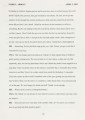
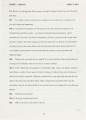
Show MARK L. ABBOTT PRI 2001 BB: No, but did it ever make you mad that they were just wasting th ir liv lik that? MLA: Not mad, but sad, I guess. Often I thought, what a waste of time what a waste ... just why. But it's necessary, but what a waste. How dumb we are. BB: Where did you end up? Did you go all the way to the end of the island on Tinian? MLA: It wasn't secured when we left, but it was pretty well secured. One example of some of the humor. When I went down to Dallas I met this guy and he told me who he was. I said, "I guess I don't remember you." He says, "You remember that guy that went out to take a crap and the Japanese surrendered to him?" I said, "Yeah, I know who you are." We laughed about it. That was quite a thing. He went out there to do his job and we always, in conditions like that, we always took a little shovel that was on the pack or some entrenchment tool, dug a hole, straddled it, done it, covered it up and that was it. Anyway, the Japanese waited until he got down (squatted) and then he come in to surrender. So the guy held his pants with one hand and held his shovel in a threatening position in the other hand and brought him into the CP as a prisoner (laughs). We always laughed about that. What a funny thing it was. Anyway, he had that pretty well parsed at that reunion down there when I remembered who he was. The punch line was, you know, "I never did get back to cover that up" (laughs). I thought that was pretty good. BB: Was that rare? Did you take many Japanese prisoners? MLA: Not too many. BB: Did you even want to take any? MLA: I didn't want to kill them. Well, at times, when you was moving that was the thing to do. You didn't try. 88 |
| Reference URL |
https://collections.lib.utah.edu/ark:/87278/s65h9jc6/1033542 |