| Title |
Judsen A. Durfee, February 9, 2004, Salt Lake City, Utah: an interview by Frances Merrill |
| Alternative Title |
Judsen A. Durfee, Saving the legacy: an oral history of Utah's World War II veterans, ACCN 2070, American West Center, University of Utah |
| Creator |
Durfee, Judsen A., 1924-2008 |
| Contributor |
Merrill, Frances; University of Utah. American West Center |
| Publisher |
Digitized by J. Willard Marriott Library, University of Utah |
| Date |
2004-02-09 |
| Date Digital |
2015-12-16 |
| Access Rights |
I acknowledge and agree that all information I obtain as a result of accessing any oral history provided by the University of Utah's Marriott Library shall be used only for historical or scholarly or academic research purposes, and not for commercial purposes. I understand that any other use of the materials is not authorized by the University of Utah and may exceed the scope of permission granted to the University of Utah by the interviewer or interviewee. I may request permission for other uses, in writing to Special Collections at the Marriott Library, which the University of Utah may choose grant, in its sole discretion. I agree to defend, indemnify and hold the University of Utah and its Marriott Library harmless for and against any actions or claims that relate to my improper use of materials provided by the University of Utah. |
| Spatial Coverage |
Philippines; Indonesia |
| Subject |
Durfee, Judsen A., 1924-2008--Interviews; Veterans--United States--Biography; World War, 1939-1945--Personal narratives, American; World War, 1939-1945--Naval operations, American; World War, 1939-1945--Campaigns--Pacific Area--Personal narratives, American |
| Keywords |
Hollandia, Leyte, Luzon, and Manila; Utah National Guard |
| Description |
Transcript (19 pages) of an interview by Frances Merrill with Judsen A. Durfee, on February 9, 2004. Part of the "Saving the Legacy" Oral History Project |
| Collection Number and Name |
Accn2070, Saving the Legacy oral history project, 2001-2010 |
| Abstract |
Durfee (b. 1924) volunteered for the U. S. Army's 1879th Aviation Engineers in October 1943 and trained at Geiger Field in Spokane, Washington. He served various construction roles in the Pacific Theatre, including Hollandia, Leyte, Luzon, and Manila. He was discharged from the army in 1946 and entered the Utah National Guard, where he served as the Mess Steward and Food Service Advisor for the state until his retirement. Interviewed by Frances Merrill. 19 pages. |
| Type |
Text |
| Genre |
oral histories (literary works) |
| Format |
application/pdf |
| Extent |
19 pages |
| Language |
eng |
| Rights |
 |
| Scanning Technician |
Mazi Rakhsha |
| Conversion Specifications |
Original scanned with Kirtas 2400 and saved as 400 ppi uncompressed TIFF. PDF generated by Adobe Acrobat Pro X for CONTENTdm display |
| ARK |
ark:/87278/s6gf2wkg |
| Topic |
Personal narratives--American; Veterans; World War (1939-1945); Military operations, Naval--American |
| Setname |
uum_slohp |
| ID |
1033208 |
| Reference URL |
https://collections.lib.utah.edu/ark:/87278/s6gf2wkg |
| Title |
Page 7 |
| Format |
application/pdf |
| Setname |
uum_slohp |
| ID |
1033195 |
| OCR Text |
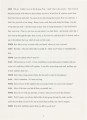
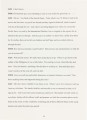
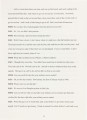
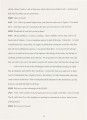
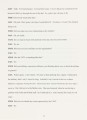
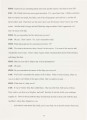
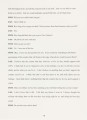
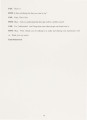
Show FHM: Why did you pick the particular service branch that you did? JAD: Well, because I thought it would be a nicer branch, an easier branch, to serv my time in rather than be in the infantry. I never was one to walk like that. o I mostly was driving a vehicle, a big truck or something; a semi, or whatever they needed. FHM: Do you recall what your first days in the military were like? JAD: Yeah. Went up to, oh, Washington, Spokane, Washington-Geiger(?) Field in Washington-and spent oh, about 60 days in basic training. And during this training-well, then they would gave us a leave and let us come home. We went through the regular basic training everybody does all the time. You know about what that is. FHM: Do you remember who any of your instructors were in basic training? JAD: No. It's been too long. I don't remember my own name then. FHM: How rigorous was it? JAD: Pretty rough. They marched us, and hiked us, and everything else. We thought we were infantry. Besides that we had to do ten mile hikes, twenty mile hikes, in ·a day, plus all the rest of the things-how to build a rifle, take it apart, and clean it. We had to do everything else that, in case you were going to be in the infantry. We had all that same training as all of them. FHM: How did you get through that experience? JAD: Well, I guess-! managed through it. I don't know. FHM: Were there a group of people you knew that went up there with you, say from Utah? JAD: No, I joined this outfit with my brother-in-law. At the time he was my boyfriend. We joined together and went into that. So, we thought we would serve together. But after 7 |
| Reference URL |
https://collections.lib.utah.edu/ark:/87278/s6gf2wkg/1033195 |