| Title |
Judsen A. Durfee, February 9, 2004, Salt Lake City, Utah: an interview by Frances Merrill |
| Alternative Title |
Judsen A. Durfee, Saving the legacy: an oral history of Utah's World War II veterans, ACCN 2070, American West Center, University of Utah |
| Creator |
Durfee, Judsen A., 1924-2008 |
| Contributor |
Merrill, Frances; University of Utah. American West Center |
| Publisher |
Digitized by J. Willard Marriott Library, University of Utah |
| Date |
2004-02-09 |
| Date Digital |
2015-12-16 |
| Access Rights |
I acknowledge and agree that all information I obtain as a result of accessing any oral history provided by the University of Utah's Marriott Library shall be used only for historical or scholarly or academic research purposes, and not for commercial purposes. I understand that any other use of the materials is not authorized by the University of Utah and may exceed the scope of permission granted to the University of Utah by the interviewer or interviewee. I may request permission for other uses, in writing to Special Collections at the Marriott Library, which the University of Utah may choose grant, in its sole discretion. I agree to defend, indemnify and hold the University of Utah and its Marriott Library harmless for and against any actions or claims that relate to my improper use of materials provided by the University of Utah. |
| Spatial Coverage |
Philippines; Indonesia |
| Subject |
Durfee, Judsen A., 1924-2008--Interviews; Veterans--United States--Biography; World War, 1939-1945--Personal narratives, American; World War, 1939-1945--Naval operations, American; World War, 1939-1945--Campaigns--Pacific Area--Personal narratives, American |
| Keywords |
Hollandia, Leyte, Luzon, and Manila; Utah National Guard |
| Description |
Transcript (19 pages) of an interview by Frances Merrill with Judsen A. Durfee, on February 9, 2004. Part of the "Saving the Legacy" Oral History Project |
| Collection Number and Name |
Accn2070, Saving the Legacy oral history project, 2001-2010 |
| Abstract |
Durfee (b. 1924) volunteered for the U. S. Army's 1879th Aviation Engineers in October 1943 and trained at Geiger Field in Spokane, Washington. He served various construction roles in the Pacific Theatre, including Hollandia, Leyte, Luzon, and Manila. He was discharged from the army in 1946 and entered the Utah National Guard, where he served as the Mess Steward and Food Service Advisor for the state until his retirement. Interviewed by Frances Merrill. 19 pages. |
| Type |
Text |
| Genre |
oral histories (literary works) |
| Format |
application/pdf |
| Extent |
19 pages |
| Language |
eng |
| Rights |
 |
| Scanning Technician |
Mazi Rakhsha |
| Conversion Specifications |
Original scanned with Kirtas 2400 and saved as 400 ppi uncompressed TIFF. PDF generated by Adobe Acrobat Pro X for CONTENTdm display |
| ARK |
ark:/87278/s6gf2wkg |
| Topic |
Personal narratives--American; Veterans; World War (1939-1945); Military operations, Naval--American |
| Setname |
uum_slohp |
| ID |
1033208 |
| Reference URL |
https://collections.lib.utah.edu/ark:/87278/s6gf2wkg |
| Title |
Page 5 |
| Format |
application/pdf |
| Setname |
uum_slohp |
| ID |
1033193 |
| OCR Text |
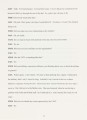
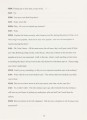
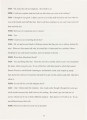
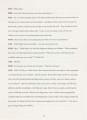
Show We done a couple of air bases there. I don't know the nam f tho . I wa th r fl r about a year I guess. FHM: Did you see combat while you were there? JAD: Yes, I was in five major battles. We was in with the infantry. We was with them. FHM: Did you receive any medals or citations? JAD: Yes. We got two- oh, I can't remember the names of the citations. Plus, I got five major battle stars on my Pacific ribbon, and one on the Philippine ribbon. And, yeah, we was right- all the time we'd been doing all these things we were right with the infantry. They'd take over, and we'd go in with them. And it was kind of a- I didn't do any shooting. I always carried a rifle, but with my job I never was required to do the fighting. We were too busy doing their maintenance, and whatever- and the roads, and bridges, and railroads and all. And we had infantry with us most of the time, until after they were secure, and then we would finish. We built a lot of the major buildings. Of course, they were tore down I'm sure after the war, the main buildings in Manilla there for the government and all that. And there were things we took care of; all them types of buildings and stuff. And then I came home about December of 1945. We came home on- they started to put the people-let us go home on the account of points. The unit I was with had-oh, boy, my memory- the 1879th Aviation Engineers was able to go home as a unit. I was about the youngest in that unit. FHM: How old were you? JAD: At that time-oh, I'd been over there about two years, 27 months. And I went in when I was 19. So, I was 21 , coming 22; right in there. So we came home as a unit, the 5 |
| Reference URL |
https://collections.lib.utah.edu/ark:/87278/s6gf2wkg/1033193 |