| Title |
Max B. Gordon, Spanish Fork, Utah: an interview by Benjamin Bahlmann, March 15, 2002: Saving the Legacy tape nos. 508 and 509 |
| Alternative Title |
Max B. Gordon, Saving the legacy: an oral history of Utah's World War II veterans, ACCN 2070, American West Center, University of Utah |
| Creator |
Gordon, Max B., 1919-2014 |
| Contributor |
University of Utah. American West Center; Bahlmann, Benjamin J. |
| Publisher |
Digitized by J. Willard Marriott Library, University of Utah |
| Date |
2002-03-15 |
| Date Digital |
2015-12-16 |
| Access Rights |
I acknowledge and agree that all information I obtain as a result of accessing any oral history provided by the University of Utah's Marriott Library shall be used only for historical or scholarly or academic research purposes, and not for commercial purposes. I understand that any other use of the materials is not authorized by the University of Utah and may exceed the scope of permission granted to the University of Utah by the interviewer or interviewee. I may request permission for other uses, in writing to Special Collections at the Marriott Library, which the University of Utah may choose grant, in its sole discretion. I agree to defend, indemnify and hold the University of Utah and its Marriott Library harmless for and against any actions or claims that relate to my improper use of materials provided by the University of Utah. |
| Spatial Coverage |
Hawaii; Philippines; Okinawa, Japan; Korea |
| Subject |
Gordon, Max B., 1919-2014--Interviews; Veterans--Utah--Biography; World War, 1939-1945--Personal narratives, American; World War, 1939-1945--Military operations, American; World War, 1939-1945--Campaigns--Pacific Area--Personal narratives, American; World War, 1939-1945--Campaigns--Japan--Okinawa Island--Personal narratives, American |
| Keywords |
Geneva Steel |
| Description |
Transcript (68 pages) of an interview by Benjamin Bahlmann with Max B. Gordon on March 15, 2002. From tape numbers 508 and 509 in the "Saving the Legacy" Oral History Project |
| Collection Number and Name |
Accn2070, Saving the Legacy oral history project, 2001-2010 |
| Abstract |
Gordon (b. 1919) describes his life in Utah prior to being drafted in August 1944. He served on Okinawa briefly before being wounded and evacuated. Shortly after he returned to his unit the war ended. Interviewed by Benjamin Bahlmann. 68 pages. |
| Type |
Text |
| Genre |
oral histories (literary works) |
| Format |
application/pdf |
| Extent |
68 pages |
| Language |
eng |
| Rights |
 |
| Scanning Technician |
Mazi Rakhsha |
| Conversion Specifications |
Original scanned with Kirtas 2400 and saved as 400 ppi uncompressed TIFF. PDF generated by Adobe Acrobat Pro X for CONTENTdm display |
| ARK |
ark:/87278/s6x08930 |
| Topic |
Personal narratives--American; Veterans; World War (1939-1945) |
| Setname |
uum_slohp |
| ID |
1032224 |
| Reference URL |
https://collections.lib.utah.edu/ark:/87278/s6x08930 |
| Title |
Page 40 |
| Format |
application/pdf |
| Setname |
uum_slohp |
| ID |
1032194 |
| OCR Text |
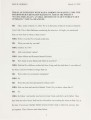
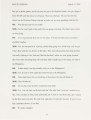
Show MAX B. GORDON March 15, 2 2 MBG: Yes there was so much waste in the Army you couldn t believe it. We 11 g t t that a little later on, but it just makes you sick to see a lot of the stuff in the water just overboard. BB: Did you have any dealings with the natives during your time in the Philippines at all, other than like that little boy fetching coconuts? MBG: No, I didn't get close to the Filipinos. I seen the way they lived, this sort of stuff, but we was busy loading ships. BB: Were there rumors circulating to where you were going next? MBG: I don't recall whether there was or not. BB: But you were loading for some kind of. .. MBG: Yes, we were loading ... I think we did know we were going to Okinawa from there. But we got the ships all loaded and we was loading them on the flat-bottomed ships, the LSTs, and they were rough riding. I can remember the one we went on was 555. After we got unloaded, we went to a convoy and some of their LSTs wasn't even going on their own power. They had a big long rope running from one ship to the other; one ship would be pulling the other. They didn't move very fast. I never see any Jap planes or anything while we were in the convoy. We got in to Okinawa on April Fool's Day, the first of April, April Fool's Day. Wife: It was Easter Sunday. MBG: Easter Sunday, yes, and April Fool's Day. We were lucky because the Japanese was on the other side of the island waiting for us to come in there because where we landed was a big reef across there. They didn't think anything could land there, but that's where we landed. 39 |
| Reference URL |
https://collections.lib.utah.edu/ark:/87278/s6x08930/1032194 |