| OCR Text |
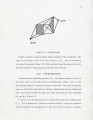
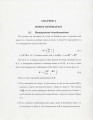
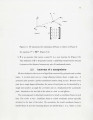
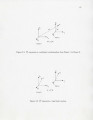
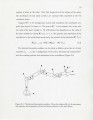
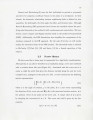
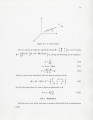
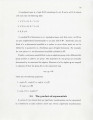
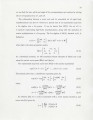
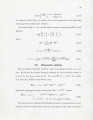
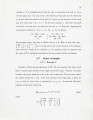
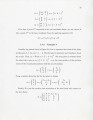
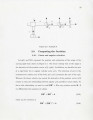
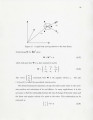
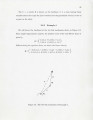
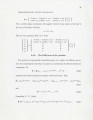
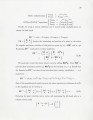
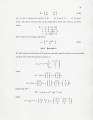
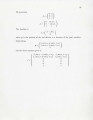
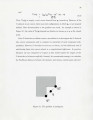
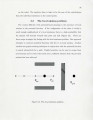
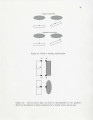
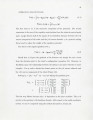
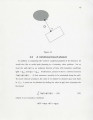
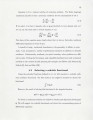
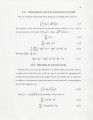
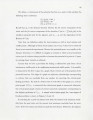
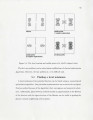
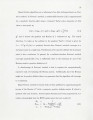
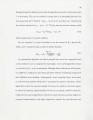
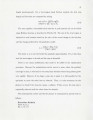
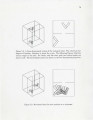
Show 14 Denavit and Hartenberg [6] were the first individuals to provide a systematic procedure for assigning coordinate frames to the joints of a mechanism. In their scheme, the kinematic relationship between neighboring links is defined by four quantities: the link length, the twist angle, the offset, and the joint value. Although Denavit-Hartenberg (DH) parameters have become the standard scheme for speci-fying robot kinematics, the method is both cumbersome and nonintuitive. We have chosen a more compact and elegant notation based on the product-of-exponentials (POE). Additionally, the POE formulation also simplifies the computation of the Jacobian compared to the DH approach. For the sake of brevity, we will merely outline the theoretical basis of the POE method. The interested reader is referred to McCarthy [17] ,Park [18], [19] and Sastry [14] for a formal exposition of this subject. 2.3 Screw theory We have seen that a frame may be represented by a rigid body transformation. Alternatively, it can also be described as a translation along a screw axis combined with a rotation about this axis (Figure 2.5). Associated with the screw axis is a scalar p called the pitch that gives the distance traveled along the axis for every complete turn, analogous to the pitch of a bolt. A screw motion has the following matrix representation ( R( </>, x) ~x +(I- R( </>, x) )u ) 0 1 . (2.4) where </> is the angle of rotation, p is the pitch, x is a unit vector representing the direction of the screw axis and R( </>, x) is the associated rotation matrix. u is the position vector of any point on the screw axis. A unique value of u is given by adopting the convention x · u = 0. The screw axis itself is given by the line equation lx( t) = u + x · t, t E R. (2.5) |