| OCR Text |
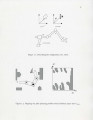
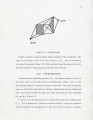
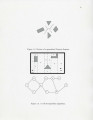
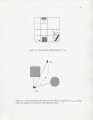
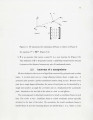
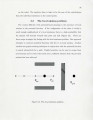
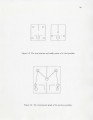
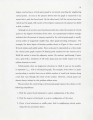
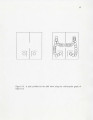
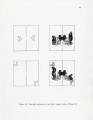
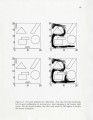
Show 4 This definition reduces path planning to the problem of finding the path of a point through a n-dimensional configuration space. The dimension of this space depends on the number of degrees-of-freedom of the robot and is usually larger than the dimension of the robot's Euclidean space. 1.2 Theoretical results There is compelling evidence that the general motion planning problem is inherently exponential in the dimension of the configuration space [20], [22]. Additionally, motion planning also takes polynomial time in the number and degree of algebraic constraints required to specify the C-obstacles. Consequently, general-purpose motion-planning algorithms become computa-tionally intractable as the dimension of the configuration space approaches four or larger. On the other hand, incomplete or heuristic algorithms often give efficient performance for large configuration spaces at the expense of occasionally failing to find a solution when one exists. 1.3 Motion planning algorithms Latombe [15] classifies motion planning algorithms into one of three general categories: roadmap , cell decomposition , and potential field methods. 1.3.1 Roadmap methods Roadmap methods attempt to find a network or roadmap of curves that reflects the connectivity of Cfree . The start and goal configurations, Cbnit and Ckoal, are attached to the roadmap via subpaths, and the augmented roadmap is searched exhaustively for a path connecting Cbnit and Qgoal· The simplest example of the roadmap method is the visibility graph. The nodes of a visibility graph consist of the C-obstacle vertices and the goal and start configurations. Edges represent the existence of straight lines in Cfree connecting two nodes (Figure 1.3). |