| Title |
Keith Richardson, Salt Lake City, Utah: an interview by Becky B. Lloyd, April 2, 2001: Saving the Legacy tape no. 202 |
| Alternative Title |
Keith Richardson, Saving the legacy: an oral history of Utah's World War II veterans, ACCN 2070, American West Center, University of Utah |
| Creator |
Richardson, Keith, 1923-2015 |
| Contributor |
Lloyd, Becky B.; University of Utah. American West Center |
| Publisher |
Digitized by J. Willard Marriott Library, University of Utah |
| Date |
2001-04-02 |
| Date Digital |
2015-12-16 |
| Access Rights |
I acknowledge and agree that all information I obtain as a result of accessing any oral history provided by the University of Utah's Marriott Library shall be used only for historical or scholarly or academic research purposes, and not for commercial purposes. I understand that any other use of the materials is not authorized by the University of Utah and may exceed the scope of permission granted to the University of Utah by the interviewer or interviewee. I may request permission for other uses, in writing to Special Collections at the Marriott Library, which the University of Utah may choose grant, in its sole discretion. I agree to defend, indemnify and hold the University of Utah and its Marriott Library harmless for and against any actions or claims that relate to my improper use of materials provided by the University of Utah. |
| Spatial Coverage |
Attu Island, Aleutian Islands, Alaska, United States; Russia |
| Subject |
Richardson, Keith, 1923-2015--Interviews; Veterans--United States--Biography; World War, 1939-1945--Personal narratives, American; World War, 1939-1945--Aerial operations, American; World War, 1939-1945--Campaigns--Pacific Area--Personal narratives, American |
| Keywords |
Great Depression; Cargo; Crash landing; Architects; Russian internment camps; Tashkent |
| Description |
Transcript (22 pages) of an interview by Becky B. Lloyd with Keith Richardson on April 2, 2001. From tape number 734 in the "Saving the Legacy" Oral History Project |
| Collection Number and Name |
Accn2070, Saving the Legacy oral history project, 2001-2010 |
| Abstract |
Mr. Richardson was born in Salt Lake City, Utah, on July13, 1923. He discusses his childhood and the Depression. He joined the Navy in August 1942 and took ground training as an aviation cadet at Brigham Young University. Pre-flight school was in San Luis Obispo, California, followed by primary flight training in Pasco, Washington. He received basic flight training at Corpus Christi, Texas and graduated as an Ensign in February 1944. Ordered to Aleutian Islands (Attu) from where he flew PV-1 Lockheed Venturas on patrol bombing missions conducting sector searches around Japanese territories. Shot down August 14, 1944. Describes crash landing in Petropavlovsk, Russia. Taken as an internee for over 6 months by the Russians. He describes his experiences during that time. In January 1944, the Russians smuggled the internees out through Iran where they were transferred to American custody. Continuing through Cairo and Naples, their group boarded Liberty ships back to New York. He was reassigned to North Island ferrying aircraft until discharge in April 1946. Mr. Richardson graduated from the University of Utah in architecture. His firm designed, among other buildings, the Pharmacy building at the University of Utah; Whitmore Library; Classic Bowling; and numerous schools throughout Utah and Idaho. Interviewed by Becky Lloyd. 47 pages. |
| Type |
Text |
| Genre |
oral histories (literary works) |
| Format |
application/pdf |
| Extent |
47 pages |
| Language |
eng |
| Rights |
 |
| Scanning Technician |
Mazi Rakhsha |
| Conversion Specifications |
Original scanned with Kirtas 2400 and saved as 400 ppi uncompressed TIFF. PDF generated by Adobe Acrobat Pro X for CONTENTdm display |
| ARK |
ark:/87278/s6pp17rr |
| Topic |
Personal narratives--American; Veterans; World War (1939-1945); Military operations, Aerial--American |
| Setname |
uum_slohp |
| ID |
1029564 |
| Reference URL |
https://collections.lib.utah.edu/ark:/87278/s6pp17rr |
| Title |
Page 11 |
| Format |
application/pdf |
| Setname |
uum_slohp |
| ID |
1029527 |
| OCR Text |
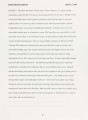
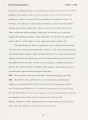
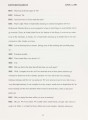
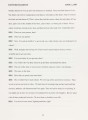
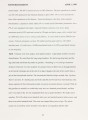
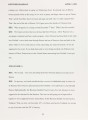
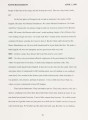
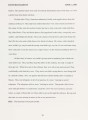
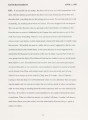
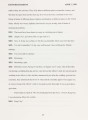
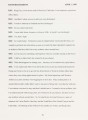
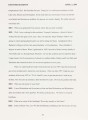
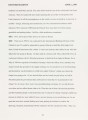
Show KEITH RICHARD ON PRI 2 2001 KEI: Then we went to Pasco, Washington, to do the actual (primary) flying training. We had open cockpit Stearman airplane, bi-plane, two-wing plane. So we had the primary training at Pasco, Washington. BEC: On those Stearmans? KEI: Yes. That's where we really learned to fly. BEC: But the first time you flew was down here in Provo? KElT: Provo, yes. They had a program called CPT, Civilian Pilot Training, that they started up to give training pre-, pre-, pre-, early flight training to candidates, both in the Air Force and the Navy. [Editor's note: President Franklin D. Roosevelt unveiled the Civilian Pilot Training Program, CPTP, which was based on similar programs in European countries, on December 27, 1938, announcing at a White House press conference that he had signed off on a proposal to provide a needed boost to general aviation by providing pilot training to 20,000 college students a year. The CPTP was established as a civilian program but its potential for national defense was undisguised . . The program actually started early in 1939, with the government paying for a 72-hour ground school course followed by 35 to 50 hours of flight instruction at airport facilities located near eleven colleges and universities. The US military establishment was initially unenthusiastic about the CPTP concept. However, just before Pearl Harbor, the shortage of trained pilots forced both the Army Air Force and Navy to waive certain "elimination" courses for CPTP graduates and allow them to proceed directly into military pilot training. After the US entered the war, The CPTP became the War Training Service (WTS) and from 1942 to 1944 served primarily as the screening program for potential pilot candidates. Students still attended classes at colleges and 11 |
| Reference URL |
https://collections.lib.utah.edu/ark:/87278/s6pp17rr/1029527 |