| Title |
Niles W. Drage, Spanish Fork, Utah: an interview by Benjamin Bahlmann, February 15, 2002: Saving the Legacy tape nos. 495-497 |
| Alternative Title |
Niles W. Drage, Saving the legacy: an oral history of Utah's World War II veterans, ACCN 2070, American West Center, University of Utah |
| Creator |
Drage, Niles W., 1923-2006 |
| Contributor |
Bahlmann, Benjamin J.; University of Utah. American West Center |
| Publisher |
Digitized by J. Willard Marriott Library, University of Utah |
| Date |
2002-02-15 |
| Date Digital |
2015-12-16 |
| Access Rights |
I acknowledge and agree that all information I obtain as a result of accessing any oral history provided by the University of Utah's Marriott Library shall be used only for historical or scholarly or academic research purposes, and not for commercial purposes. I understand that any other use of the materials is not authorized by the University of Utah and may exceed the scope of permission granted to the University of Utah by the interviewer or interviewee. I may request permission for other uses, in writing to Special Collections at the Marriott Library, which the University of Utah may choose grant, in its sole discretion. I agree to defend, indemnify and hold the University of Utah and its Marriott Library harmless for and against any actions or claims that relate to my improper use of materials provided by the University of Utah. |
| Spatial Coverage |
France; Belgium; Germany |
| Subject |
Drage, Niles W., 1923-2006--Interviews; Veterans--Utah--Biography; Alaska Highway--History; World War, 1939-1945--Personal narratives, American; World War, 1939-1945--Military operations, American; World War, 1939-1945--Artillery operations, American; World War, 1939-1945--Campaigns--Europe, Northern--Personal narratives, American; World War, 1939-1945--Campaigns--France--Normandy--Personal narratives, American; Arnhem, Battle of, Arnhem, Netherlands, 1944--Personal narratives, American |
| Keywords |
Civilian Conservation Corps; Alcan Highway; Combat Engineers; D-Day; Omaha Beach; Battle of the Bulge; Occupation duty; Geneva Steel; Military engineers; Combat Engineers; Bazookas; Bailey bridges; Pontoon bridges; Buchenwald |
| Description |
Transcript (145 pages) of an interview by Benjamin Bahlmann with Niles W. Drage on February 15, 2002. From tape numbers 495, 496, and 497 in the "Saving the Legacy" Oral History Project |
| Collection Number and Name |
Accn2070, Saving the Legacy oral history project, 2001-2010 |
| Abstract |
Drage (b. 1923) grew up in Salina, Utah. He was drafted into the Army in March 1942, and took basic training at Camp Sibert, Alabama. He was sent to Alaska to work on the Alcan Highway, then returned to Oregon for additional training before shipping to Europe as part of the 35th Combat Engineers. Drage participated in the D-Day invasion on Omaha Beach and continued in combat to within 25 miles of Berlin before the war ended. He was in Europe for occupation duty before being shipped back to the states for discharge on in 1945. After the war, he worked for Geneva Steel for more than 30 years. Interviewed by Benjamin J. Bahlmann. 145 pages. |
| Type |
Text |
| Genre |
oral histories (literary works) |
| Format |
application/pdf |
| Extent |
145 pages |
| Language |
eng |
| Rights |
 |
| Scanning Technician |
Mazi Rakhsha |
| Conversion Specifications |
Original scanned with Kirtas 2400 and saved as 400 ppi uncompressed TIFF. PDF generated by Adobe Acrobat Pro X for CONTENTdm display |
| ARK |
ark:/87278/s6qc25k8 |
| Topic |
Personal narratives--American; Veterans; World War (1939-1945); Military operations, Artillery--American; Arnhem, Battle of (Netherlands : 1944); North America--Alaska Highway |
| Setname |
uum_slohp |
| ID |
1027534 |
| Reference URL |
https://collections.lib.utah.edu/ark:/87278/s6qc25k8 |
| Title |
Page 87 |
| Format |
application/pdf |
| Setname |
uum_slohp |
| ID |
1027475 |
| OCR Text |
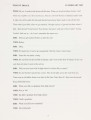
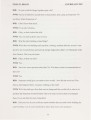
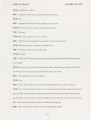
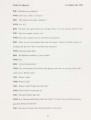
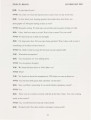
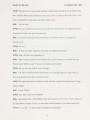
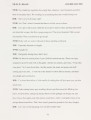
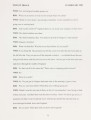
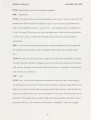
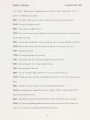
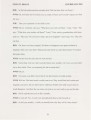
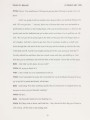
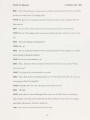
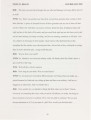
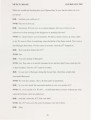
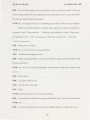
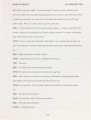
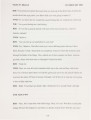
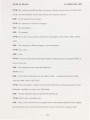
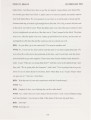
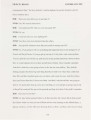
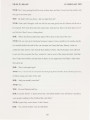
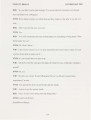
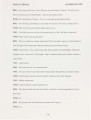
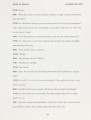
Show NILE W.DRA 15 BR R 2002 NWD: Riez talks the panish that they talk down in M xic ity, and th th r fi 11 w talks Spanish that they talk down round San Diego.' And I aid 'H win th w rld did you ever learn it?" He said "My dad was Castilian panish my mother wa M xican. ' I said, "Was the difference between Mexican and Spanish?" And he said 'Half Indian and half Spanish." And I said, "Well where did you learn Esquibar?" And he said, "I worked down in San Diego for a while, that's border Spanish, nd it's got a lot of slang in it.' BJB: Different dialects. WIF: Maybe our interviewer here could tell you where Hispanic, where did Hispanic come up from? Do you know? BJB: Pardon? WIF: Hispanic. It was always Mexican and American and all. Where did Hispanic come from? Do you know? BJB: I don't know where the "his" comes from but obviously coming out of Spain. NWD: I asked a Mexican kid down here in the third ward one day. I said, "I see where black comes from, the N egros, but I said, I can't see where Hispanic comes from the Mexicans." I said, "Can you tell me?" I said, "I'm just curious." He thought a few minutes and he said, "Well danged if I know." He said, "I don't know." He said, "I can see the same things you can, but," he said, "I can't." He said, "I'm just Mexican myself." He said, "I don't know where they get this 'Hispanic' from." BJB: Let's see, what. .. NWD: Where did you say you were on a mission? BJB: Portugal. NWD: Portugal. 87 |
| Reference URL |
https://collections.lib.utah.edu/ark:/87278/s6qc25k8/1027475 |