| Title |
Edward G. Lueders, Salt Lake City, Utah: an interview by Winston P. Erickson, February 1, 2000: Saving the legacy tape no. 326 and 327 |
| Alternative Title |
Edward Lueders, Saving the legacy: an oral history of Utah's World War II veterans, ACCN 2070, American West Center, University of Utah |
| Creator |
Lueders, Edward, 1923- |
| Contributor |
Erickson, Winston P., 1943-; University of Utah. American West Center |
| Publisher |
Digitized by J. Willard Marriott Library, University of Utah |
| Date |
2000-02-01 |
| Date Digital |
2015-09-16 |
| Access Rights |
I acknowledge and agree that all information I obtain as a result of accessing any oral history provided by the University of Utah's Marriott Library shall be used only for historical or scholarly or academic research purposes, and not for commercial purposes. I understand that any other use of the materials is not authorized by the University of Utah and may exceed the scope of permission granted to the University of Utah by the interviewer or interviewee. I may request permission for other uses, in writing to Special Collections at the Marriott Library, which the University of Utah may choose grant, in its sole discretion. I agree to defend, indemnify and hold the University of Utah and its Marriott Library harmless for and against any actions or claims that relate to my improper use of materials provided by the University of Utah. |
| Spatial Coverage |
India; Chicago, Cook County, Illinois, United States |
| Subject |
Lueders, Edward, 1923- --Interviews; World War, 1939-1945--Personal narratives, American; World War, 1939-1945--Aerial operations, American; World War, 1939-1945--Aerial operations, American; Veterans--Utah--Biography |
| Description |
Transcript (72 pages) of an interview by Winston P. Erickson with Edward G. Lueders on February 1, 2000. This is from tape numbers 326 and 327 in the "Saving the Legacy Oral History Project |
| Collection Number and Name |
Accn2070, Saving the Legacy oral history project, 2001-2010 |
| Abstract |
Edward Lueders (b. 1923) recalls his youth in Chicago. He was drafted in 1943, joined the Air Force, and spent several months in various stateside postings. He eventually ended up in India, attached to the Air Transport Command, where his assignment was to provide recreation and entertainment for the troops. He was discharged in March 1946. 72 pages. |
| Type |
Text |
| Genre |
oral histories (literary works) |
| Format |
application/pdf |
| Extent |
72 pages |
| Language |
eng |
| Rights |
 |
| Scanning Technician |
Mazi Rakhsha |
| Conversion Specifications |
Original scanned with Kirtas 2400 and saved as 400 ppi uncompressed TIFF. PDF generated by Adobe Acrobat Pro X for CONTENTdm display |
| ARK |
ark:/87278/s6321v53 |
| Topic |
Personal narratives--American; Veterans; World War (1939-1945); Military operations, Aerial--American |
| Setname |
uum_slohp |
| ID |
1026269 |
| Reference URL |
https://collections.lib.utah.edu/ark:/87278/s6321v53 |
| Title |
Page 46 |
| Format |
application/pdf |
| Setname |
uum_slohp |
| ID |
1026240 |
| OCR Text |
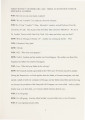
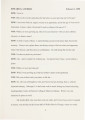
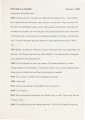
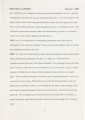
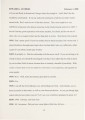
Show EDWARD G. LUEDERS February 1 2000 and I d go for long periods without any. With my sweetheart at the time from Hanov r College, who became, as soon as I got back, my wife. WIN: Well, while you were in India, how much contact did you have with the indigenous, native Indians? EDW: Relatively little, except that I was fascinated and repulsed almost, at the same time! A feeling that lives on for things Indian. For one thing, I got deathly ill at one point. I could have died of amoebic dysentery because I was mistreated for it. Deathly ill. It took me years and years to get even a whiff of Indian food without that same kind of churning sensation I'd had at the beginning. Curried foods still - I like them - but I still have the association! So I had the usual attraction to anything that's exotic, and these Hindu celebrations would go right by the base, and I'd want to get out there and watch them, and see all of the exotic things that were going on. I'd go down into Calcutta whenever I could, and try to become a part of that curious mixture of cultures that Calcutta was, and is, complete with burning ghats down at the shore of the Hoogly and all of the rites that the Hindus would live by, and live through. They were always having their holidays! It seemed one holiday was over just in time for the next. And there would be celebrations, and there would be music. That strange atonal stuff with a different scale to the music that caught me, and still catches me, is something that is so alien to me. And yet, I can understand how a musician could follow off some of the things that are being improvised in Indian music. Boy, we had the diatonic scale, and 44 |
| Reference URL |
https://collections.lib.utah.edu/ark:/87278/s6321v53/1026240 |