| Title |
Edward G. Lueders, Salt Lake City, Utah: an interview by Winston P. Erickson, February 1, 2000: Saving the legacy tape no. 326 and 327 |
| Alternative Title |
Edward Lueders, Saving the legacy: an oral history of Utah's World War II veterans, ACCN 2070, American West Center, University of Utah |
| Creator |
Lueders, Edward, 1923- |
| Contributor |
Erickson, Winston P., 1943-; University of Utah. American West Center |
| Publisher |
Digitized by J. Willard Marriott Library, University of Utah |
| Date |
2000-02-01 |
| Date Digital |
2015-09-16 |
| Access Rights |
I acknowledge and agree that all information I obtain as a result of accessing any oral history provided by the University of Utah's Marriott Library shall be used only for historical or scholarly or academic research purposes, and not for commercial purposes. I understand that any other use of the materials is not authorized by the University of Utah and may exceed the scope of permission granted to the University of Utah by the interviewer or interviewee. I may request permission for other uses, in writing to Special Collections at the Marriott Library, which the University of Utah may choose grant, in its sole discretion. I agree to defend, indemnify and hold the University of Utah and its Marriott Library harmless for and against any actions or claims that relate to my improper use of materials provided by the University of Utah. |
| Spatial Coverage |
India; Chicago, Cook County, Illinois, United States |
| Subject |
Lueders, Edward, 1923- --Interviews; World War, 1939-1945--Personal narratives, American; World War, 1939-1945--Aerial operations, American; World War, 1939-1945--Aerial operations, American; Veterans--Utah--Biography |
| Description |
Transcript (72 pages) of an interview by Winston P. Erickson with Edward G. Lueders on February 1, 2000. This is from tape numbers 326 and 327 in the "Saving the Legacy Oral History Project |
| Collection Number and Name |
Accn2070, Saving the Legacy oral history project, 2001-2010 |
| Abstract |
Edward Lueders (b. 1923) recalls his youth in Chicago. He was drafted in 1943, joined the Air Force, and spent several months in various stateside postings. He eventually ended up in India, attached to the Air Transport Command, where his assignment was to provide recreation and entertainment for the troops. He was discharged in March 1946. 72 pages. |
| Type |
Text |
| Genre |
oral histories (literary works) |
| Format |
application/pdf |
| Extent |
72 pages |
| Language |
eng |
| Rights |
 |
| Scanning Technician |
Mazi Rakhsha |
| Conversion Specifications |
Original scanned with Kirtas 2400 and saved as 400 ppi uncompressed TIFF. PDF generated by Adobe Acrobat Pro X for CONTENTdm display |
| ARK |
ark:/87278/s6321v53 |
| Topic |
Personal narratives--American; Veterans; World War (1939-1945); Military operations, Aerial--American |
| Setname |
uum_slohp |
| ID |
1026269 |
| Reference URL |
https://collections.lib.utah.edu/ark:/87278/s6321v53 |
| Title |
Page 44 |
| Format |
application/pdf |
| Setname |
uum_slohp |
| ID |
1026238 |
| OCR Text |
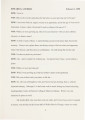
Show EDWARD G. LUEDERS February 1, 2000 converted into headquarters. And the non-com in charge over there was Tony Martin, th singer, the entertainer. WIN: Really? EDW: He kind of spent various time in the Navy, and somehow had shifted over to the Air Force and was there at Hastings Mill, that was his assignment. And Tony would be one of the people who would help to set up these touring groups as well. WIN: While you were there, did you have a sense of accomplishment? Did you think that you were doing your part in the war? EDW: I did, but I realized that it was at great length- my experience from those elsewhere. Particularly people in the more celebrated battle zones - properly celebrated, these people were putting their lives on the line in the traditional way of the war- and my role was very untraditional, but it was perilous in a way that I hope I wrote into the novel. In that not only were we out of our own United States lives, but flying over the hump was no, well it wasn't, "Oh boy!" Nor was it easy, when you had to make your way through Calcutta with the streets of Calcutta full of with all of the refugees, and you couldn't tell the living from the dead. And the general sense of displacement was also a threat all the time. Under duress of one order or another - it may not be immediate danger- but particularly when we were actively doing our part, in the more active way of these tours, there was dangerous business. And we had to push ourselves into situations that, if you had a clear choice, "Well, I don't want to do that. Well, why are we doing this? We're doing this 42 |
| Reference URL |
https://collections.lib.utah.edu/ark:/87278/s6321v53/1026238 |