| Title |
Col. William F. Roos, Springfield, Virginia: an interview by Professor Daniel McCool: Saving the legacy oral history |
| Alternative Title |
William F. Roos, Saving the legacy: an oral history of Utah's World War II veterans, ACCN 2070, American West Center, University of Utah |
| Creator |
Roos, William F., 1919-2008 |
| Contributor |
McCool, Daniel, 1950- ; University of Utah. American West Center |
| Publisher |
Digitized by J. Willard Marriott Library, University of Utah |
| Date |
2004-11-11 |
| Date Digital |
2015-09-16 |
| Access Rights |
I acknowledge and agree that all information I obtain as a result of accessing any oral history provided by the University of Utah's Marriott Library shall be used only for historical or scholarly or academic research purposes, and not for commercial purposes. I understand that any other use of the materials is not authorized by the University of Utah and may exceed the scope of permission granted to the University of Utah by the interviewer or interviewee. I may request permission for other uses, in writing to Special Collections at the Marriott Library, which the University of Utah may choose grant, in its sole discretion. I agree to defend, indemnify and hold the University of Utah and its Marriott Library harmless for and against any actions or claims that relate to my improper use of materials provided by the University of Utah. |
| Spatial Coverage |
Guam, Mariana Islands; Germany; Korea; Vietnam; Salt Lake City, Salt Lake County, Utah, United States |
| Subject |
Roos, William F., 1919-2008--Interviews; World War, 1939-1945--Personal narratives, American; Veterans--Utah--Biography; World War, 1939-1945--Campaigns--Pacific Area--Personal narratives, American; Military engineers--Biography |
| Keywords |
ROTC; West Point; Engineers; Army Air Corps |
| Description |
Transcript (75 pages) of an interview by Daniel McCool with Col. William F. Roos on November 11, 2004. This is from the "Saving the Legacy Oral History Project |
| Collection Number and Name |
Accn2070, Saving the Legacy oral history project, 2001-2010 |
| Abstract |
Roos (b. 1919) reminisces about his childhood and education in Utah, including his ROTC experience. He was attending West Point when the Japanese bombed Pearl Harbor, and he speaks at length about his experiences there. He was assigned to an engineering unit with the responsibility for turning the island of Guam into a military base. After the war he transferred to the Army Air Corps and earned a masters degree in civil engineering from the University of Iowa. He later served in Germany, Korea, Vietnam, and the Central Pacific. 75 pages. |
| Type |
Text |
| Genre |
oral histories (literary works) |
| Format |
application/pdf |
| Extent |
75 pages |
| Language |
eng |
| Rights |
 |
| Scanning Technician |
Mazi Rakhsha |
| Conversion Specifications |
Original scanned with Kirtas 2400 and saved as 400 ppi uncompressed TIFF. PDF generated by Adobe Acrobat Pro X for CONTENTdm display |
| ARK |
ark:/87278/s6vx2ftg |
| Topic |
Personal narratives--American; Veterans; World War (1939-1945); Military engineers |
| Setname |
uum_slohp |
| ID |
1025465 |
| Reference URL |
https://collections.lib.utah.edu/ark:/87278/s6vx2ftg |
| Title |
Page 55 |
| Format |
application/pdf |
| Setname |
uum_slohp |
| ID |
1025442 |
| OCR Text |
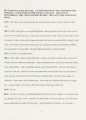
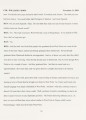
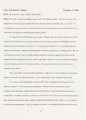
Show COL. WILLIAM F. ROOS November 11,2004 tour." So I went to the assignment people and said, "Go ahead, send me to Korea. ' They said, "We will send you to Korea if you want, but you don't have to go." I asked what the alternatives were. They said they were just setting up a new Engineer District to run a big job in Greenland, and that from a professional standpoint it would be good. So, I said, "Okay, send me to Greenland." And it did tum out to be a good assignment. We had to build this airfield up there on the west coast of Greenland, north of the Arctic Circle. During World War II it had been a small gravel strip where they used to ferry airplanes from Newfoundland to Greenland, and then Iceland, and Scotland, and England; just ferry them up there. But, by this time, we were getting real serious into the cold war, and we felt that we had to do something with the Russians. Those guys are-otherwise, they're going to eat us up. So, somebody came up with the scheme about these airfields. They were also building big airfields in the northern part of the United States up there, in North Dakota and in Maine. DAN: Are these part of the SAC system? BILL: Yes, Strategic Air Command. I think they call it something else right now. But in those days they called it the Strategic Air Command. And we're the ones that built all that stuff for them. So they had these big airfields in the northern part of the United States. They would load them up. In case we really got serious with the Russians and got trading nuclear bombs, or something, they would load them up with their bombs, and they would all take off. Tankers would meet them up over the North Pole someplace and top them off. The bombers would then 53 |
| Reference URL |
https://collections.lib.utah.edu/ark:/87278/s6vx2ftg/1025442 |