| Title |
Col. William F. Roos, Springfield, Virginia: an interview by Professor Daniel McCool: Saving the legacy oral history |
| Alternative Title |
William F. Roos, Saving the legacy: an oral history of Utah's World War II veterans, ACCN 2070, American West Center, University of Utah |
| Creator |
Roos, William F., 1919-2008 |
| Contributor |
McCool, Daniel, 1950- ; University of Utah. American West Center |
| Publisher |
Digitized by J. Willard Marriott Library, University of Utah |
| Date |
2004-11-11 |
| Date Digital |
2015-09-16 |
| Access Rights |
I acknowledge and agree that all information I obtain as a result of accessing any oral history provided by the University of Utah's Marriott Library shall be used only for historical or scholarly or academic research purposes, and not for commercial purposes. I understand that any other use of the materials is not authorized by the University of Utah and may exceed the scope of permission granted to the University of Utah by the interviewer or interviewee. I may request permission for other uses, in writing to Special Collections at the Marriott Library, which the University of Utah may choose grant, in its sole discretion. I agree to defend, indemnify and hold the University of Utah and its Marriott Library harmless for and against any actions or claims that relate to my improper use of materials provided by the University of Utah. |
| Spatial Coverage |
Guam, Mariana Islands; Germany; Korea; Vietnam; Salt Lake City, Salt Lake County, Utah, United States |
| Subject |
Roos, William F., 1919-2008--Interviews; World War, 1939-1945--Personal narratives, American; Veterans--Utah--Biography; World War, 1939-1945--Campaigns--Pacific Area--Personal narratives, American; Military engineers--Biography |
| Keywords |
ROTC; West Point; Engineers; Army Air Corps |
| Description |
Transcript (75 pages) of an interview by Daniel McCool with Col. William F. Roos on November 11, 2004. This is from the "Saving the Legacy Oral History Project |
| Collection Number and Name |
Accn2070, Saving the Legacy oral history project, 2001-2010 |
| Abstract |
Roos (b. 1919) reminisces about his childhood and education in Utah, including his ROTC experience. He was attending West Point when the Japanese bombed Pearl Harbor, and he speaks at length about his experiences there. He was assigned to an engineering unit with the responsibility for turning the island of Guam into a military base. After the war he transferred to the Army Air Corps and earned a masters degree in civil engineering from the University of Iowa. He later served in Germany, Korea, Vietnam, and the Central Pacific. 75 pages. |
| Type |
Text |
| Genre |
oral histories (literary works) |
| Format |
application/pdf |
| Extent |
75 pages |
| Language |
eng |
| Rights |
 |
| Scanning Technician |
Mazi Rakhsha |
| Conversion Specifications |
Original scanned with Kirtas 2400 and saved as 400 ppi uncompressed TIFF. PDF generated by Adobe Acrobat Pro X for CONTENTdm display |
| ARK |
ark:/87278/s6vx2ftg |
| Topic |
Personal narratives--American; Veterans; World War (1939-1945); Military engineers |
| Setname |
uum_slohp |
| ID |
1025465 |
| Reference URL |
https://collections.lib.utah.edu/ark:/87278/s6vx2ftg |
| Title |
Page 11 |
| Format |
application/pdf |
| Setname |
uum_slohp |
| ID |
1025398 |
| OCR Text |
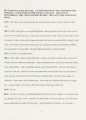
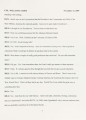
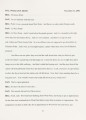
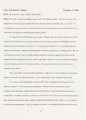
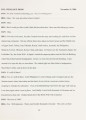
Show COL. WILLIAM F. ROO ovemb r 11 2004 DAN: They were lucky to get them out alive, too. BILL: They were. DAN: It was close. BILL: Yes. So then Germany occupied about half of France in the beginning, including Paris. The Germans occupied Paris. And they set up a puppet government in Vichy. DAN: Uhhuh. BILL: And this was the situation when I graduated. I remember having a couple of courses just in late May, just before we graduated. And we sat out there under the trees by the Park Building, and just looking around at how the-the whole world was just falling apart. DAN: So, you're reading about Dunkirk, and the evaluation, and ... BILL: Yes, that's right. DAN: ... and the fall of the Maginot line, and the fall of Paris. But how did you get your news then? Were you listening just on the radio? And didn't they have short news clips before movies? BILL: Yeah. They used to have what was called newsreels. You'd go to a movie, and often they would even have-some movies would have comedy for awhile. I think a ten minute comedy, or maybe a ten minute serial-ten minutes of a serial for one week, and then the next week it would have another one. And then, after that, they would often have 15 minutes-1 0 or 15 minutes-of newsreels. And they would have-just like you would see on today' s TV, but you would see it at the movie house. So you had a chance to keep up with the news. And my dad was actually working at the Salt Lake Tribune, so he was just a great history 9 |
| Reference URL |
https://collections.lib.utah.edu/ark:/87278/s6vx2ftg/1025398 |