| Title |
Col. William F. Roos, Springfield, Virginia: an interview by Professor Daniel McCool: Saving the legacy oral history |
| Alternative Title |
William F. Roos, Saving the legacy: an oral history of Utah's World War II veterans, ACCN 2070, American West Center, University of Utah |
| Creator |
Roos, William F., 1919-2008 |
| Contributor |
McCool, Daniel, 1950- ; University of Utah. American West Center |
| Publisher |
Digitized by J. Willard Marriott Library, University of Utah |
| Date |
2004-11-11 |
| Date Digital |
2015-09-16 |
| Access Rights |
I acknowledge and agree that all information I obtain as a result of accessing any oral history provided by the University of Utah's Marriott Library shall be used only for historical or scholarly or academic research purposes, and not for commercial purposes. I understand that any other use of the materials is not authorized by the University of Utah and may exceed the scope of permission granted to the University of Utah by the interviewer or interviewee. I may request permission for other uses, in writing to Special Collections at the Marriott Library, which the University of Utah may choose grant, in its sole discretion. I agree to defend, indemnify and hold the University of Utah and its Marriott Library harmless for and against any actions or claims that relate to my improper use of materials provided by the University of Utah. |
| Spatial Coverage |
Guam, Mariana Islands; Germany; Korea; Vietnam; Salt Lake City, Salt Lake County, Utah, United States |
| Subject |
Roos, William F., 1919-2008--Interviews; World War, 1939-1945--Personal narratives, American; Veterans--Utah--Biography; World War, 1939-1945--Campaigns--Pacific Area--Personal narratives, American; Military engineers--Biography |
| Keywords |
ROTC; West Point; Engineers; Army Air Corps |
| Description |
Transcript (75 pages) of an interview by Daniel McCool with Col. William F. Roos on November 11, 2004. This is from the "Saving the Legacy Oral History Project |
| Collection Number and Name |
Accn2070, Saving the Legacy oral history project, 2001-2010 |
| Abstract |
Roos (b. 1919) reminisces about his childhood and education in Utah, including his ROTC experience. He was attending West Point when the Japanese bombed Pearl Harbor, and he speaks at length about his experiences there. He was assigned to an engineering unit with the responsibility for turning the island of Guam into a military base. After the war he transferred to the Army Air Corps and earned a masters degree in civil engineering from the University of Iowa. He later served in Germany, Korea, Vietnam, and the Central Pacific. 75 pages. |
| Type |
Text |
| Genre |
oral histories (literary works) |
| Format |
application/pdf |
| Extent |
75 pages |
| Language |
eng |
| Rights |
 |
| Scanning Technician |
Mazi Rakhsha |
| Conversion Specifications |
Original scanned with Kirtas 2400 and saved as 400 ppi uncompressed TIFF. PDF generated by Adobe Acrobat Pro X for CONTENTdm display |
| ARK |
ark:/87278/s6vx2ftg |
| Topic |
Personal narratives--American; Veterans; World War (1939-1945); Military engineers |
| Setname |
uum_slohp |
| ID |
1025465 |
| Reference URL |
https://collections.lib.utah.edu/ark:/87278/s6vx2ftg |
| Title |
Page 5 |
| Format |
application/pdf |
| Setname |
uum_slohp |
| ID |
1025392 |
| OCR Text |
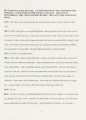
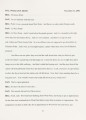
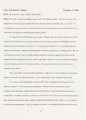
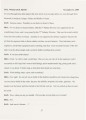
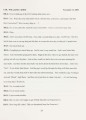
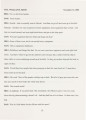
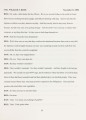
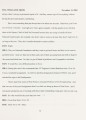
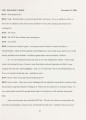
Show COL. WILLIAM F. ROOS November 11, 2004 here- we only went seven grades; kindergarten and then seven grades. We didn t have an eighth grade. We went right into high school. And I just thought that everybody did that. But I found out that the ones outside of Salt Lake had to go through an extra grade. They went to eighth grade, and we only went to seventh grade, and then into high school. And I was told that the reason for that was that we took more courses during the year, or had a longer year, or something. So in seven years we made up what the others did in eight. So, anyway, I was glad to get out. And then I started at the University of Utah. DAN: And what year was that? BILL: That was-it would have been in 1936. That was my first year at the University of Utah. And I really enjoyed going to college. It was-oh, it was not difficult for me at all. But I had a lot of courses that I liked, and most of them were history courses. I took political science and a lot of others like biology, and math, and other science courses also. So I got a good balanced education in history. DAN: So that was your degree? BILL: Yes. My degree was in history. I was also in the ROTC. DAN: Were most young men in the ROTC in the 1930's? Was it required? BILL: No, it was not required. And I would say most young men were not, although it was very popular. And a lot of my classmates did go into ROTC, but I wouldn't say the majority. The majority did not. DAN: And why did you decide to go into ROTC? BILL: Well, I was just attracted to the army. And during-I'd had high school ROTC. And I 3 |
| Reference URL |
https://collections.lib.utah.edu/ark:/87278/s6vx2ftg/1025392 |