| Title |
Wayne Kimball, Salt Lake City, Utah: an interview by Becky B. Lloyd, March 28, 2001: Saving the legacy tape no. 200 |
| Alternative Title |
Wayne Kimball, Saving the legacy: an oral history of Utah's World War II veterans, ACCN 2070, American West Center, University of Utah |
| Creator |
Kimball, Wayne, 1925-2009 |
| Contributor |
Lloyd, Becky B.; University of Utah. American West Center |
| Publisher |
Digitized by J. Willard Marriott Library, University of Utah |
| Date |
2001-03-28 |
| Date Digital |
2015-09-16 |
| Access Rights |
I acknowledge and agree that all information I obtain as a result of accessing any oral history provided by the University of Utah's Marriott Library shall be used only for historical or scholarly or academic research purposes, and not for commercial purposes. I understand that any other use of the materials is not authorized by the University of Utah and may exceed the scope of permission granted to the University of Utah by the interviewer or interviewee. I may request permission for other uses, in writing to Special Collections at the Marriott Library, which the University of Utah may choose grant, in its sole discretion. I agree to defend, indemnify and hold the University of Utah and its Marriott Library harmless for and against any actions or claims that relate to my improper use of materials provided by the University of Utah. |
| Spatial Coverage |
Salt Lake City, Salt Lake County, Utah, United States; India |
| Subject |
Kimball, Wayne, 1925-2009--Interviews; World War, 1939-1945--Personal narratives, American; World War, 1939-1945--Aerial operations, American; Veterans--Utah--Biography |
| Description |
Transcript (39 pages) of an interview by Becky B. Lloyd with Wayne Kimball on March 28, 2001. This is from tape number 200 in the "Saving the Legacy Oral History Project |
| Collection Number and Name |
Accn2070, Saving the Legacy oral history project, 2001-2010 |
| Abstract |
Wayne Kimball (b. 1925) reminisces about growing up in Salt Lake City and working in the family laundry business until Pearl Harbor, when he enlisted in the Air Corps. He went to basic flight training in Bakersfield, California, and was assigned to air transport command, which was an aircraft delivery outfit. He later flew aircraft over "the Hump" from India. 39 pages. |
| Type |
Text |
| Genre |
oral histories (literary works) |
| Format |
application/pdf |
| Extent |
39 pages |
| Language |
eng |
| Rights |
 |
| Scanning Technician |
Mazi Rakhsha |
| Conversion Specifications |
Original scanned with Kirtas 2400 and saved as 400 ppi uncompressed TIFF. PDF generated by Adobe Acrobat Pro X for CONTENTdm display |
| ARK |
ark:/87278/s60884j4 |
| Topic |
Personal narratives--American; Veterans; World War (1939-1945); Military operations, Aerial--American |
| Setname |
uum_slohp |
| ID |
1025225 |
| Reference URL |
https://collections.lib.utah.edu/ark:/87278/s60884j4 |
| Title |
Page 23 |
| Format |
application/pdf |
| Setname |
uum_slohp |
| ID |
1025206 |
| OCR Text |
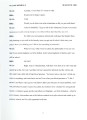
Show WAYNE KIMBALL MARCH 28, 2001 WAY: Split-s-that's a half an "s". And it so panicked him he refused to go over the Hump again. So he was assigned to fly the airplanes after they were worked on, after they were overhauled or something, he'd take them and fly them out. And he was the only one who ever told us the story of how bad things could get. I never heard of any crew coming off the Hump after they bailed out. No one ever got out. It was so dense with undergrowth and overgrowth. But I didn't know that until I read that book about the fellows who did not come back. When I was first there I was assigned as a co-pilot and about my first flight, my assignment, of course, was to make sure everything was running smoothly and we got into a thunderhead. These planes would fly over at about thirteen, fourteen thousand feet. That's not over the top of the thunderhead, you're right in the middle of the nasty part of it. We were going along, it was a daytime flight, and both engines iced up. The C-46 was notorious for icing engines and the engines iced up. So I hurried and put on my parachute and came back and found the first pilot and the radio operator went back to put on theirs and I waited long enough to think they should be back there, so I kicked the door open and they were throwing out the cargo we had, cases of food. I said, "What in the crap are you doing?" "Lightening the load." I said, "What for, you have no power, you're a glider, basically." I didn't say-I said, "What the hell for?" And I turned back around and we broke out and both engines started just that close. We were almost clipping the peaks. That was on my first flight. Two flights later we went on a night flight and I had the gear down, the flaps down, full rpms to get as much heat as we could get because we were icing up again and I was working with it. I glanced at the artificial horizon and we were going like that [points downward]. The first pilot was so intense on what I was doing, he wasn't watching that, he was watching me. I went like 21 |
| Reference URL |
https://collections.lib.utah.edu/ark:/87278/s60884j4/1025206 |