| Title |
Dale Ellis, North Ogden, Utah: an interview by Becky B. Lloyd, July 16, 2003: Saving the legacy tape no. 636 |
| Alternative Title |
Dale Ellis, Saving the legacy: an oral history of Utah's World War II veterans, ACCN 2070, American West Center, University of Utah |
| Creator |
Ellis, Dale, 1922-2014 |
| Contributor |
Lloyd, Becky B.; University of Utah. American West Center |
| Publisher |
Digitized by J. Willard Marriott Library, University of Utah |
| Date |
2003-07-16 |
| Date Digital |
2015-09-16 |
| Access Rights |
I acknowledge and agree that all information I obtain as a result of accessing any oral history provided by the University of Utah's Marriott Library shall be used only for historical or scholarly or academic research purposes, and not for commercial purposes. I understand that any other use of the materials is not authorized by the University of Utah and may exceed the scope of permission granted to the University of Utah by the interviewer or interviewee. I may request permission for other uses, in writing to Special Collections at the Marriott Library, which the University of Utah may choose grant, in its sole discretion. I agree to defend, indemnify and hold the University of Utah and its Marriott Library harmless for and against any actions or claims that relate to my improper use of materials provided by the University of Utah. |
| Spatial Coverage |
Marshall Islands; Tulagi, Solomon Islands; Palau; Japan; North Ogden, Weber County, Utah, United States |
| Subject |
Ellis, Dale, 1922-2014--Interviews; World War, 1939-1945--Personal narratives, American; Veterans--Utah--Biography; World War, 1939-1945--Naval operations, American; World War, 1939-1945--Campaigns--Pacific Area--Personal narratives, American |
| Keywords |
Minesweepers; Radar operators; Sonar operators |
| Description |
Transcript (41 pages) of an interview by Becky B. Lloyd with Dale Ellis on July 16, 2003. This is from tape number 636 in the "Saving the Legacy Oral History Project |
| Collection Number and Name |
Accn2070, Saving the Legacy oral history project, 2001-2010 |
| Abstract |
Mr. Ellis (b. 1922) recalls his childhood in North Ogden. He worked for the Southern Pacific Railroad prior to enlisting in the U.S. Navy in 1943 and was assigned to the minesweeper U.S.S. Perry, on which he was a radar/sonar operator. After the Perry was hit by a mine and sunk, Ellis was reassigned to an aircraft carrier. He finished out the war in various places in the Pacific, including Okinawa and Tokyo. 41 pages. |
| Type |
Text |
| Genre |
oral histories (literary works) |
| Format |
application/pdf |
| Extent |
41 pages |
| Language |
eng |
| Rights |
 |
| Scanning Technician |
Mazi Rakhsha |
| Conversion Specifications |
Original scanned with Kirtas 2400 and saved as 400 ppi uncompressed TIFF. PDF generated by Adobe Acrobat Pro X for CONTENTdm display |
| ARK |
ark:/87278/s63r2s3n |
| Topic |
Personal narratives--American; Veterans; World War (1939-1945); Military operations, Naval--American |
| Setname |
uum_slohp |
| ID |
1023516 |
| Reference URL |
https://collections.lib.utah.edu/ark:/87278/s63r2s3n |
| Title |
Page 33 |
| Format |
application/pdf |
| Setname |
uum_slohp |
| ID |
1023506 |
| OCR Text |
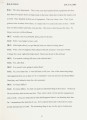
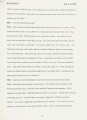
Show D L I 1 int that. W d go into that and th y d pty it all ut d d th ir r _ 1r h n til it up again. That happened two or three tim we had t g int th t. th r thin I should have mentioned those kind of mines weren t th only kind m1n th t ut there. The ones we were mainly concerned with were the big on that w r an h r d down. BEC: You described them as a big ball with spikes coming out. DAL: You've probably seen pictures of them. They show them, occasionally. It took ninety pounds of pressure to break those and that's what blew the mine up. That was the detonator, those horns on the mine. You'd hit into those with ninety pounds of pressure and you'd break them off and that would explode the mine. That was the idea. Anyway, they also had, they called them acoustic mines, or what did they call them? They were the kind that were in the area that would explode, but you didn't have to hit them. It was the vibrations you'd be sending out, the ships as they'd go in to a certain area. These things would eventually unwind, so to speak. I mean they had a certain device that would trigger them. It would take so many vibrations to do that. As they moved closer and closer, why, they'd set these off, see? About the time the ships got there, they'd explode. Also, they had magnetic mines. Magnetism would set them off. Every once in a while, they'd send us through a channel to demagnetize the ship. The ship would build up magnetism over a certain period of time and so they'd send us in to demagnetize, because that would cause these other mines to be triggered. So, we weren't mainly concerned about those, but we knew that they existed there somewhere. BEC: When you were in Tokyo, did you go ashore? DAL: Yes, well that's where that picture was taken, you know. 32 |
| Reference URL |
https://collections.lib.utah.edu/ark:/87278/s63r2s3n/1023506 |