| Title |
Dale H. West, Provo, Utah: an interview by Winston P. Erickson, June 23, 2000: Saving the legacy tape no. 45 |
| Alternative Title |
Dale H. West, Saving the legacy: an oral history of Utah's World War II veterans, ACCN 2070, American West Center, University of Utah |
| Creator |
West, Dale H., 1918-2007 |
| Contributor |
Erickson, Winston P., 1943-; University of Utah. American West Center |
| Publisher |
Digitized by J. Willard Marriott Library, University of Utah |
| Date |
2000-06-23 |
| Date Digital |
2015-09-16 |
| Access Rights |
I acknowledge and agree that all information I obtain as a result of accessing any oral history provided by the University of Utah's Marriott Library shall be used only for historical or scholarly or academic research purposes, and not for commercial purposes. I understand that any other use of the materials is not authorized by the University of Utah and may exceed the scope of permission granted to the University of Utah by the interviewer or interviewee. I may request permission for other uses, in writing to Special Collections at the Marriott Library, which the University of Utah may choose grant, in its sole discretion. I agree to defend, indemnify and hold the University of Utah and its Marriott Library harmless for and against any actions or claims that relate to my improper use of materials provided by the University of Utah. |
| Spatial Coverage |
Utah County, Utah, United States; New Guinea; Philippines |
| Subject |
West, Dale H., 1918-2007--Interviews; World War, 1939-1945--Personal narratives, American; Veterans--Utah--Biography; World War, 1939-1945--Campaigns--Pacific Area--Personal narratives, American |
| Keywords |
7th Army Air Force; Radio; decoding |
| Description |
Transcript (28 pages) of an interview by Winston P. Erickson with Dale H. West on June 23, 2000. This is from tape number 45 in the "Saving the Legacy Oral History Project |
| Collection Number and Name |
Accn2070, Saving the Legacy oral history project, 2001-2010 |
| Abstract |
West (b. 1918) recalls his childhood in Provo, Utah, and describes getting a degree in English from Brigham Young University. He taught school for several years and eventually received both a master's degree and doctorate in English. He served in the Asiatic-Pacific Theater of Operations with the 7th Army Air Force. He describes intercepting and classifying enemy air-to-ground and point-to-point radio messages. He decoded and relayed information concerning weather conditions, enemy air action, and enemy administrative orders to locally-based air combat units. 28 pages. |
| Type |
Text |
| Genre |
oral histories (literary works) |
| Format |
application/pdf |
| Extent |
28 pages |
| Language |
eng |
| Rights |
 |
| Scanning Technician |
Mazi Rakhsha |
| Conversion Specifications |
Original scanned with Kirtas 2400 and saved as 400 ppi uncompressed TIFF. PDF generated by Adobe Acrobat Pro X for CONTENTdm display |
| ARK |
ark:/87278/s6sx8cdx |
| Topic |
Personal narratives--American; Veterans; World War (1939-1945) |
| Setname |
uum_slohp |
| ID |
1023445 |
| Reference URL |
https://collections.lib.utah.edu/ark:/87278/s6sx8cdx |
| Title |
Page 18 |
| Format |
application/pdf |
| Setname |
uum_slohp |
| ID |
1023432 |
| OCR Text |
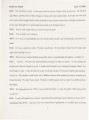
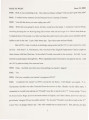
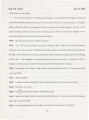
Show DALE H. WEST called again? June 23, 2000 DAL: "Sagoba." I don't even know how it was spelled. I've never seen it written. WIN: It sounds like a Japanese name. DAL: I don't know if it was written with S-1 or S-Y, or what. But it was Sagoba. WIN: So then you could send codes. Did you have any experiences over there with Navajo, or the other Native American language code talkers in your operation? DAL: We had Japanese in our outfit to help us a lot with the translation, and coding, and things like that. WIN: These were Japanese-Americans? DAL: Yes. WIN: They had them there helping you while their parents were interned here in the United States? DAL: Yeah, I guess. But most of them were from Hawaii. They were good, and they were very helpful. We did have a good crew. I hardly did any of the receiving of the codes anymore. I was correlating the various activities of our outfit; and, yes, they were very good. WIN: They must have been highly selective when they chose you to go in that particular field of specialization. You said you passed some tests. DAL= Well, the sad part of it was that I passed the test when they tried to find which ones of us had the necessary expertise. But I was one of the slowest to learn it. I had to go over and practice more than most of them did. Besides that, I had to be in charge of the group in training, and that caused some complications. WIN: Well, I guess that must have been an interesting experience for you, and you survived. How 16 |
| Reference URL |
https://collections.lib.utah.edu/ark:/87278/s6sx8cdx/1023432 |