| Title |
Barbara Greenlee Toomer, West Valley City, Utah: an interview by Becky B. Lloyd, February 25, 2006: Saving the legacy tape no. 756 |
| Alternative Title |
Barbara Greenlee Toomer, Saving the legacy: an oral history of Utah's World War II veterans, ACCN 2070, American West Center, University of Utah |
| Creator |
Toomer, Barbara Greenlee, 1929- |
| Contributor |
Lloyd, Becky B.; University of Utah. American West Center |
| Publisher |
Digitized by J. Willard Marriott Library, University of Utah |
| Date |
2006-02-25 |
| Date Digital |
2015-09-16 |
| Access Rights |
I acknowledge and agree that all information I obtain as a result of accessing any oral history provided by the University of Utah's Marriott Library shall be used only for historical or scholarly or academic research purposes, and not for commercial purposes. I understand that any other use of the materials is not authorized by the University of Utah and may exceed the scope of permission granted to the University of Utah by the interviewer or interviewee. I may request permission for other uses, in writing to Special Collections at the Marriott Library, which the University of Utah may choose grant, in its sole discretion. I agree to defend, indemnify and hold the University of Utah and its Marriott Library harmless for and against any actions or claims that relate to my improper use of materials provided by the University of Utah. |
| Spatial Coverage |
Fort Bragg, North Carolina, United States; Salt Lake City, Salt Lake County, Utah, United States |
| Subject |
Toomer, Barbara Greenlee, 1929- --Interviews; World War, 1939-1945--Personal narratives, American; Veterans--Utah--Biography; United States--Army Nurse Corps |
| Keywords |
Girl Scouts; Nurses; Polio; Activists |
| Description |
Transcript (43 pages) of an interview by Becky B. Lloyd with Barbara Toomer on February 25, 2006. This is from tape number 756 in the "Saving the Legacy Oral History Project |
| Collection Number and Name |
Accn2070, Saving the Legacy oral history project, 2001-2010 |
| Abstract |
Barbara Toomer (b. 1929) was born in Pasadena, California. She received her RN in 1952 from St. Joseph's College of Nursing in San Francisco, California. She joined the Army in 1953 and took basic training at Fort Sam Houston in San Antonio, Texas. She served at Fort Bragg, North Carolina, until her discharge in 1955. She contracted polio in 1956 and has been confined to a wheelchair since that time. She is a successful activist, petitioning for the rights of the disabled. 43 pages. |
| Type |
Text |
| Genre |
oral histories (literary works) |
| Format |
application/pdf |
| Extent |
43 pages |
| Language |
eng |
| Rights |
 |
| Scanning Technician |
Mazi Rakhsha |
| Conversion Specifications |
Original scanned with Kirtas 2400 and saved as 400 ppi uncompressed TIFF. PDF generated by Adobe Acrobat Pro X for CONTENTdm display |
| ARK |
ark:/87278/s6j985pn |
| Topic |
Personal narratives--American; Veterans; World War (1939-1945); United States. Army Nurse Corps |
| Setname |
uum_slohp |
| ID |
1022466 |
| Reference URL |
https://collections.lib.utah.edu/ark:/87278/s6j985pn |
| Title |
Page 33 |
| Format |
application/pdf |
| Setname |
uum_slohp |
| ID |
1022454 |
| OCR Text |
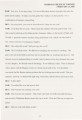
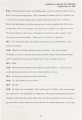
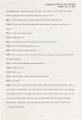
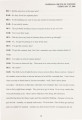
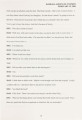
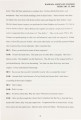
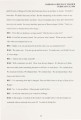
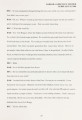
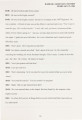
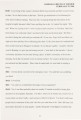
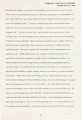
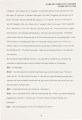
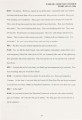
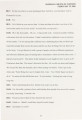
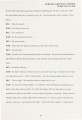
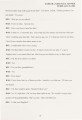
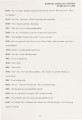
Show BRB th par nt of childr n-now that I'v had children I know that th y g t ick at night. They'r fine in the daytime but come six o'clock, they do get sick. It s what happ n t kids. But at that time when I first went down there, I thought, Oh they just don't want to go to the pediatric ward." You know, pediatrics was open in the daytime becau e medicine is free on an Army base for dependents. I must have said something, because a sergeant said, "You know Ma'am, kids do get sick and they do get sick early in the evening. That's why these people are here, not because they're trying to avoid anything." It made me sit back and think. Maybe I had been a little bit ornery. I didn't want to be known as Nurse Cratchet there. But I did learn a lot that way. I learned a lot about handling people. I had some sergeants who really didn't do the work that they were supposed to do. I finally figured out a way. I talked to a friend of mine who was a psychiatric nurse and she suggested a couple of ways of handling the problem. So I talked to them about various things and lo and behold, they started doing what they should be doing. I was really pleased with myself. So I learned a lot. I learned more there than I did isolated in surgery, because when you're in surgery, you don't interface with people. What you're doing is providing a service. When you do the wards, what you're doing is making sure that everything's in line. So it's an orderly thing. You make sure that the narcotics are done. It's a check-off list. One of the things I did before I went to the emergency room, when I was still in surgery, was to go to a MASH unit. We had a six-week training course out in the field. The guys went out in the field and so we went out in the field. We had a MASH unit out there. The one thing that I remember, and I will never forget it, I was in sort of like the triage area. It's not like MASH on TV. It was like a miniature hospital. Anyway this sergeant came in with his rifle. I mean his 32 |
| Reference URL |
https://collections.lib.utah.edu/ark:/87278/s6j985pn/1022454 |