| Title |
Barbara Greenlee Toomer, West Valley City, Utah: an interview by Becky B. Lloyd, February 25, 2006: Saving the legacy tape no. 756 |
| Alternative Title |
Barbara Greenlee Toomer, Saving the legacy: an oral history of Utah's World War II veterans, ACCN 2070, American West Center, University of Utah |
| Creator |
Toomer, Barbara Greenlee, 1929- |
| Contributor |
Lloyd, Becky B.; University of Utah. American West Center |
| Publisher |
Digitized by J. Willard Marriott Library, University of Utah |
| Date |
2006-02-25 |
| Date Digital |
2015-09-16 |
| Access Rights |
I acknowledge and agree that all information I obtain as a result of accessing any oral history provided by the University of Utah's Marriott Library shall be used only for historical or scholarly or academic research purposes, and not for commercial purposes. I understand that any other use of the materials is not authorized by the University of Utah and may exceed the scope of permission granted to the University of Utah by the interviewer or interviewee. I may request permission for other uses, in writing to Special Collections at the Marriott Library, which the University of Utah may choose grant, in its sole discretion. I agree to defend, indemnify and hold the University of Utah and its Marriott Library harmless for and against any actions or claims that relate to my improper use of materials provided by the University of Utah. |
| Spatial Coverage |
Fort Bragg, North Carolina, United States; Salt Lake City, Salt Lake County, Utah, United States |
| Subject |
Toomer, Barbara Greenlee, 1929- --Interviews; World War, 1939-1945--Personal narratives, American; Veterans--Utah--Biography; United States--Army Nurse Corps |
| Keywords |
Girl Scouts; Nurses; Polio; Activists |
| Description |
Transcript (43 pages) of an interview by Becky B. Lloyd with Barbara Toomer on February 25, 2006. This is from tape number 756 in the "Saving the Legacy Oral History Project |
| Collection Number and Name |
Accn2070, Saving the Legacy oral history project, 2001-2010 |
| Abstract |
Barbara Toomer (b. 1929) was born in Pasadena, California. She received her RN in 1952 from St. Joseph's College of Nursing in San Francisco, California. She joined the Army in 1953 and took basic training at Fort Sam Houston in San Antonio, Texas. She served at Fort Bragg, North Carolina, until her discharge in 1955. She contracted polio in 1956 and has been confined to a wheelchair since that time. She is a successful activist, petitioning for the rights of the disabled. 43 pages. |
| Type |
Text |
| Genre |
oral histories (literary works) |
| Format |
application/pdf |
| Extent |
43 pages |
| Language |
eng |
| Rights |
 |
| Scanning Technician |
Mazi Rakhsha |
| Conversion Specifications |
Original scanned with Kirtas 2400 and saved as 400 ppi uncompressed TIFF. PDF generated by Adobe Acrobat Pro X for CONTENTdm display |
| ARK |
ark:/87278/s6j985pn |
| Topic |
Personal narratives--American; Veterans; World War (1939-1945); United States. Army Nurse Corps |
| Setname |
uum_slohp |
| ID |
1022466 |
| Reference URL |
https://collections.lib.utah.edu/ark:/87278/s6j985pn |
| Title |
Page 9 |
| Format |
application/pdf |
| Setname |
uum_slohp |
| ID |
1022430 |
| OCR Text |
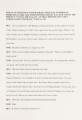
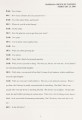
Show BRB T M R R 2 200 wa kind fa back up system for emergencies. They could talk to anyone in th w rid. He was a Morse code expert. He had quite a few talents. BEC: I'm curious. Did you have regular air raid drills? BAR: I don't remember regular drills. We would have blackouts and then we would have to go down. BEC: Do you remember how you felt at that time? BAR: Oh, yes. I felt really confined. I was worried. Everybody was worried. Of course, my dad wasn't there. He was sort of my pillar. I loved my mom, but she didn't seem to me as a really ... although I realized after he died how really self-reliant she was. But to me, at that young age, I was more in love with my father, I think. So I was really worried about him. He wasn't there to comfort us. Yes, it was kind of an interesting feeling. Of course, we did have the (Japanese) submarine come to Santa Barbara, and Santa Barbara was only seventy-five miles north of us. It wasn't very far north. So, it was interesting. BEC: Right, and that was upsetting, I guess. BAR: Yes, and we had these (barrage) balloons up in the air. If the (Japanese) air force came through, they'd get caught on these balloons. Now that I know, I can't understand why anybody flying an airplane wouldn't just go above the balloons. But then, you know, those made us feel safer at the time. BEC: I'm just trying to picture myself at twelve years old having drills and having to go down into the little cubbyhole. I'm trying to picture what that would do to me. BAR: I don't know that it did anything to me. I don't remember ever being a really fearful person, but I can't believe it wasn't upsetting and of concern. Of course, by the 8 |
| Reference URL |
https://collections.lib.utah.edu/ark:/87278/s6j985pn/1022430 |