| Title |
Roy Bird, Salt Lake City, Utah: an interview by Becky B. Lloyd, December 4, 2002: Saving the legacy tape no. 554 |
| Alternative Title |
Roy Bird, Saving the legacy: an oral history of Utah's World War II veterans, ACCN 2070, American West Center, University of Utah |
| Creator |
Bird, Roy, 1925- |
| Contributor |
Lloyd, Becky B.; University of Utah. American West Center |
| Publisher |
Digitized by J. Willard Marriott Library, University of Utah |
| Date |
2002-12-04 |
| Date Digital |
2015-09-16 |
| Access Rights |
I acknowledge and agree that all information I obtain as a result of accessing any oral history provided by the University of Utah's Marriott Library shall be used only for historical or scholarly or academic research purposes, and not for commercial purposes. I understand that any other use of the materials is not authorized by the University of Utah and may exceed the scope of permission granted to the University of Utah by the interviewer or interviewee. I may request permission for other uses, in writing to Special Collections at the Marriott Library, which the University of Utah may choose grant, in its sole discretion. I agree to defend, indemnify and hold the University of Utah and its Marriott Library harmless for and against any actions or claims that relate to my improper use of materials provided by the University of Utah. |
| Spatial Coverage |
France; Germany |
| Subject |
Bird, Roy, 1925- --Interviews; World War, 1939-1945--Personal narratives, American; Veterans--Utah--Biography; World War, 1939-1945--Military operations, American; World War, 1939-1945--Campaigns--Europe, Northern--Personal narratives, American |
| Keywords |
42nd Infantry Division; Reunions |
| Description |
Transcript (41 pages) of an interview by Becky B. Lloyd with Roy H. Bird on December 4, 2002. This is from tape number 554 in the "Saving the Legacy Oral History Project |
| Collection Number and Name |
Accn2070, Saving the Legacy oral history project, 2001-2010 |
| Abstract |
Roy Bird (b. 1925) served with the 42nd Infantry Division between 1943 and 1945. His unit was in France and Germany. He was wounded and sent to El Paso, Texas, where he remained until the war ended. Bird also talks about his trips to Europe and military reunions. 41 pages. |
| Type |
Text |
| Genre |
oral histories (literary works) |
| Format |
application/pdf |
| Extent |
41 pages |
| Language |
eng |
| Rights |
 |
| Scanning Technician |
Mazi Rakhsha |
| Conversion Specifications |
Original scanned with Kirtas 2400 and saved as 400 ppi uncompressed TIFF. PDF generated by Adobe Acrobat Pro X for CONTENTdm display |
| ARK |
ark:/87278/s6z62n8g |
| Topic |
Personal narratives--American; Veterans; World War (1939-1945) |
| Setname |
uum_slohp |
| ID |
1022350 |
| Reference URL |
https://collections.lib.utah.edu/ark:/87278/s6z62n8g |
| Title |
Page 16 |
| Format |
application/pdf |
| Setname |
uum_slohp |
| ID |
1022321 |
| OCR Text |
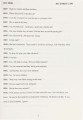
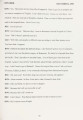
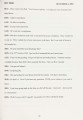
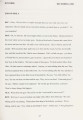
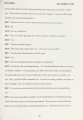
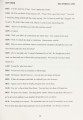
Show RO B RD the Rhine River which separated ranee and rm y y u ended up. We lost a lot of men, but most of them were taken pris n r . prisoners taken. BEC: You were just overrun. h ROY: On the 6th of January, we had our first man killed in the company. At that tim a complete company was 189 men. By the 18th of January we were down to forty-three. So in ten days, we lost that many guys. Most of them were taken prisoner. A lot of prisoners were taken during the Battle of the Bulge. BEC: When you think about that time now, what stands out in your mind the most, is it cold or hunger or being wet? ROY: Cold and scared. BEC: So, I guess you were just in foxholes? ROY: We were mostly in buildings. Anytime the Germans were around, the French people left, so we just took their houses over. We did have some foxholes, but didn't use them very much. But we just took the buildings over. Most of the fighting was house to house, and building and that. But that was good on account of the cold weather. You could at least be inside where it was warm some of the time. We weren't equipped for cold. We were in foxholes for a month up in the Hardt Mountains. BEC: The coat that they gave you just wasn't enough for the cold? ROY: Well, it was interesting. There was quite a bit of snow and we had regular boots. Then, while we were there, they came out with what they called the shoe-pack. They were an insulated, but more like an overshoe. You had your choice of what you could have but you couldn't have both. The shoe-packs would keep your feet warm, but they 15 |
| Reference URL |
https://collections.lib.utah.edu/ark:/87278/s6z62n8g/1022321 |