| OCR Text |
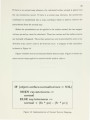
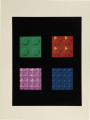
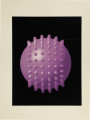
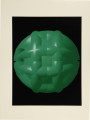
Show 17 rameters simply define the height and width of th texture map. Th ur a and vrepeat values scale the texture on the object. The utrans and vtran valu translate the texture on the object to control the position. In the case of a quadric the transformation is performed by calculating the latitude and longitude. These two angles (theta, phi) are adjusted to lie within the borders of the texture map and then used as an index into the map. The calculation of the ( u,v) indices into the texture map requires the sante parameters as used for polygons. 2.3.3 Current Techniques Current texture mapping techniques have involved only perturbations of either surface color, shading parameters, or surface nonnal information. Texture maps containing color information are used to portray natural objects that are mathematically smoooth but have large color variations. Common examples of such objects are brick walls, tile floors, and asphalt roads. Color perturbation maps may be produced by a large variety of methods, including paint programs, image processing, stochastic models, procedural models, and any image synthesis program. Texture maps that store normal perturbation information are used to simulate surfaces that are not mathematically smooth. Normal perturbations produce variations in shading that provide smooth surfaces with textured attributes. Normal perturbation maps can be produced from an explicit model or by methods similiar |