| Title |
Rabbi Eric Silver, Interviews with Jews in Utah, Accn 998 |
| Alternative Title |
Accn 998, Interviews with Jews in Utah, Rabbi Eric Silver |
| Description |
Transcript (210 pages) of interviews by Leslie Kelen with Eric Silver in 1986 for the Interviews with Jews in Utah Oral History Project. |
| Creator |
Silver, Eric, 1942- |
| Contributor |
Kelen, Leslie G., 1949-; Oral History Institute |
| Publisher |
Digitized by J. Willard Marriott Library, University of Utah |
| Date |
1986-02-13; 1986-02-20; 1986-02-26; 1986-03-10; 1986-03-17; 1986-04-03; 1986-04-07 |
| Date Digital |
2015-07-06 |
| Access Rights |
I acknowledge and agree that all information I obtain as a result of accessing any oral history provided by the University of Utah's Marriott Library shall be used only for historical or scholarly or academic research purposes, and not for commercial purposes. I understand that any other use of the materials is not authorized by the University of Utah and may exceed the scope of permission granted to the University of Utah by the interviewer or interviewee. I may request permission for other uses, in writing to Special Collections at the Marriott Library, which the University of Utah may choose grant, in its sole discretion. I agree to defend, indemnify and hold the University of Utah and its Marriott Library harmless for and against any actions or claims that relate to my improper use of materials provided by the University of Utah. |
| Spatial Coverage |
Salt Lake City, Salt Lake County, Utah, United States, http://sws.geonames.org/5780993 |
| Subject |
Jews, American--Utah--Interviews; Silver, Eric, 1942- --Interviews; Jews--Social life and customs; Hebrew Union College-Jewish Institute of Religion; Reform Judaism--United States; Judaism--Study and teaching |
| Abstract |
Silver (b. 1942) was the subject of seven interviews conducted by Leslie Kelen. In the first interview, Silver talks about his family background, his father's Hasidic upbringing, the pre-World War II immigration of his parents, talks about his own childhood. The next two interviews contain information on Silver's education, his seven years of Naval service (beginning in 1963), his experiences at Hebrew Union College, the spiritual responsibility involved in the rabbinate, and what it meant to go to a reform, rather than conservative or orthodox college. The remainder of the interviews focus on Silver's experiences as a rabbi and on the congregations and people he has served. Topics covered include interfaith marriages, how rabbis are placed, conflicts between reform and conservative components of the community, the "lost generation" of children veering away from their Jewish roots, his evaluation by the board of Kol Ami, the differences between being a rabbi and being a leader, and his decision to leave the congregation Kol Ami after five years. 210 pages. |
| Type |
Text |
| Genre |
oral histories (literary works) |
| Format |
application/pdf |
| Extent |
210 pages |
| Language |
eng |
| Rights |
 |
| Is Part of |
Interviews with Jews in Utah collection, 1982-1988, http://archiveswest.orbiscascade.org/ark:/80444/xv70657/ |
| Scanning Technician |
Niko Amaya; Halima Noor |
| Conversion Specifications |
Original scanned with Kirtas 2400 and saved as 400 ppi uncompressed TIFF. PDF generated by Adobe Acrobat Pro X for CONTENTdm display |
| ARK |
ark:/87278/s6m924cj |
| Topic |
Jews, American; Jews--Social life and customs; Hebrew Union College-Jewish Institute of Religion; Reform Judaism; Judaism--Study and teaching |
| Setname |
uum_iju |
| ID |
905322 |
| Reference URL |
https://collections.lib.utah.edu/ark:/87278/s6m924cj |
| Title |
Page 187 |
| Format |
application/pdf |
| Setname |
uum_iju |
| ID |
905297 |
| OCR Text |
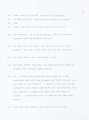
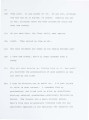
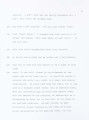
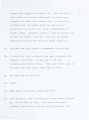
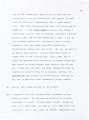
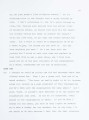
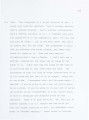
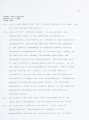
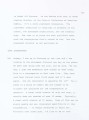
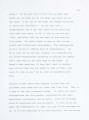
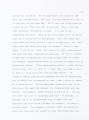
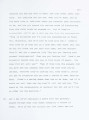
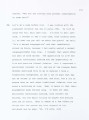
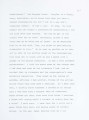
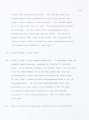
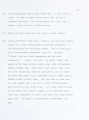
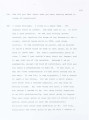
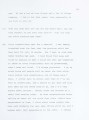
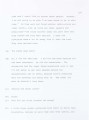
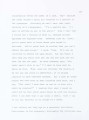
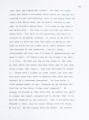
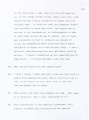
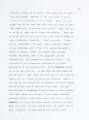
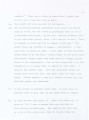
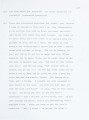
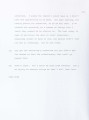
Show and he points out that none of these immigrant communities have made it beyond four 0eneration. That within each of the four generations there was a gradual di~inuation of whatever it was that made them existentially Jewish. Ergo, for example, the Spanish Jews came here because they wanted to be Jews. Being Jewish was very important to them. So they settled in places like the deep South, New York, New England. Names like Shashas, Touro, Sheftall, and so forth, these are naDes that figure prominently in American history. Just allowin0 for natural growth, there should be millions of Sephardim running around in the woods these days. There aren't, because the second generation tried to Americanize, the third even more so, and by the time we got to the fourth generation, there was a withering away. Ditto for the German immigrations, then the Eastern European immigrations. The Eastern European immigrants who came here during the latter part of the 19th, early 20th century came here and they were concerned with making a living, trying to survive. ifuat is it that Sam Levinson said his father discovered when he came here? He said it was three things that he discovered: One, the streets were not paved with gold, as they had been led to believe over in Europe; secondly, most of the streets weren't e ven paved at all; third, he was the guy who 186 |
| Reference URL |
https://collections.lib.utah.edu/ark:/87278/s6m924cj/905297 |