| Title |
Norman Nathan, Interviews with Jews in Utah, Accn 998 |
| Alternative Title |
Accn 998, Interviews with Jews in Utah, Norman Nathan |
| Description |
Transcript (89 pages) of interview by Leslie Kelen with Normon Nathan on February 17, 1983 for the Interviews with Jews in Utah Oral History Project. |
| Creator |
Nathan, Norman, 1897-1985 |
| Contributor |
Kelen, Leslie G., 1949-; Oral History Institute |
| Publisher |
Digitized by J. Willard Marriott Library, University of Utah |
| Date |
1983-02-17 |
| Date Digital |
2015-07-06 |
| Access Rights |
I acknowledge and agree that all information I obtain as a result of accessing any oral history provided by the University of Utah's Marriott Library shall be used only for historical or scholarly or academic research purposes, and not for commercial purposes. I understand that any other use of the materials is not authorized by the University of Utah and may exceed the scope of permission granted to the University of Utah by the interviewer or interviewee. I may request permission for other uses, in writing to Special Collections at the Marriott Library, which the University of Utah may choose grant, in its sole discretion. I agree to defend, indemnify and hold the University of Utah and its Marriott Library harmless for and against any actions or claims that relate to my improper use of materials provided by the University of Utah. |
| Spatial Coverage |
Salt Lake City, Salt Lake County, Utah, United States, http://sws.geonames.org/5780993 |
| Subject |
Jews, American--Utah--Interviews; Nathan, Norman, 1897-1985--Interviews; Kosher food; Antisemitism--United States; Zionism--United States--History; Jews--Social life and customs; Japanese Americans -- Forced removal and internment, 1942-1945; World War, 1939-1945 -- Japanese Americans |
| Abstract |
Nathan (b. 1897) talks about his parents, his childhood, and going to school. He also discusses the relations between Mormons and Jews in Utah, growing up kosher, his Jewish identity, and the division between two local congregations. He remembers his father's business in hides and furs, talks of peddling junk and selling ore, recalls working in the mercantile and mining businesses, and explores the question "why be Jewish." Other topics covered include anti-Semitism, working for the Bamburgers, starting the local Zionist Organization in 1926, Shaary Tzedick, Rabbi Crickstein, and Kaplan, the kosher butcher. He also talks about being a member of the Elks' Drill Team and working for a Japanese camp in Idaho during World War II. 89 pages. |
| Type |
Text |
| Genre |
oral histories (literary works) |
| Format |
application/pdf |
| Extent |
89 pages |
| Language |
eng |
| Rights |
 |
| Is Part of |
Interviews with Jews in Utah collection, 1982-1988, http://archiveswest.orbiscascade.org/ark:/80444/xv70657/ |
| Scanning Technician |
Niko Amaya; Halima Noor |
| Conversion Specifications |
Original scanned with Kirtas 2400 and saved as 400 ppi uncompressed TIFF. PDF generated by Adobe Acrobat Pro X for CONTENTdm display |
| ARK |
ark:/87278/s6jh5fwk |
| Topic |
Jews, American; Jews--Social life and customs; Antisemitism; Kosher food; Zionism; Evacuation and relocation of Japanese Americans (United States : 1942-1945); World War (1939-1945) |
| Setname |
uum_iju |
| ID |
903907 |
| Reference URL |
https://collections.lib.utah.edu/ark:/87278/s6jh5fwk |
| Title |
Page 6 |
| Format |
application/pdf |
| Setname |
uum_iju |
| ID |
903822 |
| OCR Text |
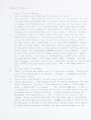
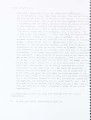
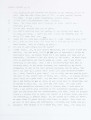
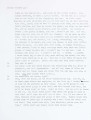
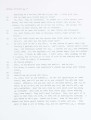
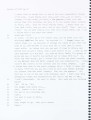
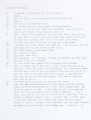
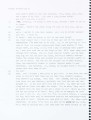
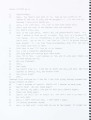
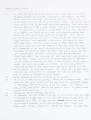
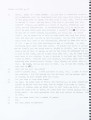
Show l 1 a than 2/17 / 83 pg 5 LK \v·as it during the summer? l r~ Luring~he sumrrer, yeah, it was very nice. I rerrerrber that fiit faintly. Lh ~hat did he take with hi~ during that trip? liT' Well, the first stop we made was at Hasrrussen Ran ch, and it was the general rrerchandise, probably so me household goods and clothing for men and wo rr en . No food stuffs . Only enough to take care of us. And then h e would go on further after this trip. This was just a short trip . But , when he went by himself he went all the way to Wyoming . LK Oh , is that right? ~hat ' s a good ways . ; ~ 1·~ VJ it h his tea rr . L~ That's a good ways , boy . wnat was the kind of price he was asking for this stuff , do you remember? · 1 tT This would only be a guess . I have no idea how much money they exchanged , or the value of the goods in those days . I have no idea . It must have been very cheap . LK LK LK NN LK NN LK So , he had to sell some amount m order to earn a livel yhood . Yeah , and they would pay him . I don ' t Y~ow how they would pay hirr . I guess with checks and currency . I remember some of the merchandise coiP.ing from St . Louis frorr r~ _ . E . Smith and Company , they were a merchandise house in St . Louis . Se would get shipments fro~ therr- . Would they come directly to your house? Yes . Those were different days , you know , I don ' t know ~ ow they came , but he would get a shipment and he ' d pack up again , and he ' d leave again for the road . My mother would take care of the home . You must have wondered about his adventures on the road sometimes . Yeah . Did he have some? Oh , yes , he had quite a few that he told us about. What did he tell you about7 This is very nice to listen to. Well , at one time somethiB£ took place in his business : He was s me going to be arrested for/illegal operation like--I don't know what it was all abut --but , anyway , the people he was staying with, they (\a~ 'n§:.) dressed him up like a woman and he left the country.~ 1t wasn't any-thing serious , he had neglected to take a license or something of |
| Reference URL |
https://collections.lib.utah.edu/ark:/87278/s6jh5fwk/903822 |