| Title |
Betsy Anne Bamberger Lesser, Interviews with Jews in Utah, Accn 998 |
| Alternative Title |
Accn 998, Interviews with Jews in Utah, Betsy Anne Bamberger Lesser |
| Description |
Transcript (104 pages) of interview by Leslie Kelen with Betsy Lesser on January 1, 1927 for the Interviews with Jews in Utah Oral History Project. |
| Creator |
Lesser, Betsy Anne Bamberger, 1922- |
| Contributor |
Kelen, Leslie G., 1949-; Oral History Institute |
| Publisher |
Digitized by J. Willard Marriott Library, University of Utah |
| Date |
1983-01-27 |
| Date Digital |
2015-07-06 |
| Access Rights |
I acknowledge and agree that all information I obtain as a result of accessing any oral history provided by the University of Utah's Marriott Library shall be used only for historical or scholarly or academic research purposes, and not for commercial purposes. I understand that any other use of the materials is not authorized by the University of Utah and may exceed the scope of permission granted to the University of Utah by the interviewer or interviewee. I may request permission for other uses, in writing to Special Collections at the Marriott Library, which the University of Utah may choose grant, in its sole discretion. I agree to defend, indemnify and hold the University of Utah and its Marriott Library harmless for and against any actions or claims that relate to my improper use of materials provided by the University of Utah. |
| Spatial Coverage |
Salt Lake City, Salt Lake County, Utah, United States, http://sws.geonames.org/5780993 |
| Subject |
Jews, American--Utah--Interviews; Lesser, Betsy Anne Bamberger, 1922---Interviews; Bamberger, Simon, 1847-1926; International House (Berkeley, Calif.); Jews--Social life and customs; Salt Lake City (Utah); Bamberger Railroad Company; Rowland Hall (Salt Lake City, Utah) |
| Abstract |
Betsy Lesser (b. 1922) tells Leslie Kelen about her childhood, and about her grandfather, Utah Governor Simon Bamberger. She recalls her memories of Mills College, World War II, the night of VJ Day, the Bamburger Railroad, Utah Coal Company, and the tensions between German Jews and other ethnic Jews. She also talks about segregation as she remembers it. She tells stories about family members, remembers going to high school at Rowland Hall, and talks about first hearing Hitler on the radio. Other topics include her father, Lagoon, ethnic groups in Salt Lake City, the community response to World War II, changes she has seen in Salt Lake, and her memories of International House at the University of California at Berkeley. 104 pages. |
| Type |
Text |
| Genre |
oral histories (literary works) |
| Format |
application/pdf |
| Extent |
104 pages |
| Language |
eng |
| Rights |
 |
| Is Part of |
Interviews with Jews in Utah collection, 1982-1988, http://archiveswest.orbiscascade.org/ark:/80444/xv70657/; Aileen H. Clyde 20th Century Women's Legacy Archive |
| Scanning Technician |
Niko Amaya; Halima Noor |
| Conversion Specifications |
Original scanned with Kirtas 2400 and saved as 400 ppi uncompressed TIFF. PDF generated by Adobe Acrobat Pro X for CONTENTdm display |
| ARK |
ark:/87278/s6kh2h38 |
| Topic |
Jews, American; Jews--Social life and customs; International House (Berkeley, Calif.); Utah--Salt Lake City; Bamberger Railroad Company; Rowland Hall (Salt Lake City, Utah) |
| Setname |
uum_iju |
| ID |
902858 |
| Reference URL |
https://collections.lib.utah.edu/ark:/87278/s6kh2h38 |
| Title |
Page 29 |
| Format |
application/pdf |
| Setname |
uum_iju |
| ID |
902781 |
| OCR Text |
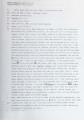
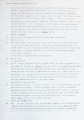
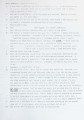
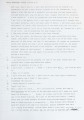
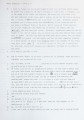
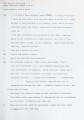
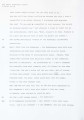
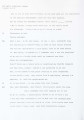
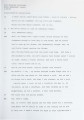
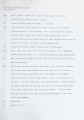
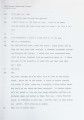
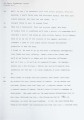
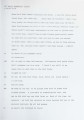
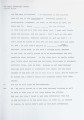
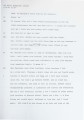
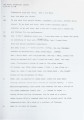
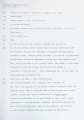
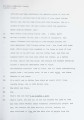
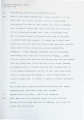
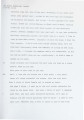
Show Betsy Bamberger 1-27-83 p.28 my parentsJbecause it had an anti -semetic aspect to it. BL Do you have other family. Sisters andbrothers. L I have a sister. That's one thing I didn't ask you. BL Yes, I have one sister. She died of cancer in 1973. L That was all the children- BL Just the two of us. And she married a man who's Jewish, from Cincinatti, but they left-they didn't raise their children as Jews. Her ex-husband L is married and living here and he's married to an Episcopalian . And they're ~P.~~assimilated and their children were not brought up as Jewish and they have nothing to do wi~h .fo ..,Y,er.L ~~tmR r;..,lf say my ~e, some day 'A call the jewish community. I used to teaseand I'd her a damn Jew. And she'd say, No, I'm not Jewish--it's my aunt Betsy. But are you friendly with your parents now? Yes, we've reconciled. It was most brutal and wheni was in my late teens, 20s .... ·[they discuss expectations] Well, you know people's personalities are very unpredictable at some times. And th e less articulate a person is about who they are, what they are--my father was pretty violentwhen I was growing. BL Wereyou the older? L Yes. BL Yes, I think the firstone always carries alot. Particularly if --forthe son ... [the tape is turned off,hmm.] L I didn't know that. Your grandfather set up pins. BL He set up pins in a bowling alley when he first came to New York, when he was a young man. He was on his way out to meet--to the home of his half sister, who lived in the middle west. I forgetten exactly where. And her husband was in the merc~ntile business and as I understand, he had given clothing and so forth to the people who were building the trans continental railroad. So eventually they sent him out to collect some of those bills, as I understood. This is the story I've heazrd and I'm not sure of exactly-but he went out and that's how he walked into Utah as a young man. Andhe like~the Mormons and he liked the West. So as soon as he took everything back to pay off thebills and so forth, he decided he would move out to Utah. L So he literally followed the gangs on the railroad. Collecting money .. BL Well, he went - to collect the money-he went to collect some of the bills. And when they got paid, I guess, after they had finished the railroad. So he came into Utah in the 1860s. And he got in before the railroad was finished. so |
| Reference URL |
https://collections.lib.utah.edu/ark:/87278/s6kh2h38/902781 |