| Title |
Interviews with Japanese in Utah: Saige Aramaki |
| Alternative Title |
Saige Aramaki |
| Creator |
Aramaki, Saige, 1918- |
| Contributor |
Kelen, Leslie G., 1949- |
| Publisher |
Digitized by J. Willard Marriott Library, University of Utah |
| Date |
1984-06-28 |
| Date Digital |
2014-03-25 |
| Access Rights |
I acknowledge and agree that all information I obtain as a result of accessing any oral history provided by the University of Utah's Marriott Library shall be used only for historical or scholarly or academic research purposes, and not for commercial purposes. I understand that any other use of the materials is not authorized by the University of Utah and may exceed the scope of permission granted to the University of Utah by the interviewer or interviewee. I may request permission for other uses, in writing to Special Collections at the Marriott Library, which the University of Utah may choose grant, in its sole discretion. I agree to defend, indemnify and hold the University of Utah and its Marriott Library harmless for and against any actions or claims that relate to my improper use of materials provided by the University of Utah. |
| Spatial Coverage |
Salt Lake City, Salt Lake County, Utah, United States, http://sws.geonames.org/5780993/ ; Price, Carbon County, Utah, United States, http://sws.geonames.org/5545269/ ; South Korea, http://sws.geonames.org/1835841/ ; Japan, http://sws.geonames.org/1861060/ |
| Subject |
Aramaki, Saige, 1918- Interviews; Japanese Americans--Utah--Interviews; Japanese Americans--Forced removal and internment, 1942-1945; United States--Armed Forces--Japanese Americans; Japanese American soldiers; Japanese American farmers; Utah--Ethnic relations |
| Description |
Transcript (typescript, 44 pages) of an interview on June 28, 1984, by Leslie Kelen of Saige Aramaki, a Japanese American born at Price, Utah. Mr. Aramaki (b. 1918) recounts his genealogy, and recalls his childhood in Carbon County, Utah. He was drafted into the army in the Spring of 1941. After Pearl Harbor he was demoted and transferred out of his unit, which was scheduled to be shipped to Europe. He was sent to Japanese language school at Camp Savage in Minnesota. He was sent to Japan after the war. In his twenty-two years in the army Mr. Aramki served in Japan, Korea, and various bases within the continental United States. Other topics covered include farming, racial discrimination, the Japanese American Citizen's League, automation in manufacturing, and the possibility of redress for Japanese internment. |
| Type |
Text |
| Genre |
oral histories (literary works) |
| Format |
application/pdf |
| Language |
eng |
| Rights |
 |
| Relation |
http://archiveswest.orbiscascade.org/ark:/80444/xv45901 |
| Scanning Technician |
Matt Wilkinson |
| Conversion Specifications |
Original scanned with Kirtas 2400 and saved as 400 ppi uncompressed TIFF. PDF generated by Adobe Acrobat Pro 9 for CONTENTdm display |
| ARK |
ark:/87278/s6m05ng4 |
| Topic |
Japanese Americans; Evacuation and relocation of Japanese Americans (United States : 1942-1945); Japanese American soldiers; Japanese American farmers |
| Relation is Part of |
Mitsugi M. Kasai Memorial Japanese American Archive |
| Setname |
uum_ijau |
| ID |
897665 |
| Reference URL |
https://collections.lib.utah.edu/ark:/87278/s6m05ng4 |
| Title |
Page 40 |
| Format |
application/pdf |
| Setname |
uum_ijau |
| ID |
897659 |
| OCR Text |
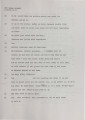
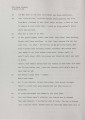
Show OHI Saige Aramaki 6-28-84 s2:39 SA Yeah. THey myl oh, god look a thtat Vfetnamese. Look at the nice car he's got. Theydon't realise is he really workedfor it. Maybe he worked to get that nice car. I'm sure nobody's I'm surehe worked for it. He worked for it by saving pennies and working lard. S cthe people don't realise that. LK I've hard some ci.. that stuff too. SA Same way with t}la· - the orientals, if they see a JApanese. Gee, that guy's got a nice car.How in hell can they afford that n'ice car. Well,that guy- he worked for it. Maybe he's got a good job. Maybe he's earned it. Ours, you've heard the saying, Well, Japan took all the jobs away fromthe people. You know, because of the automobile industry. That's -so, we gethit forhat, you know. LK Theywant to know, they think ypu're probably responsible. SA Theythink I'm resoponsible thatsomebody lost their job in Detroit you know. There's cases in Kennecott, cases like Geneva Steel. Because of the foreign country that Geneva Steel went under. I- I see what --Geneva Steel. I'vebeen throughthatplant in GEneva Steel yers ago. We took a tour down there - it was - !was with the Community Development. !was on the committee for that. And the community development people wentdown there to see the Steel Plant down there and at that time,~ou couldsee what they were doing -s pending alotof money towards wages and all wtro improvement to the plant. My, God, it's run down. It's behind. So I think that's their problem, been spending a lot of |
| Reference URL |
https://collections.lib.utah.edu/ark:/87278/s6m05ng4/897659 |