| Title |
Interviews with Japanese in Utah: Saige Aramaki |
| Alternative Title |
Saige Aramaki |
| Creator |
Aramaki, Saige, 1918- |
| Contributor |
Kelen, Leslie G., 1949- |
| Publisher |
Digitized by J. Willard Marriott Library, University of Utah |
| Date |
1984-06-28 |
| Date Digital |
2014-03-25 |
| Access Rights |
I acknowledge and agree that all information I obtain as a result of accessing any oral history provided by the University of Utah's Marriott Library shall be used only for historical or scholarly or academic research purposes, and not for commercial purposes. I understand that any other use of the materials is not authorized by the University of Utah and may exceed the scope of permission granted to the University of Utah by the interviewer or interviewee. I may request permission for other uses, in writing to Special Collections at the Marriott Library, which the University of Utah may choose grant, in its sole discretion. I agree to defend, indemnify and hold the University of Utah and its Marriott Library harmless for and against any actions or claims that relate to my improper use of materials provided by the University of Utah. |
| Spatial Coverage |
Salt Lake City, Salt Lake County, Utah, United States, http://sws.geonames.org/5780993/ ; Price, Carbon County, Utah, United States, http://sws.geonames.org/5545269/ ; South Korea, http://sws.geonames.org/1835841/ ; Japan, http://sws.geonames.org/1861060/ |
| Subject |
Aramaki, Saige, 1918- Interviews; Japanese Americans--Utah--Interviews; Japanese Americans--Forced removal and internment, 1942-1945; United States--Armed Forces--Japanese Americans; Japanese American soldiers; Japanese American farmers; Utah--Ethnic relations |
| Description |
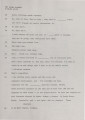
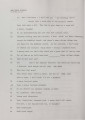
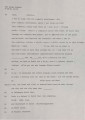
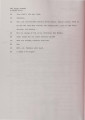
Transcript (typescript, 44 pages) of an interview on June 28, 1984, by Leslie Kelen of Saige Aramaki, a Japanese American born at Price, Utah. Mr. Aramaki (b. 1918) recounts his genealogy, and recalls his childhood in Carbon County, Utah. He was drafted into the army in the Spring of 1941. After Pearl Harbor he was demoted and transferred out of his unit, which was scheduled to be shipped to Europe. He was sent to Japanese language school at Camp Savage in Minnesota. He was sent to Japan after the war. In his twenty-two years in the army Mr. Aramki served in Japan, Korea, and various bases within the continental United States. Other topics covered include farming, racial discrimination, the Japanese American Citizen's League, automation in manufacturing, and the possibility of redress for Japanese internment. |
| Type |
Text |
| Genre |
oral histories (literary works) |
| Format |
application/pdf |
| Language |
eng |
| Rights |
 |
| Relation |
http://archiveswest.orbiscascade.org/ark:/80444/xv45901 |
| Scanning Technician |
Matt Wilkinson |
| Conversion Specifications |
Original scanned with Kirtas 2400 and saved as 400 ppi uncompressed TIFF. PDF generated by Adobe Acrobat Pro 9 for CONTENTdm display |
| ARK |
ark:/87278/s6m05ng4 |
| Topic |
Japanese Americans; Evacuation and relocation of Japanese Americans (United States : 1942-1945); Japanese American soldiers; Japanese American farmers |
| Relation is Part of |
Mitsugi M. Kasai Memorial Japanese American Archive |
| Setname |
uum_ijau |
| ID |
897665 |
| Reference URL |
https://collections.lib.utah.edu/ark:/87278/s6m05ng4 |
| Title |
Page 19 |
| Format |
application/pdf |
| Setname |
uum_ijau |
| ID |
897638 |
| OCR Text |
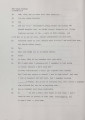
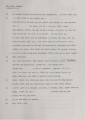
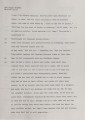
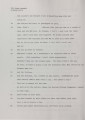
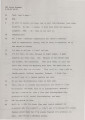
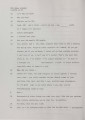
Show oHI Saige Aramaki 5-28-84 s1:18 SA Morecomplicated - charcter LK Right, that's the character writing. SA So ionly got to book 4. And !never did - LK KANJI KANJI. How did you like being in the language school Was that a good experience. SA Well, I didn't come in contact with the Bnguage, you know, with thetalking. All !did was thepersonnel work. So !didn't have antying todo with the Bnguage or anything of what they did there I just worked at Personnel. L K Whatwere the~ople like thatyou worked with. SA Oh, they were all - we had one - man - he was - He lived in Japan. So he was in thecrfice. So he knew alittlebit about Japanese people, mostly. But other than that, never thought - never thought of what they were teaching, how they were teaching. Nothing. But, they - when they made a film of this Samauri - what was it called. [The Yankee Samauri?] Anyway, the made a movie about it. Some movie about the Bnguage LK Yankee Samauri. SA Yes, Yankee Samauri. By teaching these people all bis language shortened the war becuase allthese Niseis were LK How many Niseis were at Camp Savage, whe you were there. SA Oh, you mean in school. Gosh, I couldn't say how many. LK A guess? SA Oh, there must have been - when we first - atleast 5 or 600 studants Camp Savage was a small place. and then we moved to Dort Snelling whereit was a bigger place |
| Reference URL |
https://collections.lib.utah.edu/ark:/87278/s6m05ng4/897638 |