| Title |
Interviews with Japanese in Utah: Saige Aramaki |
| Alternative Title |
Saige Aramaki |
| Creator |
Aramaki, Saige, 1918- |
| Contributor |
Kelen, Leslie G., 1949- |
| Publisher |
Digitized by J. Willard Marriott Library, University of Utah |
| Date |
1984-06-28 |
| Date Digital |
2014-03-25 |
| Access Rights |
I acknowledge and agree that all information I obtain as a result of accessing any oral history provided by the University of Utah's Marriott Library shall be used only for historical or scholarly or academic research purposes, and not for commercial purposes. I understand that any other use of the materials is not authorized by the University of Utah and may exceed the scope of permission granted to the University of Utah by the interviewer or interviewee. I may request permission for other uses, in writing to Special Collections at the Marriott Library, which the University of Utah may choose grant, in its sole discretion. I agree to defend, indemnify and hold the University of Utah and its Marriott Library harmless for and against any actions or claims that relate to my improper use of materials provided by the University of Utah. |
| Spatial Coverage |
Salt Lake City, Salt Lake County, Utah, United States, http://sws.geonames.org/5780993/ ; Price, Carbon County, Utah, United States, http://sws.geonames.org/5545269/ ; South Korea, http://sws.geonames.org/1835841/ ; Japan, http://sws.geonames.org/1861060/ |
| Subject |
Aramaki, Saige, 1918- Interviews; Japanese Americans--Utah--Interviews; Japanese Americans--Forced removal and internment, 1942-1945; United States--Armed Forces--Japanese Americans; Japanese American soldiers; Japanese American farmers; Utah--Ethnic relations |
| Description |
Transcript (typescript, 44 pages) of an interview on June 28, 1984, by Leslie Kelen of Saige Aramaki, a Japanese American born at Price, Utah. Mr. Aramaki (b. 1918) recounts his genealogy, and recalls his childhood in Carbon County, Utah. He was drafted into the army in the Spring of 1941. After Pearl Harbor he was demoted and transferred out of his unit, which was scheduled to be shipped to Europe. He was sent to Japanese language school at Camp Savage in Minnesota. He was sent to Japan after the war. In his twenty-two years in the army Mr. Aramki served in Japan, Korea, and various bases within the continental United States. Other topics covered include farming, racial discrimination, the Japanese American Citizen's League, automation in manufacturing, and the possibility of redress for Japanese internment. |
| Type |
Text |
| Genre |
oral histories (literary works) |
| Format |
application/pdf |
| Language |
eng |
| Rights |
 |
| Relation |
http://archiveswest.orbiscascade.org/ark:/80444/xv45901 |
| Scanning Technician |
Matt Wilkinson |
| Conversion Specifications |
Original scanned with Kirtas 2400 and saved as 400 ppi uncompressed TIFF. PDF generated by Adobe Acrobat Pro 9 for CONTENTdm display |
| ARK |
ark:/87278/s6m05ng4 |
| Topic |
Japanese Americans; Evacuation and relocation of Japanese Americans (United States : 1942-1945); Japanese American soldiers; Japanese American farmers |
| Relation is Part of |
Mitsugi M. Kasai Memorial Japanese American Archive |
| Setname |
uum_ijau |
| ID |
897665 |
| Reference URL |
https://collections.lib.utah.edu/ark:/87278/s6m05ng4 |
| Title |
Page 39 |
| Format |
application/pdf |
| Setname |
uum_ijau |
| ID |
897658 |
| OCR Text |
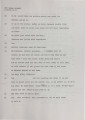
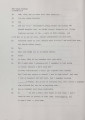
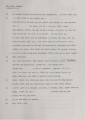
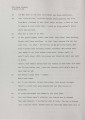
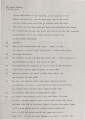
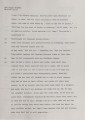
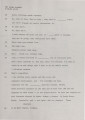
Show OHI SAige Aramaki 6-28-84 s2:38 Andso it's very dangerous. LK You mean, as a justification no matter what theyoo. SA That's right. LK In Salt Lake,you'velived here for awhile. Do you feel there's persecution here or racial bias towards specific groups, more than others. D~outhink some groups here have it worse than others. SA You mean, jobs. LK Climbing up the ladder, for instance. SA !believe there is. I think there is. LK Which groups do you think have it worse here. SA Well I don'tthink the Orientals are too bad now. We seem like we're going towards--- I mean, Oriental -- I mean the Vietnamese, they are taking a beating now, I think. Becuasea what's happening to them. And - I wen t to bowling tou1rnn aLm.A=e.n; t and 1 h a d a f ee 11. ng there's alot of Koreans over there. And they figure that the Koreans are going to take ~er becuase there's alot d people - in L.A. are Koreans, you know. So. LK Soyou felt some of the fear of people htere, someof their anger. SA Yes. BEcuse they said, Well, there's naother Korean, there's another Vietnamese. And !think some of them we're giving it a lttlebackfire to theta the Japanese, because they can't distinguish us fromthe Vietnamese. Without even thinking, well, there's no way to distinguish us fromthe Japanese from the Vietnamese or Koreans or any other. And - I guess becuase of the Vietnamese, you know, there's been abad feeling. They've taken away our jobs around here. L K Around the town. People are very sensitive about that. |
| Reference URL |
https://collections.lib.utah.edu/ark:/87278/s6m05ng4/897658 |