| Title |
Esperanza and Gavino Aguayo, No. 1, Hispanic Oral Histories, Accn 1369 |
| Creator |
Aguayo, Esperanza, 1932-; Aguayo, Gavino |
| Contributor |
Kelen, Leslie G., 1949- |
| Date |
1985-02-06 |
| Date Digital |
2016-05-02 |
| Spatial Coverage |
Bingham, Salt Lake County, Utah, United States |
| Subject |
Mexican Americans--Utah--Interviews; Aguayo, Esperanza, 1932- --Interviews; Aguayo, Gavnio--Interviews; Discrimination against Mexican Americans; Emigration and immigration--Social aspects |
| Access Rights |
I acknowledge and agree that all information I obtain as a result of accessing any oral history provided by the University of Utah's Marriott Library shall be used only for historical or scholarly or academic research purposes, and not for commercial purposes. I understand that any other use of the materials is not authorized by the University of Utah and may exceed the scope of permission granted to the University of Utah by the interviewer or interviewee. I may request permission for other uses, in writing to Special Collections at the Marriott Library, which the University of Utah may choose grant, in its sole discretion. I agree to defend, indemnify and hold the University of Utah and its Marriott Library harmless for and against any actions or claims that relate to my improper use of materials provided by the University of Utah. |
| Description |
Transcript (102 pages) of part 1 of 2 of interviews by Leslie Kelen with Esperanza and Gavnio Aguayo, on February 6, 1985 and February 25, 1985. |
| Collection Number and Name |
ACCN 1369, Hispanic Oral Histories, 1984-1987 |
| Abstract |
Esperanza Aguaya (b. 1932) recalls her parents and their stories about various revolutions in Mexico. She explains how her parents came here from Mexico intending to stay one year and never went back. She and her brother, Gavino, remember their childhood in Bingham, a small mining town in Utah. Topics discussed include the differences in what girls and boys were allowed to do, street games, Hispanic culture, school, neighbors and friends from various ethnic groups, living conditions in Bingham, and racial/ethnic discrimination. |
| Type |
Text |
| Format |
application/pdf |
| Extent |
102 pages |
| Language |
eng |
| Rights |
 |
| Rights Holder |
For further information please contact Special Collections, J. Willard Marriott Library, University of Utah at spcreference@lists.utah.edu or (801)581-8863 or 295 South 1500 East, 4th Floor, Salt Lake City, Utah 84112 |
| Relation |
http://archiveswest.orbiscascade.org/ark:/80444/xv46923 |
| Scanning Technician |
Mazi Rakhsha |
| Conversion Specifications |
Original scanned with Kirtas 2400 and saved as 400 ppi uncompressed TIFF. PDF generated by Adobe Acrobat Pro X for CONTENTdm display |
| ARK |
ark:/87278/s64j2mvp |
| Topic |
Mexican Americans; Emigration and immigration--Social aspects |
| Genre |
oral histories (literary works) |
| Setname |
uum_hoh |
| ID |
893604 |
| Reference URL |
https://collections.lib.utah.edu/ark:/87278/s64j2mvp |
| Title |
Page 100 |
| Format |
application/pdf |
| Setname |
uum_hoh |
| ID |
893598 |
| OCR Text |
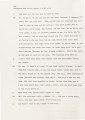
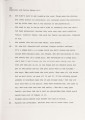
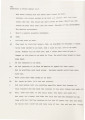
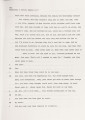
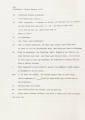
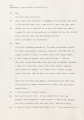
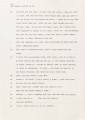
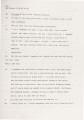
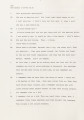
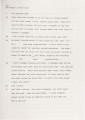
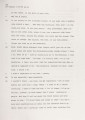
Show OHI E&G Aguayo 2-25-85 s6:49 radishes. Little tiny radishes came out like that. Nothing else grew - but oh, we saw visions of this beautiful victory garden. Somebody in the movies toldyou to grow. Oh, that was part of the war that I remember. I don't remember the war.I knew there was a war on, and stuff like that, but what I was in 5th grade, 6th gradem 7th. And oh another thing I remember about that, I - We went - in 7th grade - We were saving on light, electricity, I guess, or gas. Or stuff like that. Because they'd take you to school in the afternoon. Gee, goingto school in the afternoon is nothing new. We did it then. Because they didn't want tobe busing. So you could stay for the ballgame. So you could save the ride after school. Going to theballgame. And that's what I remembercbout the war. You know, big deal. Youhad to go to school in the afternoon. Cause you were saving on gas and electricity I think it was. L Right. So it didn't really hit you in a direct way. But it kind cf affected. EA Yeah, different things, yeah. Other than that. My brother being away. But other than that. L TheJast time, you mentioned when you joined the armed services, you£ent money back. Do-- GA I had allowance from the L Fromthe army you sent it back to the family. Why did you do that? EA Becuase we needed it desparately. |
| Reference URL |
https://collections.lib.utah.edu/ark:/87278/s64j2mvp/893598 |