| OCR Text |
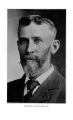
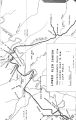
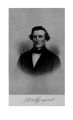
Show "7 *• " < <i" I . ' •<' "|«> ^ ' ••••' .•' " | J ,J' .T..- .<• U' " " • " " i l l H U M I i . i I ,i l . i . l |r -3 ii-n-ii- r.t • imii.ii f'mtriiii-'tt ..HUMS.' f.it /tv ./••in Dim'•< ,/r r.'ii/.- Jit fori- /.'.• ..i/.uif,- ,rrrott-iliifaHhtfti* iiui't' /r l.iii- tfr '/'fifiiiii/i' \ ^ . tAif i'onl* ,Aii/HiV, ir'it/iri'.r ,i "/*'»„ fm/it'ti.f * Yttnuuiriiii,,' ''• - **wP'' ,H..,ml, J;,r^ ,r,l,,„„ !,„. I \, .Utw ,w..rr,„t ,i,t Mw /«A.*\"v$ ' ,v. V To:t v P.\V.r droits fa Jlvston * ^ Imttfll.f Y,im,llfli /n,/ii'tl.f •/r Zitfil/ruyir -UM In.licn.r Cithii/i JU Yillttpttl,*' it rlr m.ri/i• f.it Ir forr fr'ifro fan/ i~?5 • ft •' /••;•/•••• fi.n-A*i $ CtHlffl 0 Jiiitifiu Jrnitju, /naiert.f ,//t/tn/,r fiuft'ffl.t Crt/llt'/ltfir., ItliilflM (IIVtliHI Part of the "Carte Generate du Royaume de la Nouvelle Espagne . . ." or "General Map of the Kingdom of New Spain," by Alexander von Humboldt, published in 1811. It is the first detailed map based upon actual exploration of the region which is now the state of Utah. HUMBOLDT'S UTAH, 181 I By C. Gregory Crampton* Utah's magnificent natural scenery was first revealed to public view on a comprehensive scale in 1811 through the works of the German scientist, Baron Alexander von Humboldt. In his Political Essay on the Kingdom of New Spain he wrote of the latitudes south of Great Salt Lake when it was one of the limits of geographical knowledge in the Rocky Mountains above the Spanish settlements; his maps in the accompanying atlas extend no further north than forty-two degrees of latitude. Humboldt described with much detail the country now shared by Utah, Colorado, New Mexico, Texas, Arizona, Nevada, and California, then the northern frontier of the viceroyalty of New Spain, which was wholly portrayed in the essay. As he pictured the wealth and resources of the northern Spanish provinces, Humboldt fairly prophesied the westward sweep of the United States across the continent, and it was he, one of the greatest scientists of his time, more than anyone before him, who publicized these attractions. It could scarcely have been at a more auspicious time, * Dr. Crampton is professor of history at the University of Utah, Salt Lake City. Acknowledgment is made to the University of Utah Research Fund for assistance in meeting research costs, and to the Bancroft Library, University of California, Berkeley, for permission to reproduce the two maps and the portrait of Humboldt. Italics are used for names which appear on the map and to which reference is made. Numbered footnotes appear at die end of the article. 270 UTAH HISTORICAL QUARTERLY for the essay was published just as Mexico plunged into a revolutionary war for independence from Spain. The war invited attention to a region which had long lived under Spain's monopolistic control. Intercourse with the world outside was prohibited, and little was known abroad of the vast resources of Spanish North America until Humboldt's work proclaimed them to the world. He said he wanted to "contribute something to dispel the darkness which for so many ages has covered the geography of one of the finest regions of the earth." He did just that. The Political Essay on the Kingdom of New Spain raised the Spanish curtain in North America to reveal in intimate detail a dazzling region which emerged as sovereign and independent Mexico when the patriots finally severed the political bond with Spain in 1821. Some years before the revolution, with permission of the Spanish government, Humboldt, in company with the botanist Aime Bonpland, had come to Spanish America in 1799 to prosecute scientific studies which were expected to take him around the world. He spent five years in the New World, most of it in South America and Cuba. When plans failed for a voyage across the Pacific, he journeyed to New Spain and studied there for a year. The scientist traveled about some in central Mexico, and from his own observations, in conversation with learned men, and from official records in the viceregal archives which were opened to him, he gathered a mass of material upon which he based the Political Essay. The general map accompanying it was completed in preliminary draft before he left the viceroyalty. En route to Europe in 1804, Humboldt stopped briefly in the United States. He visited President Jefferson, with whom he must have had some interesting conversations about Mexico and the West, and left with the Department of State in Washington a copy of the preliminary map. The Political Essay on the Kingdom of New Spain was published sectionally in the original French from 1808 to 1811; the complete first edition together with a folio atlas appeared in 1811. An English edition translated by John Black was published during the same year, and a German edition (1809- 1814) was followed by one in Spanish (1822) and others.1 The essay on New Spain contains the first detailed published description based upon actual exploration of the region which is now the state of Utah. Humboldt himself never visited the northern part of Mexico, but he talked to those who had, and he used many manuscript and printed sources which are discussed in the long geographical introduction in volume one and elsewhere throughout the work. Most of the Utah material appears on the general map accompanying it, the north- HUMBOLDT'S UTAH 271 western part of which is reproduced here on a reduced scale.2 The boundaries of the state may be superimposed upon Humboldt's map by drawing two perpendicular lines from the northern edge of it, one at longitude 109° 23', the other at longitude 116° 23', to intersect a horizontal line drawn from the western edge of the map at the latitude of thirty-seven degrees. The northwestern boundaries may be drawn by dropping a perpendicular line at longitude 113° 23' to forty-one degrees of latitude and by extending the line along this latitude until it intersects the eastern boundary. These lines are adjusted to the Greenwich meridian from that of the observatory of Paris which Humboldt used. He adopted Mercator's projection. Most of the geographical features appearing on the Utah part of the map are those discovered in 1776 by the Spanish exploring party directed by friars Francisco Antanasio Dominguez and Francisco Silvestre Velez de Escalante and first laid down on maps by the expedition cartographer, Bernardo de Miera y Pacheco. Although Miera drew several maps reflecting these discoveries, none was ever printed, so far as is known, and it was left to Humboldt to publish the work of the Domin-guez- Escalante expedition.3 It is not certain that Humboldt used Miera directly, for he is not acknowledged by name in the geographical introduction of the essay; but the first map Humboldt mentions there is one by Mascaro and Costanso on which Miera data have obviously been used, though again unacknowledged.^ Humboldt's "Carte Generale" is a fair reflection of Utah as it was known at the beginning of the nineteenth century, and it was regarded as an authoritative work for much of the area mapped until Fremont, who recognized Humboldt's contribution and retained some of his geography, published the report of his first two exploring expeditions thirty-five years later. The modern traveler will be interested to learn how many of the scenic wonders of Utah were known, named, and found a place on Humboldt's great map of 1811. With a few, and some quite radical, adjustments the Humboldt geography may be squared with the modern map. Note that most of Humboldt's place names are in Spanish; the names of lakes and Indian tribes and explanatory and descriptive matter are in French. In the analysis of Humboldt's map to follow, we will travel counterclockwise around the state, following as it were the trail of Dominguez and Escalante as laid down by the German scientist. The main dividing ridge of the Rocky Mountains, the Sierra de las Grullas, separates the waters of the Rio Grande del Norte, shortened Alexander von Humboldt, 1769-1859. Scientific traveler, author of many volumes, he helped to make America better known to the world. His Political Essay is still of primary importance. Map depicting a possible commercial route across the Rockies at the head of the Rio Grande and Colorado rivers, as suggested by Humboldt. HUMBOLDT'S UTAH 273 now to the Rio Grande, from those of the Colorado River system. The upper basin of the Colorado River is rather accurately drawn. The San Juan River is identical with the Rio Nabajoa, which receives the Rio de las Animas, the name today of a major fork heading in Colorado. The Rio de Nra. Sra. de los Dolores has been shortened by modern usage to the Dolores River, which skirts the Montagnes de Sel Gemme, a name retained partly in its Spanish form today as the La Sal Mountains, the striking peaks on the Utah-Colorado line, south of the Colorado River. Humboldt's Rio de S. Xavier is the Gunnison; and the Rio de S. Rafael, indicated as being the major source of the Colorado, is indeed the Colorado River above the mouth of the Dolores. All of these streams and other geographical features were known to Spain before the traverse by Dominguez and Escalante in 1776. Beyond the Colorado these men pushed into country new to the whites, and they left a trail of names many of which appear on Humboldt's map. The first considerable discovery of the Dominguez-Escalante expedition was the Green River, first seen where it was crossed just outside the southern boundary of Dinosaur National Monument. The explorers reported no fossilized bones, but they were the first to view spectacular Split Mountain, through which Green River flows in Dinosaur.5 Miera named the adjacent Yampa Plateau Sierra Verde as it appears on Humboldt's map, though too far east. The origin of the name Green River, which is still in doubt, may well be related somehow to Miera's Sierra Verde. On Humboldt's map the Green is the Rio de S. Buenaventura, the name applied to it by the discoverers, who thought it to be a river wholly unrelated to the Colorado. Miera documented the Spaniards' conclusions when he extended the stream westward and emptied it into a salt lake which is in fact Sevier Lake! This serious error perpetuated by Humboldt confounded explorers and geographers for more than thirty years after his map appeared. Even after the Green was discovered to be a branch of the Colorado River, Humboldt's authority was so great that some cartographers identified his Rio Nabajoa with the Colorado and his Rio Zaguanganas with the Green even though the junction of the two extended below the southern boundary of Utah.6 The Sierra de Timpanogos was the name applied to the western part of the Uinta Mountains and the northern reaches of the Wasatch Mountains by the Spaniards. Miera has shown them much more accurately than Humboldt, but then Humboldt was probably using a secondary source and not Miera directly, and under these conditions his accu- 274 UTAH HISTORICAL QUARTERLY racy is surprising. The name remains in use today to identify majestic Mount Timpanogos, overlooking Utah Lake and Valley, and in Timpanogos Cave National Monument located on its northern slope. Dominguez and Escalante also applied the name Timpanogos to Utah Lake, which they discovered. The Indians of the same name living about the lake told the explorers that its waters communicated with an "extremely salty" lake to the north. The explorers did not visit Great Salt Lake, but Miera put it on his maps seemingly as an arm of Lake Timpanogos extending some distance above forty-two degrees (a very considerable error), so it does not appear on the Humboldt maps, which do not reach above that latitude. But Humboldt casts doubt upon the size of the portion of the lake which he does show by the word "douteux," the omission of water lines, and reference to Escalante's journal. The little stream Rio Yampancas flowing into Lac de Timpanogos from the west is probably identical with the Rio de los Yamparicas (Humboldt's Indiens Yamparicas is the same word) which Miera on some of his maps causes to enter the lake from the east above forty-two degrees of latitude. The Yampa River, which enters the Green River in Echo Park in Dinosaur National Monument, and the Yampa Plateau may be historic vestiges of this stream and name. Just south of Lac de Timpanogos the massive Mount Nebo is shown on the Humboldt map as another Montagnes de Sel Gemme, or Mountains of Rock Salt. Miera places hills of salt on some of his maps in the locality adjacent to the Valle de Salinas where, Escalante notes in his diary, the Indians living about Utah Lake came to obtain their supplies of salt. The stream today known as Salt Creek, which drains the southern slopes of Mount Nebo and debouches in Juab Valley at Nephi, is thought to be the Valle de Salinas of the Spaniards.7 The Franciscan fathers, Dominguez and Escalante, together with their colleague, Francisco Garces, were the discoverers of the Great Basin. Yet in their extensive pioneer explorations of it in 1776 - Garces crossed the Mojave Desert only months before Dominguez and Escalante traversed its eastern edge - they were altogether unaware that they were in an interior basin with no outlet to the sea. Quite the opposite. Garces in California, after crossing the Mojave Desert, concluded that the rivers he found in the southern Sierra Nevada headed back in the Rocky Mountains, and Dominguez, Escalante, and Miera imagined that the streams originating in the Rockies, or Sierra de las Grullas, flowed westward to reach the Pacific, an idea accepted by Humboldt, HUMBOLDT'S UTAH 275 who adopted Miera's illustration of it from the sources he used to construct his map. This is again the Rio de S. Buenaventura, in reality the Green River, which is discharged into the large unnamed lake the western limits of which are indicated as unknown. On the Miera maps this is Lake Miera (or Laguna de Miera); this and Lake Timpanogos were both used by cartographers after Humboldt as sources for several mythical westward-flowing streams which reached the Pacific in various latitudes between the mouths of the Columbia and the Colorado, much to the confusion of explorers who tried to find them.8 Historic Lake Miera, left without name by Humboldt, is Sevier Lake, the salty sink of the Sevier River which heads south on the High Plateaus of Utah near Bryce Canyon National Park and Cedar Breaks National Monument. The Rio Salado entering an arm of Sevier Lake on the Humboldt map is the way Miera has it on his maps. When the Spanish explorers visited the lake in 1776, they must have found it much larger than it is today, covering most of the flats, now dry, below the town of Delta. The running stream, Rio Salado, or Salt River, is identified with the spring source that today fills Clear Lake, a migratory water fowl refuge. South of Miera's lake the Plaines (Llanos) de Nuestra Senora de la Luz is the open country south of Milford, appropriately called now the Escalante Valley and the Escalante Desert. Here the Spanish explorers decided to return to New Mexico rather than go on to California as they had intended. They crossed over the rim of the Great Basin and descended Ash Creek along the Hurricane Cliffs until they reached the Virgin River, called by them the Rio Sulfureo, or Sulphurous River, for they discovered or were near the mineralized La Virken Hot Springs at the mouth of Timpoweap Canyon. The Virgin (a later Spanish name - Virgen) appears as the Rio de las Piramides Sulphureas, a corruption on the Humboldt map of one of the names Miera applied to the Virgin. But the term Miera most frequently uses is the Rio Sulfureo de los Piramides, or the Sulphurous River of the Pyramids, and from a study of his maps it is clear that the word pyramid is intended to describe the mountainous towers and temples to the east of the trail at this point and to the north of it as they headed back toward New Mexico. This may be regarded as the first description of the intricately carved escarpments peculiar to the southern exposures of the High Plateaus of Utah which find classic expression in Zion National Park and Monument not far from the Spanish Trail of 1776.9 As the Spaniards turned eastward, they skirted the brilliant Vermilion Cliffs, catching views here and there of the terrace of White Cliffs which stand above them, until they reached 276 UTAH HISTORICAL QUARTERLY the Colorado River. To the High Plateaus, which they had seen at many points, Miera appears to have given the name Sierra de los Guacaros, a prominent feature on Humboldt's map. Returning for a moment to the River of the Pyramids: Humboldt in a note in French states that the location of the mouth of the stream is unknown. In a legend to the left of this in French he also notes the existence of a chain of mountains extending toward the west, traversed by the Rio de San Felipe. The San Felipe (Kern River) was one of the discoveries of Francisco Garces in California, who believed that it headed far back in the interior of the continent. This became one of the more durable mythical rivers of the West, in part because of its mention on Humboldt's respected map. Even Miera's Sulphurous River of the Pyramids was caught up in this cartographical fantasy when it was emptied into the Pacific Ocean without first joining the waters of the Colorado. The explorations ascribed to Pedro Font in the next note below on the Humboldt map refer actually to those of Father Garces in 1776. After crossing the Mojave Desert and discovering the Mojave River, which he named the Rio de los Martires, as Humboldt has it (though flowing the wrong way!), he crossed the Colorado River and made a pioneer traverse eastward to Oraibi in the Hopi country. Father Pedro Font made the maps incorporating his discoveries, and these were used by Humboldt.10 There is nothing on Humboldt's map to show where the Domin-guez- Escalante expedition crossed the Colorado River on its way back to Santa Fe. This was at a point in Glen Canyon, which the Spaniards discovered, later known as El Vado de los Padres and now as the Crossing of the Fathers, a few miles upstream from the Glen Canyon dam-site. On Humboldt's map this is just below the junction of the Rio Nabajoa and the Rio Zaguanganas, a corruption of Miera's Zaguaganas (Escalante's Sabuaganas), the name of the Indians upstream where the Spaniards crossed the Colorado (San Rafael) on the outgoing trip. The only landmark in the area noted by Humboldt is El Rastrillo, a misspelling of El Castillo, Miera's name for one of the castle-like monuments east of Glen Canyon Dam, possibly Leche-e Rock, perhaps White Mesa, or Preston Mesa. The Puerto de Bucarelli nearby is Garces' name for the lower course of the Rio faquesila, now the Little Colorado River. When Dominguez, Escalante, Miera, and company reached the Hopi town Oraibi (Humboldt's Oraybe), they were on familiar ground again, and they soon arrived at Santa Fe, the point of beginning. In the field HUMBOLDT'S UTAH 277 six months, they discovered much new territory which became known to the world when Humboldt published his "Carte Generate" in 1811. Not the least valuable feature of the map is the location of many of the campsites named by the Dominguez-Escalante expedition; if a line is drawn counterclockwise around the map connecting places identified by the small circular dot (S. Rustico, Valli de S. Jose, etc.), the route followed by the explorers through Utah may be located approximately. The expedition by reference to "Pere Escalante" is mentioned three times on the face of the map and a number of times in the text of the Political Essay. The one legend where the name is given as ". . . Pere Antonio Velez y Escalante . . . ," followed by the erroneous date 1777, is a curious mixture of the names of Dominguez and Escalante, and it belies Humboldt's indebtedness to the manuscript maps drawn by Cos-tanso and Mascaro.11 Indian tribes are located by Humboldt; those in the Utah region he has quite probably adopted from the Mascaro-Costanso sources, though he has not reproduced the tribal boundaries found in their work and in the maps of Bernardo de Miera y Pacheco, the original source. The Aztec Indians who left their homeland Aztldn in 1160, Humboldt suggests, may have traveled across Utah in their wanderings, passing Utah Lake, which he says might be Lake Teguayo, en route to the San Juan River, where they remained for a time before going on to the Gila River in Arizona. This startling information is carried in the legend in French to the left of Lac de Timpanogos, in one immediately below the Rio Nabajoa, and in another just below the Casas Grandes in Arizona.12 Hypothesis to Humboldt was fact to another. The word Teguayo, a product of the fertile seventeenth-century-Spanish imagination, identified a fabulous land northwest of New Mexico. This was a legend contradicted in fact by the Dominguez-Escalante expedition, but it was revived by the weight of Humboldt's words alone. Lake Teguayo blossomed out again on the maps after 1811, competing with Timpanogos as the name for Great Salt Lake, or Utah Lake, or it was applied to Sevier Lake, which had been left blank by Humboldt. It was not crowded off the map altogether until some time after the Mormons arrived in Utah in 1847.13 The Aztecs and Montezuma are still here. It was easy after the middle of the nineteenth century, once the numerous ruins left by ancient peoples in Utah and the Southwest became better known, to conclude that Humboldt's hypothesis was right: they had passed this way.14 Two frequently encountered names in the Southwest today are 278 UTAH HISTORICAL QUARTERLY Aztec and Montezuma. Utah has at least one of each. Montezuma Creek, a fork of the San Juan River, drains the slopes of the Abajo (Blue) Mountains, and Aztec Creek, which receives the waters that flow under Rainbow Natural Bridge, are both where Humboldt notes that tradition, however uncertain, accounts for one of the stopping places of the Aztecs in their migrations. Alexander von Humboldt, then, literally put Utah on the map. The Political Essay was accepted at once, even before it was published, as the word of authority, and it remained so for some time after the mountain men and later explorers corrected the geographical errors.15 Humboldt revealed the land, he told what was known about it, and he prophesied what might become of it. At a time when men were probing for water routes across the continent, and before Lewis and Clark published their report, Humboldt suggested the feasibility of commercial communication between the Rio Grande and the Colorado. But, he said, the Rio Zaguanganas and Rio Grande "can never be interesting for commerce, till great changes . . . introduce colonization into their fertile and temperate regions," and as he observed the rapid advance of the Americans into the Mississippi Basin, he concluded that "these changes are perhaps not very distant."16 As much as any other, John Charles Fremont personifies the American advance and the searcher for first the water and then the railroad routes to connect the Atlantic and the Pacific. And Fremont recognized and acknowledged his debt to Humboldt by frequent reference to him in his published works and by naming after him the Humboldt River and the mountains in which it heads.17 But these were lost to Nevada in 1861 and in 1864 and 1866 when the-territory was first divided and then reduced, and one studies the map in vain- today to find a place in Utah commemorative of the man who first publicized some of its many wonders.18 NOTES 1 The original English edition, Political Essay on the Kingdom of New Spain. Containing Researches Relative to the Geography of Mexico, the Extent of its Surface and its Political Division into Intendancies, the Physical Aspect of the Country, the Population, the State of Agriculture and Manufacturing and Commercial Industry, the Canals Projected Between the South Sea and the Atlantic Ocean, the Crown Revenues, the Quantity of Precious Metals which have Flowed from Mexico into Europe and Asia, since the Discovery of the New Continent, and the Military Defence of New Spain. With Physical Sections and Maps, founded on Astronomical Observations, and Trigonometrical and Barometrical Measurements. Translated from the original French by John Black (4 vols., London, 1811), has been used primarily in the preparation of this article. The original French edition appeared in die series of quarto volumes written by Humboldt and Aime Bonpland, Essai Politique sur le Royaume de la Nouvelle Espagne (2 vols., Paris, 1811), and this was accompanied by the atlas in folio, Atlas geographique et physique du Royaume de la HUMBOLDT'S UTAH 279 Nouvelle-Espagne, fonde sur des observations astronomiques, des mesures trigonometriques et des nivellemens barometriques (Paris, 1811); another (Paris, 1812). An octavo edition of the Essai in five volumes was also published in Paris in 1811, and a second edition was published there, 1825-1827, in four volumes. The most recent edition is the sixth in Spanish, edited by Vito Alessio Robles, Ensayo politico sobre el Reino de la Nueva Espana . . (4 vols., Mexico, 1941), and an atlas. All who work widi Humboldt soon discover the need for an exhaustive study of his immense bibliography. A recent biographer is Helmut de Terra, Humboldt, the Life and Times of Alexander von Humboldt, 1769-1859 (New York, 1955). 2 The map bears the title, "Carte Generale du Royaume de la Nouvelle Espagne depuis le parallele de 16° jusqu'au parallele de 38° (latitude Nord) dressee sur les observations astronomiques et sur l'ensemble des materiaux qui existoient a Mexico, au commencement de l'annee 1804." This is the map that was drawn up in preliminary form by Humboldt in Mexico in 1804 and completed by him and by Friesen, Oltmanns, and Thulier in 1809. Another general map, "Carte du Mexique et des pays limitrophes situes au nord et a Test . . ." was adopted from the above and from otiier materials by J. B. Poir-son, but it lacks the detail of the first for the Rocky Mountain region. Both maps appeared, the first in two sections, in the editions of the Atlas geographique; owing to its smaller size the "Carte du Mexique . . ." is frequently found in the several editions of the essay with a title translated to match the language of the edition. The northwestern portion of this map has been reproduced, plate 30 (B) in, Charles O. Paullin, Atlas of the Historical Geography of the United States, John K. Wright, ed. (Washington and New York, 1932). The northern half of the "Carte Generale . . ." has been reproduced by Carl I. Wheat, 1540-1861 Mapping the Transmississippi West, Volume One, The Spanish Entrada to the Louisiana Purchase, 1540-1804 (San Francisco, 1957), as his no. 272, opposite page 134. Wheat's monumental work under this title is scheduled to run to five volumes. 3 The maps drawn by Bernardo de Miera y Pacheco have been brought out in published form only in recent years. One appears in the article with the misleading title by J. Cecil Alter, "Father Escalante's Map," Utah Historical Quarterly, IX (January, April, 1941), 64-72. This is followed by two articles by Herbert S. Auerbach which are helpful in squaring the discoveries of the Dominguez-Escalante expedition and the maps made by Miera with modern geography: "Father Escalante's Route (As depicted by the Map of Bernardo de Miera y Pacheco)," and, "Father Escalante's Itinerary," ibid., 73-80; (July, October), 109-28. Auerbach's edition of the journal and itinerary of the Dominguez- Escalante expedition, "Father Escalante's Journal with Related Documents and Maps," ibid., XI (1943), has two additional maps by Miera and several other maps of importance though they are not precisely identified. Another map by Miera, in colors, is found in the journal and itinerary of the Dominguez-Escalante expedition edited by Herbert E. Bolton, Pageant in the Wilderness (Salt Lake City, 1950). Carl I. Wheat, op. cit., devotes his entire chap, vi to the Miera maps of the 1776 Dominguez-Escalante expedition; he describes six distinct manuscript Miera maps in three separate types and reproduces one of the "bearded Indian" maps, a type found also in Auerbach and Bolton. ' One combs the long geographical introduction in vain for any mention of Bernardo de Miera y Pacheco, but Humboldt does refer, Vol. I, lxxiv-lxxv, to a "Carte manuscrite de la Nouvelle Espagne, dressee par ordre du vice-roi Buccarelli, par MM. Costanzo et Mascaro," which map served him for the Moqui (Hopi) country and for the Rio Nabajoa (San Juan River) among other places. He refers to another, Vol. I, lxxxiii, "Mapa del Nuevo Mexico," a manuscript map extending from twenty-nine to forty-two degrees of latitude, no author given. This apparently was the source of the Utah material, for he notes that under forty-one degrees this map is minute in detail, particularly with reference to such features as the lake "des Timpanogos," the sources of the "Rio Colorado," and the "Rio del Norte." This latter map has not been identified, but a comparison of Humboldt's "Carte Generale" with maps made by Miguel Costanso and Manuel Agustin Mascaro suggests that he must have also used one of them, or one based upon their work for the Utah portion of the map. Wheat, op. cit., notes four manuscript maps - one by Mascaro- Costanso, one by Mascaro, and two anonymous, produced between ca. 1779 and 1783. His nos. 181, 182, 193, and 195 bear certain parallel resemblances in the Utah region, and it is this type which Humboldt must have used to portray that area in his "Carte Generale." 280 UTAH HISTORICAL QUARTERLY One of these, the following map, or one of its type may have been the source Humboldt cites as the "Carte manuscrite" above: Carta o mapa geografico de una gran parte del Reino de N. E. comprendido entre los 19 y 42 grados de latitud septentrional y entre 249 y 289 grados de longitud del meridiano de Tenerife . . . Construyolo el Ingeniero Don Miguel Costanso y va aumentado en varias noticias que adquirio en sus viages el ingeniero Don Manuel Mascaro. This is no. 702 in, Henry R. Wagner, The Cartography of the Northwest Coast of America (Berkeley, 1937), II, 349, who dates it "1784(?)"; note also his 694, p. 348; see Wheat, no. 182. Whatever source Humboldt used, die genius of Bernardo de Miera shows brightly through as it unmistakably does in Humboldt's own work. This seems to be the place to mention a map of North America drawn in 1802 by Isidoro de Antillon who published it with an accompaniment of fifty-two pages, Numero V, Carta de la America Septentrional [Madrid, 1803]. Antillon, a professor in Madrid, incorporated Anza, Garces, and Dominguez-Escalante data on his finely-engraved map, and he actually preceded Humboldt in portraying die Utah region as it had been seen by "los PP.s Velez y Escalante." His map is on a smaller scale, however, and it seems to have enjoyed very little use by others, although Humboldt himself acknowledged a limited indebtedness to Antillon, Political Essay, I, lxi. Antillon notes in his accompaniment, 43- 44, the use of "an anonymous author on a grand scale" for the north central interior, which suggests the Mascaro-Costanso type of map also used by Humboldt. See also note 15 for others who preceded Humboldt by beating him into print with his own material. 5 C. Gregory Crampton, "The Discovery of the Green River," Utah Historical Quarterly, XX (October, 1952), 299-312, discusses the expedition's experiences here in detail. ° An influential example of this treatment is found on the general "Map of the Territory of the United States from the Mississippi to die Pacific Ocean . . . to Accompany the Reports of the Explorations for a Railroad Route . . ." by Lt. G. K. Warren, 1857, in Reports of Explorations and Surveys to Ascertain the Most Practicable and Economical Route from the Mississippi River to the Pacific Ocean (Washington, 1861), XI. 1 Utah's colorful nomenclature deserves more study. The use of the words Nebo, Juab, Nephi, Salinas, and Salt, all in one sentence above suggests the rich potentialities. s The place of Utah's lakes and rivers in the historical cartography of the West has been examined by C. Gregory Crampton and Gloria G. Griffen, "The San Buenaventura, Mythical River of the West," Pacific Historical Review, XXV (May, 1956), 163-71. 0 George C. Fraser reproduces a portion of a Miera map in an article, "El Vado de los Padres, die Story of the Old Ute Ford of the Colorado River, Crossed in 1776 by the Spanish Fadiers, Escalante and Dominguez, and nearly a Century Later by the Mormon Pioneer, Hamblin; Long a Route of Marauding Indians," Natural History, XXIII (July-August, 1923), 344-57. He identifies Miera's "pyramids" with the Temples of the Virgin at the entrance to Zion National Park. 10 See Crampton and Griffen, op. cit., 165. "The date 1777, which appears on Humboldt's map, could not be included in the part reproduced here. Wagner's map no. 702 (see note 4), and possibly others of this type, bear die date 1777 for the expedition. Reference is made by Humboldt, Political Essay, I, 22, to "Father Escalante and Father Antonio Velez." (Italics his.) Other references to Escalante: II, 336, 382. '"' In the text of the Essay, II, 303, Humboldt notes diat it is only "Very vague supposition" that the Aztecs traveled this route; he notes here that the three stations in the migration were Lake Teguayo, the Rio Gila, and Yanos, which is at variance with the information carried on the face of the "Carte Generale." But again in the text, II, 315, he reports Indian tradition as saying that twenty miles north of the Moqui (Hopi) villages, and near the mouth of die Rio Zaguanganas, was the place where the Aztecs first established themselves after departure from Aztldn. See also his note, page 324, where identification of Lake Teguayo with Lake Timpanogos is suggested. Humboldt's information about the migrations of the Aztecs comes from die work by Francisco Javier Clavigero, Storia antica del Messico (4 vols., Cesena, 1780-1781); an English edition translated from the Italian by Charles Cullen, The History of Mexico Collected from Spanish and Mexican Historians . . . (2 vols., London, 1787). See particularly Humboldt's chap, vi, Book II, Vol. II. The material on the migrations of the Aztecs is in Book II in Clavigero. Another HUMBOLDT'S UTAH 281 source was the engraved map by Josef Antonio de Alzate y Ramirez, Nuevo Mapa geo-grafico de la America Septentional, perteneciente al Virreynato de Mexico: dedicado a los sabios miembros de la Academia Real de las Ciencias de Paris . . . (Paris, 1768), which Humboldt, Essay, I, lxxv, attributes to Siguenza. This has the "Laguna de Teguyo" at forty-one degrees with a note that the Mexicans (Aztecs) left there to found their empire. 13 S. Lyman Tyler, "The Myth of the Lake of Copala and Land of Teguayo," Utah Historical Quarterly, XX (October, 1952), 313-29, has examined the history of a durable myth. George P. Hammond, "The Search for the Fabulous in the Settlement of the Southwest," ibid., XXIV (January, 1956), 1-19, places the myth in broad perspective. " Josiah Gregg in his classic Commerce of the Prairies . . . (New York, 1844) (see the fine edition edited by Max L. Moorehead [Norman, Oklahoma, 1954]), chap, xv, suggests an Aztec origin for die ruined towns such as Pueblo Bonito. He cites Clavigero and Humboldt. Humboldt himself repeated the assertion of the Aztec migrations and their stops at Teguayo and the Rio Gila in his Views of Nature or Contemplations on the Sublime Phenomena of Creation with Scientific Illustrations . . Translated from the German by E. C. Otte and Henry G. Bohn (London, 1850), 207. Here are some later writers who identify the Aztecs with various Indians, ancient and living, in the Southwest: William A. Bell, New Tracks in North America . . . (2nd ed., London, 1870), chap, iii, Part III, "The Aztec Ruins of New Mexico and Arizona"; J. H. Beadle, Western Wilds and the Men who Redeem Them . . . (San Francisco, 1881), chap, xvii, "Among the Aztecs in Arizona." 15 Others published die essential material appearing on his "Carte Generale" before Humboldt himself. The preliminary draft of the map which he had left in Washington supplied much of the data appearing on Zebulon Montgomery Pike's "Map of die Internal Provinces of New Spain," accompanying the narrative of his western travels which appeared in the first edition in 1810. The standard scholarly edition of Pike is by Elliott Coues, The Expeditions of Zebulon Montgomery Pike (3 vols., New York, 1895). Coues says in his Introduction, I, xxxv-xxxvi, that Pike simply used Humboldt's maps without acknowledgment. The Pike map in the Utah region pretty closely follows Humboldt, but there are some differences. One is that Alzate's chart is referred to as one of the sources of information for the identification of Lake Timpanogos with Lake Teguayo of the Aztecs. Another who beat Humboldt to print with his own map was the English cartographer Aaron Arrowsmith, who published "A New Map of Mexico and Adjacent Provinces Compiled from Original Documents" at London in 1810. Humboldt had sent Arrow-smith a copy of his map, in what must have been its last revision, for the English production is closer to the original than Pike's. Humboldt publicly chastised Pike and Arrow-smith in his Personal Narrative of Travels to the Equinoctial Regions of the New Continent during the Years 1799-1804, Translated into English by Helen Maria Williams (London, 1814), I, xxix-xxx. 16 Political Essay, I, 71-72, 274; II, 278. The map reproduced in this article showing the projected communication between the Rio Grande and the Colorado River is one of eight such maps in illustration of as many routes appearing in Atlas geographique et physique du Royaume de la Nouvelle Espagne . . . (Paris, 1811), 4. 17 In his important Geographical Memoir upon Upper California, in Illustration of his Map of Oregon and California (Senate Miscellaneous Document No. 148, 30 Cong., 1 sess.) (Washington, 1848) which finally defined the Great Basin, Fremont pays frequent tribute to Humboldt, and on page 10 he records the renaming of the Humboldt River in respect to one "who has done so much to illustrate North American geography. . . ." In his later works Humboldt expressed appreciation for the results of Fremont's scientific explorations in the West: Views of Nature . . . (London, 1850), 29, 32, 33-34, 37, and particularly in his Cosmos: A Sketch of the Physical Description of the Universe (New York, 1859), V, 383-86. The latter passage is quoted by Fremont in his Memoirs of my Life . . . (Chicago and New York, 1887), I, 605-06. 18 As originally constituted the territory of Utah included the entire watershed of the Humboldt River, but the creation of the territory of Nevada in 1861 and the subsequent reduction of the western boundary of Utah in 1864 and 1866 left the drainage, as well as the mountains entirely in Nevada. |






![Lake Bonneville, its name and history, by Rufus Wood Leigh]](/dl_thumbs//92/2e/922e6c204b76066141d237c7ee447dea8e212831.jpg "Lake Bonneville, its name and history, by Rufus Wood Leigh]")