| OCR Text |
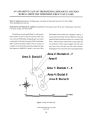
Show The A v o c a t i o n i s t ' s C ó r n er PUMP ORGAN REEDS: ARCHAEOLOGY, HISTORY, AND MUSIC COME TOGETHER AT THE FRARY SITE Ronald J. Rood, Utah Assistant State Archaeologist, División of State History, Antiquities Section, 300 Rio Grande, Salt Lake City, UT 84101 rrood@utah.gov Archaeological testing on Antelope Island State Park at a small homestead known as the Frary Site produced several metal artifaets linking one small but significant aspect of homestead life to the archaeological and historical record. In the case ofthe Frary Site and these particular small metal artifaets, archaeology and history come together under a tangible and familiar aspect of many people's lives: music. Whether performed by professionals, garage bands, a church choir, or played and sung around the house or campfire with family and friends, music is something most of us can appreciate. Although a review ofthe archaeological evidence for musical instruments is beyond the topic at hand, the first musical instrument used by the earliest humans may have been one rock bashed against another in a repeated rhythm. The oldest dated musical instruments in the world were found at the early Neolithic site of Jiahu in China, where six nearly complete ilutes and fragments of 30 more were dated to almost 9,000 years ago (Zhang et al. 1999). Since the dawn of humanity, music has likely been an important aspect of human life. THE FRARY SITE, 42DV56 Alice Frary and her husband George established a homestead on Antelope Island in 1891. Antelope Island, now a Utah State Park, is located roughly five miles northwest of downtown Salt Lake City (Figure 1). According to Roberts (1981) the Frary Homestead consisted of a small, three-room cabin along the eastern shore ofthe island, roughly four miles from the larger Fielding Garr Ranch (Figure 2). The Frary Site now consists of several features evident on the surface, including the foundation of the house, evidence of several additional structures, a surface scatter of artifaets indicative of residential, farming, and ranching activities, and the alleged grave of Alice Frary. George Frary made his living by prospecting, farming, and ranching, and by transporting people and livestock to the island in his boat. Alice looked after their six children, several of whom were born on the island, and she maintained the household. Holt (1996:10) writes: George was gone a lot with his sloop, doing more sailing than farming. The children were happy with lots of room to play, and flowers to pick in the spring and summer. The mother, being a school teacher, taught them well. She played a small organ while George and the children sang favorite songs. In September 1897 Alice Frary became ill from what may have been a burst appendix (Roberts 1981). George, desperate to help, sailed his boat across Farmington Bay to Syracuse to get needed medicine from Ogden. On his way home, a storm capsized his boat. George, thrown into the lake, lost the medicine. He spent the night clinging to the capsized boat, and in the morning he found his way to shore (Strum 63 64 UTAH ARCHAEOLOGY 2003 Idaho ANTELOPE ISLAND 1 f7^^ Arizona ! New México Figure 1. Location of Antelope Island in relation to Salt Lake City. Fielding Garr Ranch ANTELOPE ISLAND STATE PARK Figure 2. Map of Antelope Island showing the location ofthe Frary Site. AVOCATIONIST'S CÓRNER 65 2002:138). Some accounts suggest that as George reached Antelope Island his wife had already died (Roberts 1981). Others suggest he found his wife fading and nearly dead (Holt 1996). In either case, Alice died on September 3, 1897, at the age of 38 (Adamson 1941). Alice Frary was buried "a few rods from the house" on the island she lo ved (Holt 1996). A monument marking her alleged burial spot remains at the site (Figures 3 and 4). After the death of Alice, the family stayed on the island for some years (Roberts 1981). George continued to build boats and explore the Great Salt Lake. At some point after his wife's death, the older children asked if the family could leave the island so that the younger children could receive a better education (Holt 1996:12). George Frary agreed, and: Five one-meter square test pits were excavated at the Frary Site. Three of these were placed within Feature 2, described as a roughly rectangular but incomplete rock alignment and thought to be parí of the house. The three test pits (numbers 1-3) within Feature 2 produced numerous artifaets. Heap (2000) notes several varieties of window and bottle glass, china, several shell and glass buttons, and thousands of metal fragments. Although a detailed analysis of the artifaets has not been completed, the assemblage from Feature 2 is consistent with use as a household. Several of the metal artifaets from this collection became the subject of an independent study project conducted by students from Salt Lake Community College (Parrish and Overall 1998). It was a sad day, indeed, when they left their dear island home. A cow and her calf, a mulé and two horses were left behind. A few pieces of furniture and the precious organ sat alone in the house. It took them a while to realize they would never be back to live in this humble cottage again (Holt 1996:12, emphasis added). ARCHAEOLOGY AND THE FRARY SITE During the summer of 1995, archaeologists from the Utah División of State History, Antiquities Section conducted some limited test excavations at the Frary Site, assisted by members of the Utah Statewide Archaeological Society, and under a cooperative agreement with Utah State Parks. The goal of the excavation was to gain archaeological information that would aid State Parks in future development and interpretation of the Frary Site for the public. At the same time, test excavations were completed at the Fielding Garr Ranch located several miles south ofthe Frary Site. Antiquities Section archaeologists Kevin Jones, Dave Schmitt, and Jim Dykman directed the excavations. A preliminary report on some of the materials recovered during the excavations at both sites is presented in Heap (2000). METAL ARTIFACTS FROM THE FRARY SITE Heap (2000) reports that over 1100 metal artifaets were recovered from the Frary Site. Eight metal artifaets from test pit 3 in Feature 2 raised special interest because during the fieldwork and early phases of the analysis, nobody knew what they were. The excavators described these only as "brass items" or "brass clips." The eight items look very similar in shape and overall appearance, but they differ, in some cases ever so slightly in length. They can be described as thin pieces of metal, fíat on one end and rounded on the other, with a rectangular-shaped indentation on the fíat end. All have a slender opening along the center of the long axis, and all have a flexible strip of metal attached to the fíat end and extending along the rectangular opening. A search through oíd Montgomery Ward and Sears catalogs and other historie retail catalogs provided no clues on the origin or function of these items. Once in the laboratory the items were cleaned with water and vinegar. This removed additional residue, and we noted each of these artifaets had letters and symbols engraved into the ends. Individual 66 UTAH ARCHAEOLOGY 2003 Figure 3. Photograph ofthe Alice Frary gravesite. The view is to the northeast toward the town of Clearfield, Utah. • < • M re si m this bunal site FRARY FAMnjY i BÍuly2l.l8S9inNewYoii Died Scpi. 3.HÍ97 i-J^ur Philips B. 5 888 Dúo Me B 1892 Frank Marvm B ÍM4 Ftorcnec lfcj»e R 180? Gewrge wus KM*) antf e*f**«WS . & .-,.;. A it e *ÜS íVai!. 1 : " wi[fiMwe\o.siKÍ *Gf> (ti.v i í oí a t a s i i i htóatlh and Gwiíge''1 ¡«tensa ift isfficg. íhis Pewti isk **aí chnseu Tíie duklrirt » « hapu jf r -.; ihings ío ño. hilinj; (1H- ¡vswks. sv* SOMMMSS! m ate ijuhtsa#ií! pk ktng wiki HEJWCTS Their miíite» raugttt iticsi *«if an£¡ pnciotti times a m í when Ebo pía ves» úw. M$SS .i«tJ the r(tmtiy vang iheír favorite stsnas Every year s pareien *Si ¡íi¿»tcd ¿snd imfsuied by a fraÉ spring The batB *n*i «hkke» woop were htiiti in the gwlly T&e tose was rustic. tiahkd <JH«) nuilt opon nalur.il SfOM WÍÍN OBB raCSK Soon a kiluhea Alice's health detcnorawti Gcorf* weni la ihe mainUnd for medicine. Upen retuming ateiul imdmgtM. a siomi capmzsed his boat and dawn fosad tóa fwil drowncd M M m i t e b t t d k The iwatdav Aires d*xl She pnswHMJv rcqucScd bariai « i ihe ísiiad. IfchtafimH i «acetona attbcodgi ^«e ^ * e l * ^ ^ A , ^ ^ ? D ~ a ? ! ^ t e l ^ l * * ^ * ! ^ _ * ^ ! !Í uegae pl»>tnS i - ' /" • * • Figure 4. Detail of the plaque placed at the Frary gravesite by the Syracuse Historical Commission. A vocATiONisrs CÓRNER 67 Table 1. Measurements (in mm) of Eight Metal Artifaets from the Frary Site, 42DV56. LENGTH WIDTH THICKNESS 2.2 2.2 2.2 2.2 2.2 2.2 2.2 2.2 NOTATION F B-A# B C D# D E 61.4 45.7 38.9 38.4 38.0 37.2 36.6 35.8 10.6 10.6 10.6 10.6 10.6 10.6 10.6 10.6 measurements and the letters or notations are presented in Table 1. The letter notations on the items provided our first real clue about the function of these artifaets because the letters and associated symbols indicated musical notations. A trip to a piano store in Salt Lake City confirmed that these were reeds used to produce sounds in a pump or wind reed organ (Parrish and Overall 1998). Organ reeds may be a rare component of historie archaeological assemblages. However, one other site in the Salt Lake City área has produced a similar artifact. Abram Sorensen, age 11, found numerous metal and ceramic artifaets, including at least one organ reed while digging in his backyard (personal communication 2003). This site is designated as 42SL357, is currently being documented, and appears to be a residential trash dump dating to the early 1900s. sections (Figure 5). The rounded portion is the front of the reed and is termed the "toe." The flattened end, which is attached to the frame, is termed the heel, and the vibrating part is the tongue. The depressed área at the heel is part of the attachment and is termed the "reed pan" (Knupp 1999). A bellows or foot pump pushes a stream of air over the reed, causing the tongue to víbrate and produce the sound. Figure 6 shows the eight reeds recovered from the Frary Site. During the latter part of the nineteenth century, several companies made pump organs for the consumer market. Popular brands included Estey, Kimball, and Farrand and Windsor (Figure 7). In 1895, the Mongomery Ward catalog sold several models of Windsor organs for between $37.00 and $63.00, including shipping (Montgomery Ward and Company, Catalog and Buyers Guide 1895:238). Unfortunately, the reeds from the Frary Site give no indication ofthe type or brand of organ represented. THE PUMP ORGAN Pump organs were invented around 1835, but the principie had existed for hundreds of years. The ancient Chinese used a reed organ in the form of a mouth instrument. In the 1800s, technological advancements included using the vacuum principie to push air over the reeds to make sounds (Knupp 1999). Reeds are typically made of brass and are divided into several THE HISTORIC RECORD AND ARCHAEOLOGY Sometimes historical accounts and the archaeological evidence don't match up (e.g., Hardesty 1997:61-62). However, in the case ofthe Frary Site, historie accounts about the Frary family abandoning their homestead and leaving behind their organ are 68 UTAH ARCHAEOLOGY 2003 Musical Notation INCH CAÁ Figure 5. Example of an organ reed showing reed nomenclature. Figure 6. Assemblage of organ reeds from the Frary Site. AVOCATIONIST'S CÓRNER 69 Image source: Advertisement: W.P. Hastíngs Co. Portland, Maine Figure 7. Example of a pump organ from an 1895 Montgomery Ward catalog. borne out by archaeological research. A single test unit within the Frary house produced eight organ reeds representing eight keys on the organ that Alice Frary played while her children and husband sang along. These artifaets represent a tangible connection to one small, yet familiar aspect of homestead life at the Frary Site. A main goal of archaeologists should be to edúcate the publie about our field and to provide insight and topics that link the archaeological assemblage to aspeets of modern life. George Frary doesn't live on the island now. His oíd house is falling down and rain leaks through the rotten roof onto the furniture that he never moved. The window glass is all gone and on windy nights when landlubbers put into his little cove with their motorboats they keep at a safe distance from the oíd cabin. Stray breezes blowing through the reeds of his oíd organ make sounds that unnerve even the bravest men (Kelly 1936). Acknowledgments. The Antiquities Section thanks all ofthe members ofthe Utah Statewide Archaeological Society (USAS) who assisted with the testing at the Frary Site during some very hot and humid days. Clay Johnson and Kate Toomey provided excellent editorial comments, as did Kevin Jones, Kristen Rogers, Jim Dykman, and Steve Simms. Kristen Jensen helped me with the maps and provided great suggestions. Any errors are my own. REFERENCES CITED Adamson, N. 1941 Personal interview with Mr. George Frary, Salt Lake City, Utah. Ms. on file, División of State History, Salt Lake City. Hardesty, D. L. 1997 The Archaeology ofthe Donner Party. University of Nevada Press, Reno. Heap, L. 2000 Report of the Artifaets Recovered from Archaeological Testing Conducted During the Summers of 1995 and 1996 at the Fielding Garr Ranch and Frary Homestead. Ms. on file, División of State History, Antiquities Section, Salt Lake City. 70 UTAH ARCHAEOLOGY 2003 Holt, C. J. 1996 History of Antelope Island: 1840 - 1995. Syracuse Historical Commission, Syracuse, Utah. GREAT SALT LAKE V-EDGE COBBLES Kelly, C. 1936 George Frary. From the Pony Express Courier, November 1936. Ms. on file, División of State History, Salt Lake City. Knupp, K. 1999 The Physics of the Pump Organ. http:// www.bridgewater.edu/philo/philo96/ knupp.html Parrish, A. and P. Overall 1999 Wind Reed Organs: An Investigation of Artifaets Found at the Frary Site on Antelope Island. Ms. on file, División of State History, Antiquities Section, Salt Lake City. Roberts, A. D. 1981 History of Antelope Island in the Great Salt Lake, Utah. Wallace N. Cooper 2 & Associates, Architects and Planners. Ms. on file, División of State History, Salt Lake City. Strum, M. 2000 Building a Home in the Wilderness. In Great Salt Lake: An Anthology, edited by G. Topping, pp. 131 - 145. Utah State University Press, Logan. Montgomery Ward & Company 1895 Catalogue andBuyers Guide. Number 57, Spring and Summer 1895. Dover Publications, Inc., New York. Zhang, J., G. Harbottle, C. Wang, and Z. Kong 1999 Oldest Playable Musical Instruments Found at Jiahu Early Neolithic Site in China. Nature 401: 366-368. Dann J. Russell, Promontory/Tübaduka Chapter, Utah Statewide Archaeological Society, 2581 W. 5000 S., Roy, UT 84067 Some ground stone pieces recovered from excavated sites on the northeastern shoreline of Great Salt Lake appear to exhibit a unique ground edge. Personal observations during the Great Salt Lake Wetlands Project and the Willard Burial Recovery revealed a large number of stones with this same edge. My aim here is to better document these artifaets by summarizing the existing information, provide photographs and illustrations, and discuss some possibilities for the use of these artifaets. V-EDGE COBBLES FROM EXCAVATED SITES AND BURIAL RECOVERY SITES A number of stones from the Levee and Knoll sites are described as having: beveled surfaces that are fíat to slightly convex and quite smooth . . . . several may occur on a single stone. Characteristically, two surfaces from different planes converge at approximately the same angle to form a marked keel (Fry and Dalley 1979:59,60). Fry and Dalley classify the stones into two types. Class I stones are rounded or disk-shaped with the keel around most, if not all, ofthe circumference edge. Class II stones are elongate with the beveled keel on one or both ends (Fry and Dalley 1979:47, 59, 60, 78). Documentation ofthe Bear River No. 1, 2, 3, and Injun Creek sites also reported the abraded surface on these types of cobbles. For instance, at Injun Creek there were cobbles with "battered and abraded surfaces |