| OCR Text |
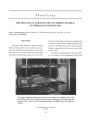
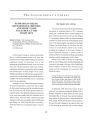
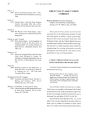
Show P h o t o E s s ay THE BOTANICAL PARTS OF THE PATTERSON BUNDLE: AN HERBALIST'S DISCOVERY Merry Lycett Harrison, Millcreek Herbs LLC, 2930 Millcreek Road, Salt Lake City, UT 84109 Photographs by Jim Blazik DISCOVERY In the early 1980s, Thompson's Springs residents Bryce and Margaret Patterson were hiking in a remote área ofthe Book Cliffs near Green River, Utah, when they noticed a thin strand of leather under a knee-high rock ledge. Margaret dug around it to see what it was and followed it through soil and layers of juniper bark to discover a large, leather wrapped bundle that she took home. The Pattersons kept it for several years and Margaret explained to me that she tried to keep all the contents intact. After Bryce's passing, Margaret gave the bundle to U.S. Bureau of Land Management (BLM) Moab The empty Patterson Bundle with some of its contents in the display case at the Moab office ofthe BLM. Initially, when the author noticed the root bundle she was unaware that it carne from this large assortment of artifaets from the Patterson Bundle. UTAH ARCHAEOLOGY 16(1)2003 pp. 53-62 53 54 UTAH ARCHAEOLOGY 2003 The author with what remains of the contents of the Patterson Bundle. Field Archaeologist, Bruce Louthan. Louthan accompanied Margaret to the place where she found the bundle, but he found no signs of a burial, habitation, or other cultural material. A display of the bundle's leather wrapping and many ofthe artifaets it contained was arranged in a glass case in the foyer of the BLM office in Moab. Sadly, a few very substantial pieces of the Patterson bundle were stolen from the display case, among them a stone blade and an extensive length of delicate "quill wrapped trim" (Louthan 1990). Louthan (1990) describes the contents ofthe bundle that include a wide assortment of items, such as a spoon shaped implement made of horn, decorative trim of leather and seeds, a necklace of bone and juniper seed, a stone blade, and an arrowhead. Louthan wrote, "The arrowhead resembles a Desert Side-notched type whose sides appear to have been reworked." There are two deer antier tip flakers, a ball of pine pitch, a pair of moccasins, a strand of deer dewclaws, four whorls of uniformly stripped bark, pouches of stones, red ochre, and much more. Louthan reports one category as "Miscellaneous Pouches" which were small bundles that held a variety of botanical and faunal material. These individual leather wrappings in themselves are interesting and deserve further study. Some appear to be fragments of leather clothing because they have PHOTO ESSAY 55 finely stitched seams and delicate fringe, seemingly of indigenous materials. A bit ofthe outside leather wrapping ofthe bundle was radiocarbon dated and returned a conventional radiocarbon age of 400 ± 70 B.P. (Louthan, 1990). The calibrated age range for this date is cal A.D. 1408 - 1649 (Calibrated at 2 sigma with the program CALIB 4.3 [Stuiver and Reimer 2000]). My interest in the Patterson Bundle was sparked when I noticed one of these smaller bundles in the display case. It appeared to contain roots. As a trained clinical herbalist who harvests roots of wild plants to use in my pharmacy, my curiosity was piqued. I obtained permission from Louthan to more closely examine this grouping and knew at first glance that one of the roots was from osha, Ligusticum porten, that grows in the mountains near Moab. It is a very potent medicinal herb that I use to help relieve respiratory symptoms. I wondered if the other roots could be from such useful medicinal plants. Permission to study the contents ofthe Patterson Bundle carne with the stipulation that I report my findings to the BLM. My primary focus would be to try to identify the botanical parís. The results of my research were first published in Harrison (2002). A MEDICINAL PERSPECTIVE was insufficient to tan much leather. He reported that another root was rabbitbrush, (Chrysothamnus sp.), a common plant in the región with a root used as chewing gum, among other things. These suggestions were interesting, but as an herbalist, I considered the plants for their availability, medicinal valué, and possible use. I wondered why would anyone go to the trouble to dig up, clean, dry, wrap, bury, and store a root like rabbitbrush that was in great abundance around them. I did not think the roots were used as food because the amount stored was varied and small. The quantities are, on the other hand, reasonable for treating an ailment. The variety intrigued me as I could tell the roots were not all from the same plants. The way they were wrapped was also of interest. One small bundle had several different types of roots in it. This might suggest that the plants in it were used together. Another bundle had a compacted mass of roots that were all the same kind. Understanding that medicinal plants generally grow in a variety of bioregions (e.g., wetlands, pinyon/juniper woodland, mountains), they cannot all be harvested at the same time because their availability and potency vary with season, temperature, habitat, and elevation. Having sepárate bundles for some ofthe herbs, therefore, makes sense because they had to be harvested, cleaned, dried, and stored in a timely way. This line of thinking kept my focus on looking for plants I know to have therapeutic valué. In all, there are four sepárate bundles that contain mostly roots that are exquisitely preserved. It is obvious that they had been extracted from the ground and wrapped with extreme care because even the tiniest rootlets were still attached. They were thoroughly cleaned, with hardly a grain of dirt or sand left on them. The fact that there was nothing exotic to Utah in the bundle suggests that the plants would likely have been gathered locally. That is, the distance people could travel on foot before the introduction ofthe horse. Louthan wrote that one of the roots was dock (Rumex hymenosepalus). This plant is used to tan hides, but the thumb-sized piece of root thought to be dock METHODS AND INVENTORY OF THE BOTANICAL PARTS OF THE PATTERSON BUNDLE The botanical material was identified primarily using morphological comparison. Because most herbarium specimens do not have roots attached, I had to go to the field over several years to collect plants when they were recognizable with roots intact to créate my own herbarium. After digging these up, I cleaned and dried them and took them into the BLM for cióse examination under a lOx to 25x dissecting microscope. 56 UTAH ARCHAEOLOGY 2003 The Patterson Bundle with its leather exterior wrapping and the small herb bundles and basketry materials that were inside. The small leather strand in the foreground is attached to the wrapping and is what Margaret Patterson noticed under the rock ledge. This is Pouch 8, the largest herb bundle from the Patterson Bundle. It contains three different kinds of roots and a yucca leaf. The stone blade might have been used to scrape or cut the roots into smaller pieces to créate a dose or preparation. PHOTO ESSAY 57 Because the oíd roots are so well preserved, distinguishing features such as size, color, form, texture, and root type could all be scrutinized. Characteristics of the roots like the crown, root hairs, rootlets, bark or epidermis, and structure were closely examined. I began with the plants I knew, but over my three years of research, I also investigated plants at random out of necessity when a match seemed impossible to find. Below is the inventory of my findings based on this method. The findings are organized by category, and according to which component ofthe bundle they are from. The inventory numbers (e.g., "Pouch 8") are those assigned by the BLM. Herbs Pouch 8. This is the leather-wrapped herb bundle that caught my eye in the display case. At first glance it appeared to have at least a dozen or more finger-sized pieces and a few smaller fragments of roots, sticks, and a large piece of what looked like bark. Upon closer examination, I discovered that these many pieces could be laid end to end to recréate three, whole, exquisitely preserved roots that were obviously from three different plants. There is a small stone blade included with this combination, which suggests that the roots were scraped or cut into smaller pieces to make an infusión or other preparation. The amount of herb in this bundle would be sufficient to treat one or perhaps a few people, depending on how sick they were and how long the illness lasted. Osha (Ligusticum porten) is from the Apiaceae family and is also known as bear root. I recognized it at once (perhaps the way an archaeologist recognizes the cultural origin of an arrowhead or pottery sherd). My first inclination was to smell it to see if there was any trace ofthe distinctive, spicy odor that is a helpful identifying characteristic. After so many centuries it had dissipated. The root's appearance, however, had many distinguishing features such as root hairs at the crown, very dark brown color, wrinkled texture and the usual tough, smooth, cord-like center of the root. This plant grows at higher elevations, usually between 7,000 and 10,000 feet. It grows in the La Sal Mountains near Moab, Utah, so it is available in the región where the bundle was found. Osha is "one of the best treatments for viral infection" and is particularly effective against respiratory conditions brought on by a cold or the flu (Moore 1979:121). Like many herbs, osha has other applications and is considered sacred by some indigenous cultures. My ethnobotany teacher, Enrique Salmón, told me that the Tarahumara Indians chew it for endurance on their long runs through the mountains, and I have seen it used in sweat lodges. It is sprinkled on the hot rocks in the center of the lodge and the pungent smell permeates the dark, steamy space. Pleurisy root (Asclepias tuberosa) is from the Asclepiadaceae or milkweed family and is also known as butterflyweed. It is a powerful medicinal herb that is used as a cough remedy as an expectorant (Moore 1979:130). It is also muscarinic, meaning that it can increase secretions and cause vasodilation, gastrointestinal stimulation and other parasympathetic effects (classroom lecture by Michael Moore, Southwest School of Botanical Medicine, 1998). According to A Utah Flora, it grows in mountain brush and pinyon-juniper communities between 4,000 to 6,500 feet in elevation in Grand and San Juan counties (Welsh 1993:60). It blooms with beautiful orange flowers in late May or June and attracts butterflies. Only the root is useful. Daniel Moerman in his authoritative book, Native American Ethnobotany, documented that the Navajos used it ceremonially as a "chant lotion", and that an infusión was used for dog or coyote bites (Moerman 1998:109). Unfortunately I was unable to find a specimen in the wild and had to resort to ordering roots from an organic grower that I dried and used for comparison under the microscope. A remarkable feature of this root is that it is very long and slender so it penetrates deep into the ground. It would have been difficult to dig up without the root breaking off. A complete taproot was found in the bundle and it had been severed to créate equal lengths 58 UTAH ARCHAEOLOGY 2003 in storage. Furthermore, the tiniest fragüe rootlets, which are the thickness of coarse linen thread, are still attached, and some are several inches long. This clearly reveáis that this root, as well as the others, was dug with extraordinary care and skill so it could be lifted from the earth in its entirety. Balsam root (Balsamorhiza sagittata) is from the Asteraceae family. It is a sturdy, thumbsized piece of the top of the taproot and includes the crown, which contributed to its identification. Stanley L. Welsh, curator of the Brigham Young University herbarium, confirmed my identification. Balsam root grows in abundance between 4,000 and 6,000 feet and it too, is available in the La Sal Mountains. Michael Moore compares its usefulness to that of the Echinacea plant common to the plains. It is an immunostimulant and can inhibit respiratory viruses. The best seasons to gather the root are spring and fall as it becomes very Botanical parts that at first looked like a collection of sticks and twigs turned out to be just a few roots that could be laid end to end to recréate the whole ones. The fact that tiny rootlets are still attached attests to the extreme care with which the roots were dug and stored. PHOTO ESSAY 59 This close-up shows the mass of roots the author believes is from the Stream Orchid, Epipactis gigantea. The details of the leather wrapping show stitch holes and worn places. The shape suggests it is from a worn out moccasin. tough during the summer when the energy ofthe root goes into developing the aerial part ofthe plant (Moore 1998). Yucca leaf (Yucca sp.) is from the Agavaceae family. Welsh identified it as the base of a yucca leaf. Various species of yucca grow in the hot, dry, lower elevations ofthe área where the bundle was found. This finger-sized section looks like a curved piece of smooth, stiff bark. Because it appears to have scrape or wear marks on one edge, it may have been used as an implement, or perhaps particles were scraped off for ingestión. I knew of the use of yucca root for arthritis inflammation, but I carne across a study that showed yucca leaf protein exhibits antiviral activity (Hayashi et al. 1992:323-333). Daniel Moerman claims the Navajos used the leaves in a tea to help reduce vomiting (Moerman 1998:604). Pouch 3. The leather wrapping on this bundle is thicker than most of the other wrappings. It is soft, pliable, and appears to be colored or dyed red. This wrapping is remarkable because it is so different from the others. It contains the top several inches of two roots that have the same texture, color, and form as the large example of pleurisy root in Pouch 8. Pouch 9. This small leather pouch has fine fringe attached to the wrapping. Inside are small chips of bark or wood. These are in fact from the broken base ofthe large balsam root in Pouch 8. They fit like puzzle pieces 60 UTAH ARCHAEOLOGY 2003 onto it. Why these chips were preserved in a sepárate pouch is unknown. Perhaps they comprise an individual dose. Whatever the purpose, the root seems to have been valued greatly to store the bits so carefully. Pouch 2. The leather wrapping of this pouch looks like the heel of a worn out moccasin. Of particular interest is the way the shape ofthe leather conforms to the shape of the cluster of roots within. The roots are from the Stream Orchid, Helleborine (Epipactis gigantea), ofthe Orchidaceae family. It grows in moist, shady places and I have seen it along Mili Creek near Moab at an elevation of 4,500 feet. It is a powerful herb that has many applications including tachycardia, migraines, and poison ivy, to ñame a few. It can ease tensión and is helpful as a buffer to pain (Moore 1997). Michael Moore recommends using it in the place of the rare lady slipper (Cypripedium sp.) that is good for nervous tensión and related ailments (Moore 1998). Daniel Moerman claims that the Navajo used the plant in a girl's puberty rite and that it was used to purify a newborn infant (Moerman 1998:213). Other Materials There are four whorls of uniformly stripped bark that appear to be suitable for making baskets. ítem 53 is Sumac (Rhus trilobata). ítems 52, 54, and 55 are willow (possibilities are Salix amygdaloides, S. eriocephala, S. interior, and S. lucid). Seeds of the juniper berry (Juniperus sp.) were found and were used with bone, leather, and other materials. Juniper bark served to protect and preserve the bundle wrapping and contents. Margaret Patterson reported that she dug through substantial layers of it to get to the bundle. Judging from the high level of preservation, it was very effective at repelling insects. There are also 16 small plástic bags that contain very small fragments of dirt and plant parts that perhaps collected in the bottom ofthe bundle. A spoon handle of wood is also present. SEEKING CONTEXT I cannot say how or for what purpose the plants were used, but they do represent some of the most potent and effective botanical medicine the área has to offer. All of the plants are available within the región where the bundle was found. To further ascertain the context ofthe bundle, Jack Broughton at the University of Utah identified the faunal material. Five small bundles contained cottontail rabbit foot bones, a tail of a short-eared owl, the skin of a small mammal, the headless body of a native trout, a rabbit arm bone, and an unidentifiable body part. This left me questioning if these are the kinds of items usually found in a "subsistence kit." What use could they possibly have had? Instead, is this someone's medicine bag whose materials were used together in healing efforts or ceremonies? RECOMMENDATIONS FOR FURTHER STUDY The Patterson Bundle presents an extensive and rare assemblage of well-preserved cultural elements that may lead to greater understanding and knowledge beyond just what the contents are. I will use the plant osha to illustrate this potential. Because osha grows so high in the mountains, we know its availability was limited to certain seasons. The plant dies back in the winter so it cannot be identified until late June or July. Furthermore, the root's potency is strongest after it has gone to seed in the late summer. Knowing this helps us to determine how people traveled the land in order to be in the right place at the right time to harvest specific, valuable plants. Study of the "spoon" could reveal it was a multipurpose instrument. Some curious aspects about it include a small, irregularly shaped hole in the bottom ofthe bowl that is approximately 1.5-3 mm wide. Perhaps it was a strainer to sepárate tough, woody plant material from a tea or infusión. Then there are two PHOTO ESSAY 61 similar niches opposite each other on the rim. At first I imagined they looked like the type of wear that a small child could have caused by frequently biting down on it. Then, under the microscope I could see what looked like signs of wear on the backside of the spoon at the niches as if something had been firmly drawn through them. Perhaps a pollen wash ofthe spoon would reveal its primary use. It may also be worthwhile to use carbón dating on some of the wrappings and contents of the smaller bundles. With so little known about the use and purpose of these artifaets, it cannot be assumed that everything is the same age. The faunal elements are unusual and quite remarkable, particularly the headless trout and owl tail. What use or significance could they have had? Interestingly, there are several well-known owl images in rock art in the región where the Patterson bundle was found, and they have substantial tails. When I completed my analysis, I shared my findings with my herb teacher, Michael Moore. "This is winter medicine," he commented. He called the herb collection "elegant" in its simplicity and usefulness. I believe what he meant is that these are the herbs that would be most useful to treat a range of health problems, but especially the bronchial conditions that are so common to the people during the cold winter months in a high, dry, desert climate. Throughout my solitary study, one question stayed with me. Where are the other herb bundles? When I began, I called museums, curators, and scholars in surrounding states to see if they had anything similar. I even interviewed a law enforcement authority whose job it was to retrieve illegally collected artifaets. The answer was always no. I searched the storage bags and boxes at the Edge ofthe Cedars Museum in Blanding, Utah, but found only the pinyon pine nuts and yucca fiber one would expect. I even contacted the Smithsonian's new National Museum ofthe American Indian in Washington, D.C. I spoke with Patricia Nietfeld, the supervisory museum specialist in charge of collections management. She did not know of any similar bundles or collections of botanical material in their collections. It is a curious thing to me that plants were such an important part of indigenous people's lives, yet there are not more herb bundles or collections to study. Are there some in boxes labeled "unknown plant material" or as is the case ofthe Patterson Bundle, were they presumed to be for subsistence when they may have been medicinal? I believe that there is much to be learned by knowing what plants the people used and I hope that more herb bundles can be recognized and studied in the future. Measures should be taken to provide extraordinary care to preserve and keep safe this remarkable assemblage in its entirety. It is a collection rich in materials that through further study may help to better define the culture from which it carne. As of January 2004, the Patterson Bundle is curated at the Utah Museum of Natural History, Salt Lake City. The final disposition of the bundle will be determined through consultation between the U. S. Bureau of Land Management and Native American tribes. Acknowledgments. Karen Adams, Duane Atwood, Jack Broughton, Ann Kelsey, Bill King, Enrique Salmón, Stanley Welsh, and Daryl Trotter shared their expertise in botany and related fields. Margaret Patterson shared her story. Bennie LeBeau and Woableza offered Native American perspectives. Kristen Jensen helped edit this article. The author gratefully acknowledges the assistance of Bruce Louthan in offering information, maps and photos. I thank family and friends for their encouragement, patience and support. A grant from Utah Native Plant Society helped support this project. 62 UTAH ARCHAEOLOGY 2003 REFERENCES CITED Harrison, M. L. 2002 The Patterson Bundle: An Herbalist's Discoveries in a 500-Year-Old Native American Bundle. HerbalGram: The Journal ofthe American Botanical Council 55:34-41. Hayashi K., H. Nishino, S. Niwayama, K. Shiraki, and A. Hiramatsu 1992 Yucca Leaf Protein (YLP) Stops the Protein Synthesis in HSV- Infected Cells and Inhibits Virus Replication. Antiviral Research 4:323-33. Louthan B. D. 1990 The Patterson Bundle: A Pre-Horse Ute Subsistence Kit? Canyon Legacy: A Journal ofthe Dan O 'Laurie Museum 1:16- 20. Moerman, D. E. 1998 Native American Ethnobotany. Timber Press, Portland, Oregon. Moore, M. 1979 Medicinal Plants of the Mountain West, Museum of New México Press, Santa Fe. 1997 Specific Indications for Herbs in General Use. 2nd ed. Southwest School of Botanical Medicine, Bisbee, Arizona. Stuiver M. and P. J. Reimer 2000 CALIB 4.3 [WWW program and documentation] Seattle: University of Washington. URL: http://www.calib.org/calib/ Welsh, S. L., N. D. Atwood, S. Goodrich, and L. C. Higgins 1993 A Utah Flora. 2nd ed. Brigham Young University, Provo, Utah. |